How Ernest Everett Decoded the Architecture of Life and What It Teaches Us About Intellectual Property
In the high-stakes world of legacy building, we often talk about “assets.” We discuss real estate, stock portfolios, and trust funds. But for the established diaspora leader or the multi-generational family business, the most volatile yet valuable asset you possess is your Intellectual Property (IP), your unique methodology.
Learn How to Leverage Your Story through our Story To Asset Framework.
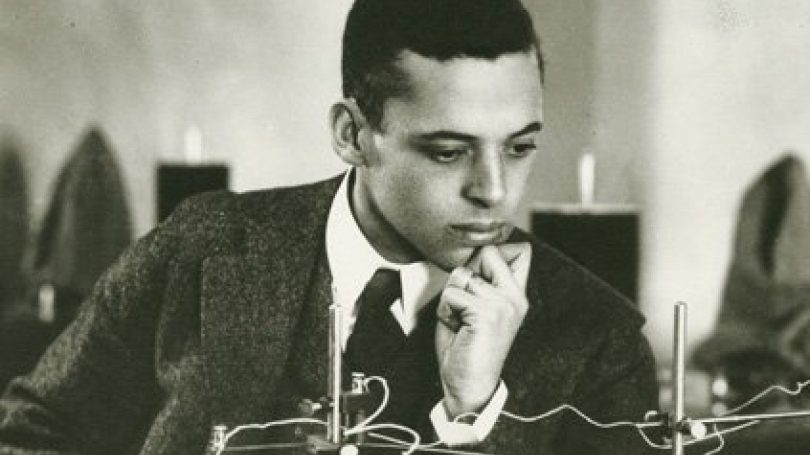
History is filled with brilliant minds who possessed world-changing IP but struggled to have it recognized or codified due to the societal constraints of their time. Among them stands a giant whose work quite literally defines how life begins, yet whose name is often omitted from the general biology textbooks. His name was Ernest Everett Just.
He was not merely a scientist; he was an architect of cellular biology. At a time when the world saw him as a “Negro laborer” in the halls of academia, he was teaching the world that life is not just a machine, but a complex, holistic event. His story is a masterclass in excellence, resilience, and the absolute necessity of documenting your genius.
The Genesis of Resilience: From the Phosphate Mines to the Ivy League
To understand the man, we must look at the stock from which he came. Born in Charleston, South Carolina, in 1883, Ernest’s early life was defined by the kind of tragedy that usually breaks a spirit.
By the time he was four, he had lost both his father and grandfather. His mother, Mary Matthews Just, was left to support the family alone. She was a woman of profound vision, a prototype for the modern female founder.
To support her children, she worked in the grueling phosphate mines on James Island. But she didn’t just survive; she built. She persuaded other Black families to pool their resources and buy land, eventually founding the town of Maryville, one of the first self-governing Black towns in America. The Statistic of Survival:
At age 13, Ernest contracted typhoid fever. The illness was so severe that he lost his ability to read and write. He had to relearn the alphabet from scratch. This is a crucial data point in his legacy: he went from illiterate at 13 to graduating magna cum laude from Dartmouth College just 11 years later in 1907.
At Dartmouth, he was the only Black student in his graduating class. Despite winning virtually every prize available, including honors in sociology, history, and botany and being a Rufus Choate scholar for two years, he was denied the honor of delivering the commencement speech. The faculty feared it would be a “faux pas” to have a Black man address the white parents and alumni.
See also How To Tell Your Personal Story: The Essential Guide To Memorable Storytelling
It was a sting of rejection that would define his relationship with American institutions, but it never slowed his output.
The Science of the Surface: Redefining Biology
Upon graduating, just took a position at Howard University, where he would eventually become the head of the Department of Zoology (1912–1941). However, his true laboratory was the Marine Biological Laboratory (MBL) in Woods Hole, Massachusetts.
For over 20 summers, he became the world’s leading authority on the marine egg. While his contemporaries were obsessed with the nucleus of the cell (the “brain”), Just was obsessed with the cytoplasm and the cell surface (the “skin”).
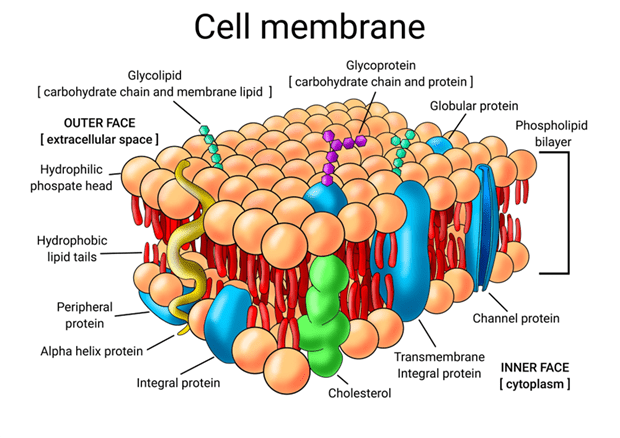
The Methodology of Genius: Just advocated for studying whole cells under normal conditions. In an era of “reductionism”, where scientists would tear cells apart to see how they worked, Just treated the cell with respect. He realized that to understand life, you must observe it in its living state, not merely as a dissected collection of chemicals.
His specific contributions were monumental:
- The Block to Polyspermy: Just discovered the mechanism that prevents an egg from being fertilized by more than one sperm. If multiple sperm enter an egg, development becomes chaotic and fails. Just identified the “fast block” and elucidated the “slow block”, essentially the security system of life.
- The Importance of the Ectoplasm: He argued that the cell surface was not just a passive wrapper but an active, decision-making boundary. He proved that the surface dictates how the cell interacts with its environment.
Legacy Note: Today, this understanding is foundational to modern cancer research and developmental biology. Cancer is often a failure of the cell surface to recognize signals to stop growing. Just was decades ahead of this realization.
Shutterstock
Between 1909 and 1941, Just published at least 70 scientific papers and two seminal books: Basic Methods for Experiments on Eggs of Marine Animals and The Biology of the Cell Surface. In 1915, at age 32, he became the first recipient of the NAACP’s Spingarn Medal.
The Prophet Without Honor: Seeking Respect in Europe
Despite his genius, American universities refused to hire him as a full faculty member outside of Historically Black Colleges and Universities (HBCUs). The Rockefeller Foundation and other major funding bodies often marginalized him, viewing him through the lens of his race rather than his output.
See also MALCOLM X: Stan Bernard Interviews Malcolm X (February 18, 1965)
Just refused to accept this ceiling. He became a trans-Atlantic intellectual, seeking the respect of the European scientific community.
- 1929: He traveled to Naples, Italy, to work at the Stazione Zoologica Anton Dohrn.
- 1930: He became the first American invited to the Kaiser Wilhelm Institute in Berlin, home to Nobel Prize winners who treated him as a celebrity.
In Europe, he was simply “Dr. Just.” In America, he was a brilliant anomaly who had to be “managed.” This dichotomy exhausted him. He wrote extensively about the psychological toll of racism, noting that in Europe, he felt like a human being, whereas in the US, he was constantly fighting for the right to breathe intellectually.
The Bridge: Your Methodology is Your Legacy
Ernest Everett Just died in 1941 of pancreatic cancer, shortly after escaping Nazi-occupied France. For decades, his work was largely ignored by the American scientific establishment, only to be rediscovered and validated by modern epigenetics and cellular biology.
What does this mean for you, the modern leader?
Just’s life illustrates a critical principle for family businesses and founders: Excellence alone does not guarantee legacy.
Just was excellent. He was a genius. But because he lacked the institutional machinery to propagate his own school of thought in America, his “Methodology”, his unique way of viewing the cell, was almost lost. He had to rely on European institutions to validate his work.
As a founder or a leader of a multi-generational business, you have accumulated a “Just-like” genius. You have a unique way of solving problems, a unique culture, and a unique history. But does the world know it? Is it codified?
- If you are a coach or consultant: Do you have a proprietary methodology, or are you just selling your time? Just had a specific way of handling marine eggs that yielded better results than anyone else. That was his IP.
- If you are a family business: Do you have your history and values documented, or are they just oral traditions fading with each generation? Mary Matthews Just built a town to secure her family’s future. What are you building to secure your story?
Just left us books. He left us papers. Because he wrote it down, we can now look back and give him his crown. But imagine the impact if he had the resources to build his own institute—his own “Legacy Signature Program.”
Conclusion: Don’t Let History Write Itself
Ernest Everett Just taught us that the cell surface—the boundary—determines the life of the organism. Similarly, the boundary you set around your own Intellectual Property determines the life of your legacy.
You are living in a time of unprecedented opportunity. Unlike Just, who fought against a system designed to silence him, you have the tools to broadcast your brilliance. You have the ability to turn your life’s work into a curriculum, a book, or a film that ensures your “methodology” survives for the next 100 years.
We celebrate Dr. Just not only for the 70 papers he wrote but for the resilience he embodied. He refused to let his genius die in the dark. You must make the same refusal.
Your experience is an asset. Your struggle is a lesson. Your method is a solution. It is time to package it.
Your legacy is your most valuable asset.
Before you print another brochure or launch another generic marketing campaign, let’s talk about how to immortalize your unique genius. Do not let your methodology fade into history.
Book your free 15-minute Legacy Strategy Call today to design the asset that will tell your story for the next 50 years. Book Your Free 15-Min Legacy Call Now