The Elon Musk Trillion-Dollar Question: What Happens When One Man Can Buy a Country?
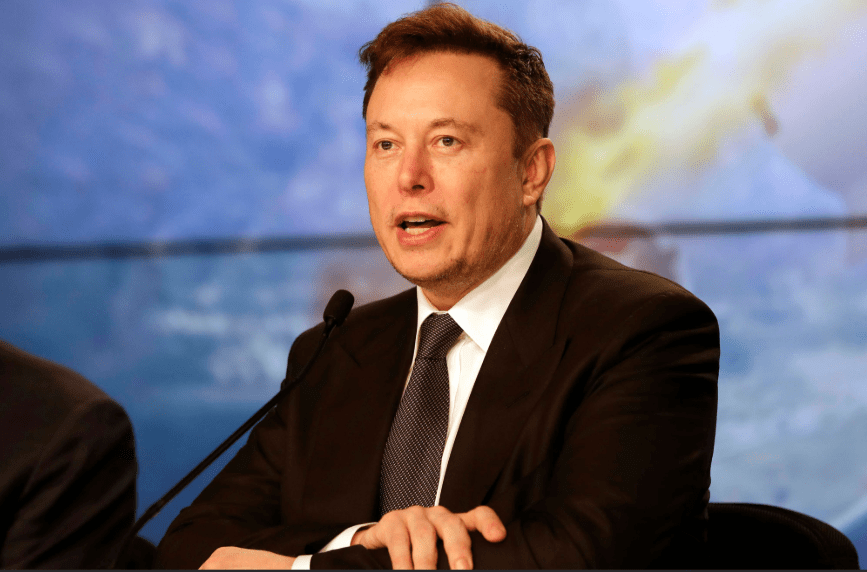
History was made or at least, the potential for history was ratified when Tesla shareholders recently did something unprecedented. In a move that stunned casual observers and galvanized the financial world, they approved a compensation package for Elon Musk that is staggering in its scale. It is a pay deal that, contingent on Tesla hitting some truly stratospheric milestones over the next decade, could officially crown Musk as the world’s first trillionaire.
Learn How to Leverage Your Story through our Story To Asset Framework.
Before we start printing the commemorative T-shirts, we have to acknowledge the caveats. For Musk to unlock this treasure chest, Tesla doesn’t just need to succeed; it needs to defy gravity. The company must increase its market capitalization by roughly 466% from current levels.
Is it possible? In the volatile world of tech stocks, sure. Is it probable? That depends entirely on whether you view Tesla as a car company or, as Musk insists, an AI and robotics superpower. But the probability isn’t really the point. The point is that there is now a non-zero chance that a single human being will control wealth designated by a one followed by twelve zeros.
This possibility forces us to confront a cognitive blind spot. We talk about “millions,” “billions,” and “trillions” as if they are just steppingstones on the same path. But they aren’t. The gap between a billion and a trillion isn’t just a matter of degree; it is a difference of species.
As we stand on the precipice of the Trillionaire Era, it is time to perform a thought experiment. We need to strip away the numbness we feel toward big numbers and truly visualize what $1 trillion looks like, what it can buy, and what it means for the rest of us.
The Human Brain vs. The Number Trillion
The reason financial headlines often fail to land with the public is that the human brain is not wired to comprehend numbers for this large. We evolved to count members of our tribe, the number of buffaloes on the plain, or the days until winter. We did not evolve to visualize twelve zeros.
When the media tosses around the “T-word,” it feels abstract. To understand why this wealth is so comical, we have to move away from money and look at time.
Consider this analogy, famously cited by KRWG columnist Jerry Pacheco, which puts the scale into terrifying perspective:
Imagine you are compelled to spend $40 every single second. You do not sleep, you do not eat, you do not stop. You are a machine designed solely to spend forty bucks a second.
- To spend one million dollars, you would be done in about 7 hours. You could start at breakfast and be finished by dinner.
- To spend one billion dollars at that same frantic pace, you would be spending for 289 days. That’s nearly a year of non-stop spending.
- To spend one trillion dollars, doing the exact same thing ($40 per second), you wouldn’t finish in a lifetime. You wouldn’t finish in ten lifetimes. It would take you 792.5 years to go broke.
If you started spending a trillion dollars the day the Magna Carta was signed in 1215, you would still have money left over today.
That is the difference. A millionaire is a wealthy individual. A billionaire is a financial titan. A trillionaire is a historical epoch.
The Ultimate Shopping Spree: A Thought Experiment
Musk already possesses a fortune hovering near $475 billion (depending on the market’s mood that day). This is already more money than any person could logically spend on goods and services. It is “Scoreboard Wealth”, money that exists to keep score rather than to buy bread.
But let’s suspend disbelief. Let’s assume the pay package hits, the stock soars, and Musk has a liquid $1 trillion sitting in a checking account. What does that purchasing power actually look like in the real world?
It turns out, when you have $1 trillion, you stop shopping for “things” and start shopping for “civilizations.”
1. Total Domination of the Auto Industry
Musk has spent years trying to beat legacy automakers with better technology and manufacturing innovations. But with $1 trillion, he wouldn’t need to innovate. He could simply acquire the board.
For that price, he could buy Toyota, Volkswagen, Stellantis, Hyundai, Ford, and GM.
Read that again. He wouldn’t just buy a few competitors; he could buy essentially every major car manufacturer in the Western world and Asia. He would own the factories, the supply chains, the patents, and the labor of millions of workers. He would control the roads.
You might also like Has Tesla Hit a Roadblock? Exploring the Electric Car Giant’s Challenges
And just to be safe, in case the electric vehicle revolution hits a snag? He could spend his leftover change to buy ExxonMobil, Chevron, and ConocoPhillips. He would own the cars and the oil they would run on. He would be the vertically integrated king of motion.
2. The “Brewster’s Millions” Problem
Let’s say Musk decides he wants to enjoy the money in a more traditional, hedonistic sense. The problem is, there aren’t enough luxury goods in the world to make a dent in his bank account.
- Super-Yachts: Jeff Bezos commissioned a yacht so large it required dismantling a historic bridge to get it to the ocean. It cost about $500 million. With a trillion dollars, Musk could buy 2,000 of them. He would face a logistical nightmare, though, as annual maintenance costs (usually 10% of the value) would run him $25 million per boat.
- The Fleet: If he wanted something bigger, he could purchase the Icon of the Seas, the world’s largest cruise ship. In fact, he could buy 465 of them. That is roughly the same number of ships currently in the active US Navy. He wouldn’t just have a yacht; he would have a navy capable of projecting power globally.
- Sports: We were all stunned when Shohei Ohtani, arguably the greatest baseball player of our generation, signed a $700 million contract. It was the biggest deal in sports history. For Musk, that is a rounding error. He could sign 1,428 Shohei Ohtanis. Since there aren’t that many baseball players, he could simply buy every team in the MLB, NBA, NFL, and Premier League, and still have hundreds of billions left over.
3. Real Estate and Infrastructure
When you are a trillionaire, you don’t buy a house. You buy a zip code.
- The Skyline: Walking down Park Avenue in New York, you might marvel at the new JPMorgan Chase headquarters. It’s a monolith of steel and glass that cost a fortune, $3 billion to build. Musk could build 333 of them. He could essentially build a second Manhattan, entirely from scratch, anywhere he wanted.
- The Aloha State: This is perhaps the most visceral example of them all. There are 572,781 residential households in Hawaii. Zillow estimates that the average value is hefty, at around $826,000. Musk could buy every single house in Hawaii. He wouldn’t just be a neighbor; he would be the landlord for the entire state. Larry Ellison owns an island; Musk could own the archipelago.
4. Buying Institutions and Nations
Here is where the math gets truly uncomfortable. A trillion dollars bridges the gap between private equity and sovereign GDP.
- The Ivy League: We often debate the cost of higher education. The endowments of the eight Ivy League schools (Harvard, Yale, Princeton, etc.) total about $200 billion. Musk could buy the entire Ivy League system five times over. He could buy them and make tuition free for every student for the next century without breaking a sweat.
- Switzerland: You cannot literally buy a country (international law is tricky like that), but in terms of raw economic output, a trillion dollars exceeds the annual GDP of Switzerland (approx. $900 billion). Musk’s personal fortune would generate more value than the banking capital of the world, the producer of the world’s finest watches and chocolates, and a nation of 8.9 million people.
5. Benevolence (and its Consequences)
What if he gave it away? This is the most common argument: “He could solve world hunger!”
If Musk played Santa Claus, he could cut a check for $2,923 to every single person in the United States. It would be the greatest stimulus package in history.
Alternatively, he could buy The Coca-Cola Company outright (market cap ~$270 billion) and use the remaining $730 billion to buy every human being on Earth a 12-pack of Coke to celebrate.
However, economists would look at this scenario with horror. Injecting a trillion dollars of cash into the consumer economy instantly would likely trigger hyperinflation that would make the post-COVID economy look stable. It turns out, you cannot simply spend a trillion dollars without breaking the system that gives the dollar its value.
The Corporate Pivot: Why This is Happening
Why are we even discussing this? Why did shareholders approve this package? It is because Tesla is pivoting. They are moving away from the “car company” model, which has low margins and high competition, toward an “AI and Robotics” model.
Musk is betting the farm on autonomous robotaxis (the Cybercab) and the Optimus humanoid robot.
If Musk pulls this off, if he solves full self-driving and puts a robot in every factory, Tesla captures value that was previously locked away in human labor.
That is the only scenario where a trillion-dollar payday makes mathematical sense. The shareholders are betting that Musk is not just a CEO, but a figure who can alter the trajectory of human productivity.
See also The Anatomy Of Tesla’s Storytelling Strategy: The Secret Behind The Success
If they are right, he becomes a trillionaire. If they are wrong, the pay package is a moot point, as the stock options will expire worthless.
The Bottom Line: The Meaning of the Number
We are entering uncharted waters. We are moving into an era where individual companies and their CEOs can amass wealth that rivals the GDP of mid-sized nations.
The wealth at the top has become incomprehensible, orders of magnitude beyond the numbers most of us glean from our checking accounts. It creates a distortion in reality.
When one person can theoretically buy the entire U.S. auto industry, the concept of “market competition” changes. When one person can finance a space program out of pocket, the concept of “public works” changes. But there is one quasi-upside to this exercise in absurdity.
Economists and politicians have been wringing their hands for years about the United States national debt, which currently sits at roughly $38 trillion. It is a terrifying number. It represents the accumulated bills of the American experiment.
But after visualizing what a trillion dollars looks like, the debt suddenly seems… quantifiable. Our giant, looming national debt is just 38 Elon Musks. It’s just 7.5 Nvidias.
It is still a mountain, but at least now we know how high the peak is.
Whether you view Musk’s potential trillion-dollar payday as a triumph of capitalism or a symptom of a broken system, one thing is undeniable: the numbers have gotten so big that they have ceased to be money.
They have become power, pure, and undiluted. And we are all just watching to see how it gets spent.
Learn How to Leverage Your Story through our Story To Asset Framework.