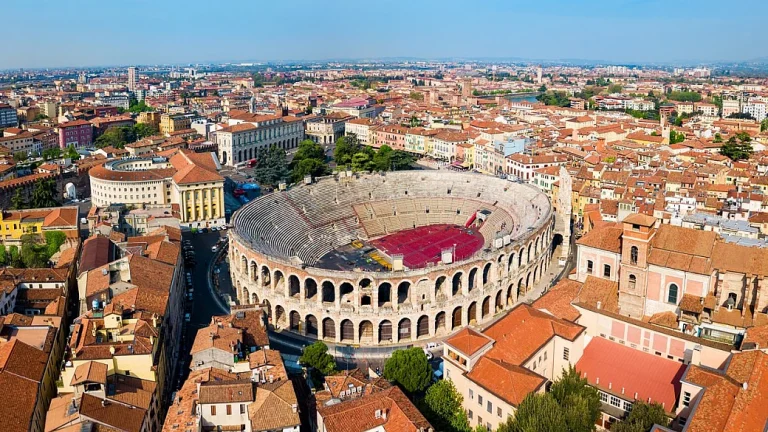
Festival del Cinema Africano di Verona Screens Creating the Blackness of Africa, A Documentary by Obehi Ewanfoh

In 2011, Obehi Ewanfoh took the stage at the Festival del Cinema Africano di Verona (FCAVR) to reclaim a long narrative written by others. With his debut documentary, “Creating the Blackness of Africa,” Obehi stepped into the role of a modern historian, dismantling centuries of distorted perceptions.
Learn How to Leverage Your Story through our Story To Asset Framework.
The film was more than a cinematic debut; it was a fearless confrontation of the deeply rooted prejudices and traditional European misconceptions surrounding African identity. This bold challenge did not go unnoticed.
The African Students Union at the University of Verona recognized the film’s profound impact, honoring it with the PREMIO ASAV as their Best Film.
Deconstructing “Blackness” as a Political Tool
In a globalized era dominated by superficial discourse on multi-ethnicity, interculturality, and integration, Obehi’s documentary poses a radical, uncomfortable question: Can the identity of a person truly be reduced to the color of their skin?
The documentary emerged as a deliberate attempt to contest the prevailing Western gaze. Through multidisciplinary analysis and interviews with experts, it arrived at a profound conclusion: “African Blackness” is not a biological or cultural absolute; it has been transformed into a propagandistic construct.
This label was strategically designed to mask exploitation and simultaneously rob the African continent of its true, multifaceted identity.
For the Diaspora founder or business owner, this history is critical. It exposes how “Institutional Barriers” are often built first in the mind through language and labels.
Yes, some see Africans as black even some Africans, especially though living outseld their continent might refer to themselves as black, but being black does not rely define the African identity.
For a Diaspora founder, understanding these distinctions is a vital step in dismantling “Institutional Barriers” that use color-based labels to “nullify” or “derubare” (rob) Africa of its sophisticated cultural and historical reality.
The Limits of “Black” as an Identity Label
| # | Term / Concept | Why it is NOT an African Identity | Strategic Insight for Founders |
| 1 | Black Friday | This is a purely commercial event focused on retail sales and consumerism. | It is an “Economic Tenant” construct unrelated to African heritage. |
| 2 | Black Music | A generic marketing category that often groups diverse genres solely by the skin color of the artist. | It ignores the specific linguistic and traditional “flows of orality” unique to African nations. |
| 3 | Black Business | A label that categorizes a business by race rather than by its specific “Sovereign Asset” or professional expertise. | It places the founder in a “Subject” category instead of an “Architect” category. |
| 4 | Blackness as a Label | A “propagandistic tool” used to cover and rob Africa of its true, multifaceted identity. | It is an “Institutional Barrier” built first in the mind through language. |
| 5 | Skin Color | Skin color is a biological trait that does not define the complex “identità di un popolo” (identity of a people). | Identity is a “child of destiny” found in roots and memory, not pigment. |
| 6 | Black Fashion | Often refers to a style or a specific color palette (black clothing) rather than African values. | It lacks the “vestiti colorati” (colorful clothes) and cultural pride seen in traditional African identity. |
| 7 | Black Monday | A term often used to describe stock market crashes or negative economic events. | It frames “black” as a negative descriptor, disconnected from African “Sovereign Truth”. |
| 8 | Black Lists | A tool for exclusion or banning, reinforcing the word “black” as a label for the “other” or “problem”. | This mirrors the “nullification” of Africans in Western institutional systems. |
| 9 | Black Comedy | A genre of humor focused on dark or morbid themes. | It has no relation to the “strong and right values” or traditional storytelling of African culture. |
| 10 | Black Markets | Refers to illegal or underground trade, further stigmatizing the word “black”. | It creates “Institutional Barriers” that Diaspora founders must work to dismantle by owning their narrative. |
As showed in other publication and research in Padova, Verona, and Brescia, the African Diaspora in Italy and beyond face experiences of an “identity crisis” when they try to mirror Western labels instead of their own culture.
See also Crisis Of Identity: How to reinforce your personal identity in 7 days
By recognizing that “black” is often a “hidden ideology” or a marketing construct, you can move toward Educational Sovereignty.
By deconstructing the “Blackness” construct, Obehi wasn’t just making a film; he was performing a “Mission Excavation” to reclaim the humanity that had been hidden under political definitions.
The Genesis of an Intellectual Asset
The success at the 2011 Festival was not a stroke of luck; it was the result of years of rigorous academic and literary preparation.
Obehi did not present himself as a mere enthusiast of African issues in Verona, but as a practitioner who had already codified his vision into a “Fortress of Peace” through multiple media:
1. The Literary Foundation
In 2007, Obehi wrote Between Africa and Europe, a raw account of his initial experiences in the Western world. Although it remained unpublished at the time, it served as his first “Decoding Formula”, a way to synthesize the pain of displacement into structured thought.
2. The Journalistic Discipline
Following a two-year correspondence course in “Feature Writing” (completed in 2009) at the London School of Journalism, he published his first book: Still Owing Me Goodbye. This autobiography served as a permanent record of his African roots, ensuring his past was an asset he owned, not a memory he was fleeing.
3. The Analytical Research
In 2010, while studying filmmaking through Film School Direct, he published his second book: Underdevelopment In Africa: My Hands Are Clean.
See also Leadership – From Individual Success to Institutional Legacy
This 216-page research work took a bold stance on internal responsibilities for the continent’s development, demonstrating an analytical maturity that moved beyond simple victimhood narratives.
4. The Cinematic Synthesis
By the time he completed his film course in early 2011, he was already deep into the production of Creating the Blackness of Africa. He had moved his expertise through the Story-to-Asset methodology: from lived experience to written word, from research data to visual narrative.
Why the Students’ Award is a Blueprint for Your Future
The award granted by the African Students Union of the University of Verona was a pivotal moment of Institutional Sovereignty. It represented the recognition of truth by the very people who were the subjects of the film’s inquiry.
Having a personal reflection, how does this specific achievement help you protect your family’s future for the next generation?
- Validation of Sovereign Truth: Winning “Best Film” within a university setting means the message was tested against academic and peer standards and found to be true. This creates a “Fortress of Peace” where your children can stand on a foundation of facts, not stereotypes.
- Breaking the “Referral Lottery”: Before this award, Obehi was an “observer.” After the award, he was a “Best Film Winner.” He codified his genius into an asset that spoke for him, attracting high-value opportunities without him having to beg for a seat at the table.
- Turning “Trapped Expertise” into Capital: The documentary proved that the “pain points” of being a silent observer in a diverse society could be transformed into a 30-minute high-value asset that gains global respect.
Owning Your Genius at AClasses Academy
Every leader within the African Diaspora is currently sitting on a goldmine of “Trapped Expertise.” You have lived through “Economic Tenancy,” you have navigated “Institutional Barriers,” and you have succeeded despite them. But as long as that wisdom stays in your head, it is a liability, it dies with you.
At AClasses Academy, we use the same blueprint Obehi used to win in 2011. We help you take your story and codify it into a Sovereign Asset. Whether it is a legacy book, a signature video, or an online curriculum, we help you build the “Director’s Cut” of your life’s work.
The Architect’s Mandate
The year 2011 marks the moment Obehi Ewanfoh stopped being a “silent observer” of European society and became the Architect of his own narrative. Creating the Blackness of Africa was his declaration of mental and professional independence.
Today, we invite you to do the same. We help you identify the “propagandistic labels” that have been placed on your career or your business and replace them with a Sovereign Pivot. We help you move from being a “Subject” of your industry to being an “Icon” of your legacy.
Conclusion: Reclaiming the Lion’s Historian
“The sun does not forget a village just because it is small.” Your message, born from solitary research and silent observation, has the power to illuminate the path for others. Obehi’s journey from a correspondence student to an award-winning director is a great example of the Educational Sovereignty we champion at AClasses Academy.
Your story is the key to reclaiming your family’s identity and financial future. It is time to stop answering definitions created by others and start writing your own chronicle of success.
Are you ready to transform your vision into the next award-winning asset? Don’t let your genius remain trapped in the silence of observation. It is time to project your truth onto the world’s stage. Book your free 15-minute Legacy Project strategy call now.