Veronetta, New Face of a Neighborhood, Screened at The University of Padova
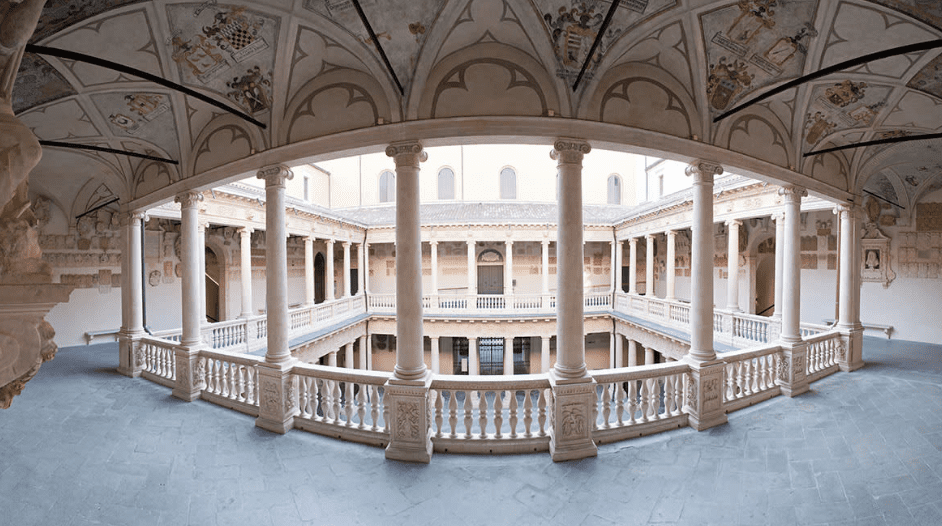
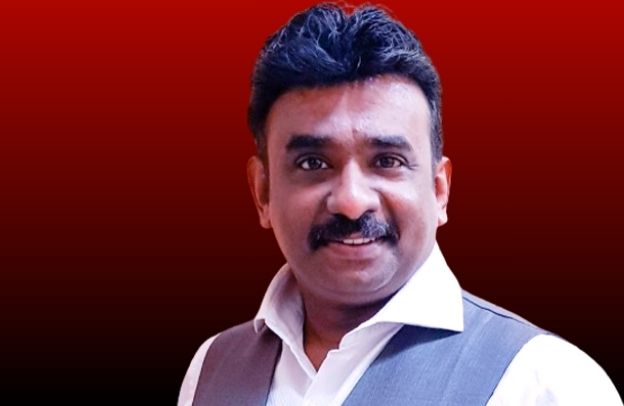
The African proverb reminds us that “Knowledge is like a garden; if it is not cultivated, it cannot be harvested.” On Tuesday, November 11, 2014, Obehi Ewanfoh took his cultivation of Diaspora truth to one of the oldest and most prestigious academic institutions in the world: The University of Padova.
Learn How to Leverage Your Story through our Story To Asset Framework.
The event, titled “Racconti visuali sulle trasformazioni del Nord Est” (Visual Tales of the Transformations of the North East), was not just a film screening; it was a high-level intellectual symposium.
Within the historic walls of Aula 1 in Via Cesarotti, the lived experiences of the Diaspora were presented not as anecdote, but as critical data for understanding the changing sociological landscape of Italy.
By presenting his documentary “Veronetta: Nuovo volto di un quartiere,” Obehi proved that the African Diaspora is not merely a passenger in Europe’s evolution, but a primary witness and architect of its transformation.
Understanding The Territory Of Veronetta
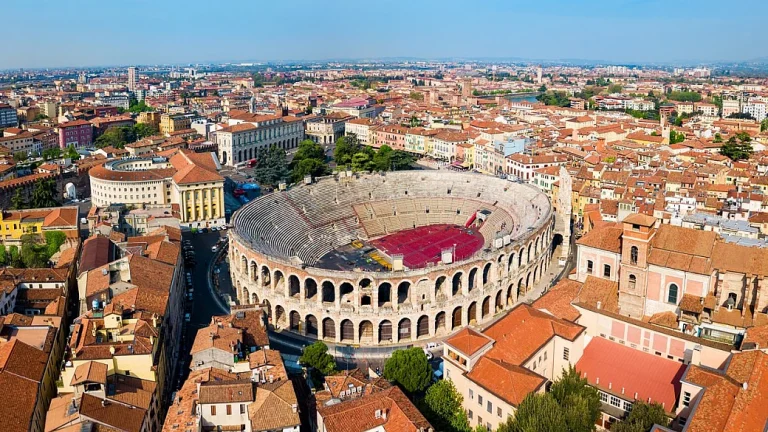
Veronetta is not just a district; it is the living soul and ancient birthplace of Verona. Situated on the left bank of the Adige River, its territory is a dramatic landscape where 2,000 years of history are etched into the stone.
See also 5-Day Diaspora Exchange of Wine Business and Culture in Verona, Italy
From the sheer heights of Castel San Pietro, a fortress that offers a strategic view of the entire city, to the ancient tiers of the Roman Theater, the land itself speaks of power, defense, and cultural layers.
This is the “Veronette” of Napoleon’s era, a territory once used as a military stronghold for the Austrian Empire, where massive walls and gated portals like Porta Vescovo still stand as silent witnesses to the neighborhood’s resilience through centuries of war and flooding.
Today, this territory has undergone a radical transformation, evolving from a marginalized enclave into one of Italy’s most vibrant multiethnic communities. It has become what Moustapha Wagne, a Senegalese union leader interviewed by Obehi Ewanfoh, powerfully describes as an “urban laboratory.”
This phrase captures the essence of the neighborhood: a place where different cultures aren’t just living side-by-side, but are actively experimenting with new ways of building a shared society.
In this “laboratory,” the African Diaspora and the local Venetian population are creating a new blueprint for coexistence, proving that diversity is not a problem to be solved, but a formula for a more resilient future.
As the primary seat of the University of Verona, the historic palaces and former military warehouses have been reclaimed by a global intellectual community. It is a space of “social fusion,” where ancient Roman foundations supported a modern, multicultural reality.
For the African Diaspora in Verona, Veronetta represents a sacred geography, a place where the “invisible” have become visible architects of a new Italian identity, turning a neighborhood once dismissed as a periphery into the very center of the city’s cultural and intellectual future.
Moving Beyond “Economic Tenancy” in the Northeast
For decades, the “Northeast” of Italy has been the industrial engine of the nation, a region defined by productivity, rigorous work ethics, and economic output. In the mainstream narrative, African migrants in this region were often viewed through the narrow, restrictive lens of “Economic Tenancy.”
See also Capturing Your Verona Memories: My Verona Journey Series, Part 9
They were recognized as essential labor for the factories, yet they remained socially and intellectually invisible in the universities, city halls, and cultural centers.
The gathering at the University of Padova shattered this glass ceiling. By placing a Diaspora director at the center of a discussion featuring esteemed scholars, the event shifted the traditional power dynamic.
The panel included notable voices such as Valentina Anzoise, Adriano Cancellieri, Stefano Collizzolli, Francesco Della Puppa, Sandra Kyeremeh, Cadigian Hassan and Vincenzo Romania.
This was no longer a case of Italian academics studying “the migrant” as an object of curiosity. Instead, it was an expert practitioner, Obehi Ewanfoh, providing the visual evidence, the Sovereign Truth that the academic community required to complete its understanding of the region’s transformation.
You might also like The 34th Verona African Festival: Elevating the Diaspora Narrative
Under the coordination of Annalisa Frisina and Alessio Surian, the Diaspora moved from the factory floor to the lecture podium.
The “Visual Tale” as a Sovereign Asset
In our proprietary Story-to-Asset framework, we emphasize that information only becomes an asset when it is codified, structured, and presented with authority.
The University of Padova event that day serves as a “Decoding Formula” for how the Diaspora can leverage intellectual spaces to protect their legacy. Here are for your consideration:
- Visual Documentation as Proof: Obehi utilized film to capture “Visual Tales” (Racconti visuali). In a world dominated by dense academic text, visual evidence provides an undeniable record of reality that cannot be easily dismissed or reinterpreted by outsiders.
- Collaborative Legitimacy: By coordinating with academic facilitators like Frisina and Surian, the documentary was integrated into the university’s pedagogical structure. This transformed the film from a personal project into an institutional resource.
- Multidisciplinary Validation: The participation of diverse specialists, from sociologists to researchers, created a “stress test” for the narrative. It proved that Diaspora stories are valid across scientific, cultural, and political lines.
At AClasses Academy, we teach that your expertise must move from “opinion” to “authority.” When you codify your years of experience into an asset like a documentary or a book, you are no longer asking for a seat at the table; you are providing the table itself.
Protecting Your Legacy Through Codification
How does a 2014 lecture in Padova help you protect your family’s future today? It teaches the vital lesson of Narrative Ownership. If Obehi had only shared these stories in private conversations or informal settings, they would have vanished with the passing of time.
Because he codified them into a “Visual Tale,” they are now part of the University of Padova’s historical record and the broader European intellectual archive.
Building Your Fortress of Peace:
- Shift from Subject to Researcher: The world often wants to study the Diaspora as a “phenomenon.” AClasses Academy teaches you how to be the researcher who analyzes the world through your own cultural lens.
- Turn Struggle into Strategy: The “transformations” Obehi documented were often born from the friction of migration and social change. We help you turn your professional frictions into a Sovereign Asset that generates value and commands respect in the global marketplace.
- Institutionalize Your Wisdom: By presenting at a university, Obehi ensured his work reached the next generation of thinkers and leaders. We help you do the same by transforming your “Trapped Expertise” into digital courses, legacy books, and educational platforms.
Conclusion: The Architect’s Mandate
The event on November 11, 2014, was a declaration of Educational Sovereignty. It proved that the African Diaspora possesses the intellectual capacity to narrate the transformations of the Western world with more depth and accuracy than the Western world often narrates itself.
“A man who pays respect to the great paves the way for his own greatness.” By honoring the complex history of the Northeast through his lens, Obehi Ewanfoh paved a sovereign path for every Diaspora leader, founder, and business owner who follows.
Are you ready to transform your “Visual Tales” into a permanent Legacy? Book Your Free 15-Minute Legacy Strategy Call Now.