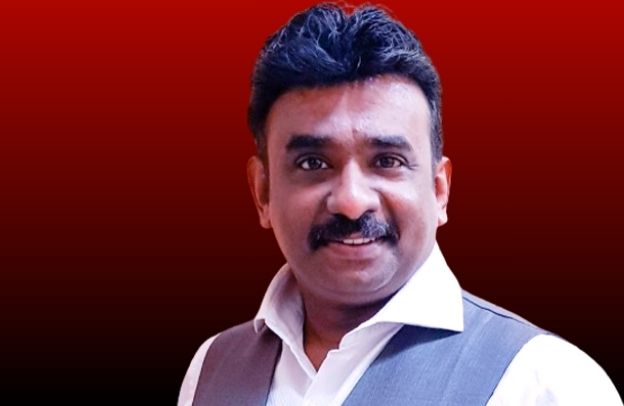
The Padova University, Screens Pan-Africanism: Testing Ideas on Reality, A Documentary by Obehi Ewanfoh
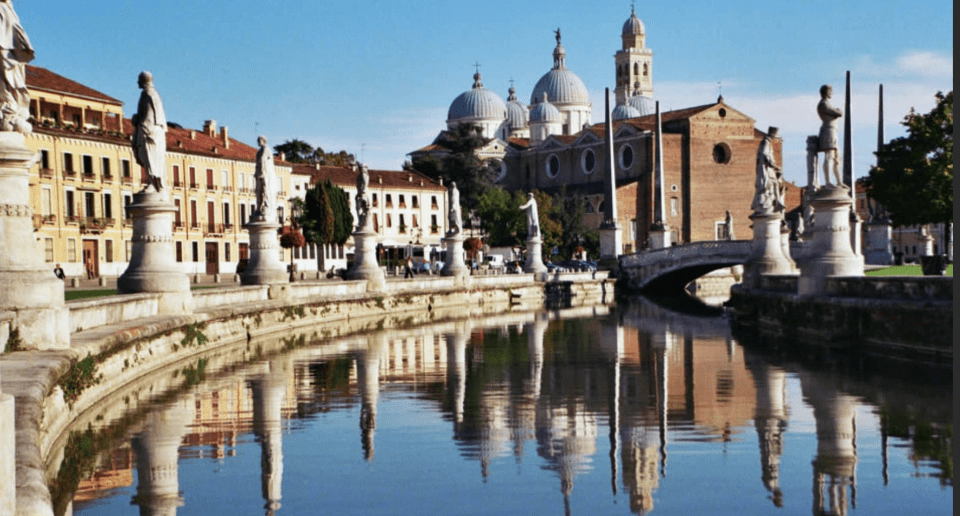
As the African proverb reminds us, “A tree without roots cannot stand against the wind.” This timeless wisdom took on a powerful, living form on May 22, 2015, at the University of Padua, Italy. That evening, a collective of African students gathered not just to watch a film, but to confront their own history through Obehi Ewanfoh’s documentary, “Pan-Africanism: Testing Ideas on Reality.”
Learn How to Leverage Your Story through our Story To Asset Framework.
This was no mere cinematic screening; it was a moment of reflection for a generation of young Africans, the “Second Generation”, navigating the complex, often painful friction of life in Europe.
For many caught in the tug-of-war of a dual identity, the evening became a site of transformation. Through the Story-to-Asset framework, these young voices began a critical shift: moving from being “Subjects” of European assimilation to becoming “Sovereigns” of their own legacy.
See student’s comment after the film screening (In Italian)
This article explores those testimonials and the journey of reclaiming a story that was always ours to tell. But why is this even important?
Why Should You Care About Pan-Africanism?
Pan-Africanism is far more than a political theory; it is a sacred recognition that every person of African descent, whether walking the streets of Lagos, London, or Salvador, is bound by a shared history and a collective destiny.
Born from the fires of resistance against the Transatlantic slave trade and the scars of colonialism, this movement was designed to heal the fragmentation of a people.
It is a defiant refusal to accept the borders drawn by others, asserting instead that the dignity and progress of one African soul are inextricably tied to the liberation of all Black people worldwide.
This vision has evolved from the revolutionary intellectualism of giants like W.E.B. Du Bois, Marcus Garvey and Kwame Nkrumah into a modern, practical engine for global power. Today, it breathes through the African Union’s pursuit of a “borderless Africa” and the economic promise of the AfCFTA.
Yet, its most potent strength lies in the cultural renaissance it ignites, a homecoming of the mind that celebrates indigenous knowledge and shatters external narratives.
See also The “Foreign” Paradox: Turning 2.5 Million Italian Stories into Sovereign Assets
For the Diaspora, Pan-Africanism is the bridge back to self, providing the sovereign foundation needed to reclaim our heritage and dictate the continent’s future on our own terms.
The Crisis of the “Rootless Tree”
For many young Africans born or raised in Italy, the struggle for identity is a daily experience of “Institutional Tenancy.” They inhabit a cultural space that often categorizes them as perpetual “guests” or “immigrants,” despite having spent their formative years in Italian schools and neighborhoods.
Simultaneously, they often feel a haunting disconnection from their ancestral heritage, a “Trapped Expertise” of culture that they do not know how to access.
One student of Nigerian origin, reflecting on his own internal struggle, shared a sentiment that resonated with many in the room: “Until now, I saw Pan-Africanism as something distant… things I didn’t think about, didn’t imagine… I tried more to mirror myself in the culture in which I grew up, instead of the culture of my origin”.
This is the quintessential “Pain Point” of the Diaspora: a fragmented identity where the individual feels forced to choose between the territory they inhabit and the bloodline they carry.
The documentary served as a mirror, forcing these students to confront the reality that to build a sustainable future, they must first reach back and fetch the truth of their past.
Data-Driven Insight: Pan-Africanism as a Practical Tool for Sovereignty
The testimonials moved beyond the “Beautiful Idea” of Pan-Africanism into the “Decoding Formulas” required for modern survival and growth. Through the lens of the Story-to-Asset™ framework, the students identified three core pillars of a sovereign identity:
1. The Identity Asset: From Shame to Redemption
A student from Cameroon was deeply moved by the documentary’s deconstruction of identity labels. She argued that reclaiming one’s visual and cultural markers is the first step toward self-ownership:
“What struck me most was the point about identity… we must have our own identity… we must not be ashamed of being African, not be ashamed of being called ‘black,’ of having hair that stands up, of wearing colored clothes… we must not be ashamed of who we are”.
2. The Responsibility Formula: Internal Accountability
A Nigerian Italian student provided a sharp analysis of the documentary’s message regarding the “Internal Barriers” of the continent. He noted that waiting for external salvation is a symptom of “Economic Tenancy”:
“I agree… that before Africa, there are the Africans themselves… if we among ourselves cannot collaborate, cannot support each other, it makes no sense that we wait then for people or entities from abroad”.
3. The Cultural Bridge: Intentional Reconnection
A student from Angola, having lived in Europe for six years, noted that his displacement actually acted as a catalyst for cultural reclamation. He observed that even in Africa, the “capital city mentality” often erases traditional roots, making the Diaspora journey a unique opportunity for “Rescue”:
“I feel the need because I believe in Pan-Africanism and I believe that Africa will change if we Africans love ourselves more… we will return more to our culture, our identity, which is that of being a unique people, culturally united”.
The Sovereign Pivot: Protecting the Family’s Future
The University of Padua screening proved that when we codify our stories, we create a “Fortress of Peace” for the next generation. The “Second Generation” students highlighted that they often ask questions about their identity: “Who am I? Italian? Nigerian? How should I behave? How should I grow?” to which they find it difficult to get answers.
The documentary provided the “Sovereign Pivot” by shifting the responsibility back to the foundational unit of society: the family. One student made a direct appeal to parents:
“I would like to bring a message to all families, to fathers and mothers: it is necessary that in every family one teaches a bit of what is African culture to their children. We must never forget where we come from. If we forget where we come from, then obviously it will be difficult to know where we will end up”.
You might also like this What Granville T. Woods Teaches Us About Ownership, Genius, and Immortalizing Your Legacy
This is the ultimate answer to what we do in AClasses Academy. By documenting these events and presenting these “Visual Tales” in universities, Obehi Ewanfoh is providing the “Root System” that keeps the Diaspora tree from falling.
From Talk to Actionable Assets
The evening concluded with the realization that Pan-Africanism must transition from an “intellectual talk” to practical action. As one student noted:
“I think it is not just a thing of talking, but also in our gestures, in our way of doing, we must prove it… for example by coming to meetings like these where together we can put ideas and also give ideas… that we think can make our Africa grow”.
At AClasses Academy, we take these “ideas for growth” and codify them into Sovereign Assets. We help the Diaspora leader move from the “Identity Crisis” witnessed in Padua to the “Identity Capital” required to lead global industries.
Conclusion: Reclaiming the Root
The testimonials from the University of Padua serve as a permanent record of a community reclaiming its genius. As the first student noted at the beginning of the evening:
“A tree without roots falls; it is a thing that must be carried forward… it struck me a lot and I will return home with much to think about”.
We invite you to stop being a “Subject” of someone else’s territory and start being a “Sovereign” of your own bloodline. The roots are there; it is time to cultivate the garden.