The Sierra Leone Civil War, Causes And Consequences More Than 20 Years Later – Buckarie Dumbuya
The history of Sierra Leone is often reduced to a single, haunting image: the “Blood Diamond.” While Hollywood has captured the shimmering surface of this narrative, the reality of the nation’s eleven-year conflict (1991–2002) is a far deeper ocean of institutional wisdom, psychological resilience, and political lessons. To move from being a consumer of history to an architect of the future, we must look beyond the cinematic tip of the iceberg and excavate the roots of sovereignty.
Learn How to Leverage Your Story through our Story To Asset Framework.
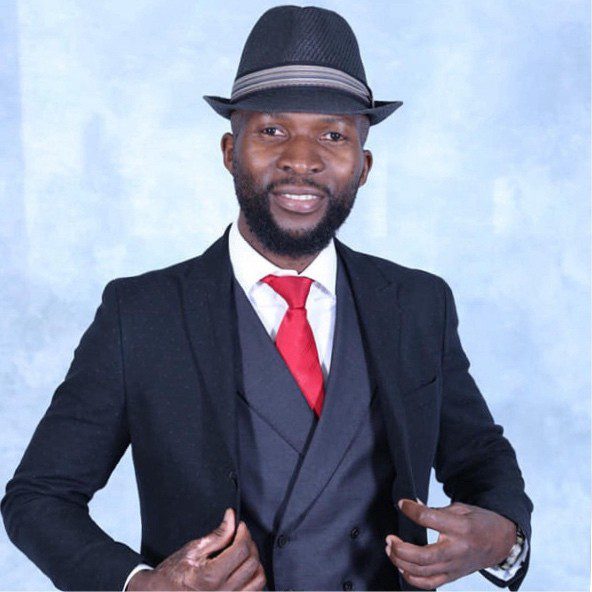
In a profound episode of The Obehi Podcast, Buckarie Dumbuya, a man designed and nurtured in Sierra Leone, developed in the United Kingdom, and now identifying as a “Global Citizen”, joins Obehi Ewanfoh to peel back the layers of this history.
See the full interview with Buckarie Dumbuya
Dumbuya is not just a survivor; he is a Bridge of Inspiration and Transformation. As a business psychologist and design thinking expert, he applies a “Master’s Workshop” lens to the trauma of his homeland, teaching us that the ultimate “Signature Asset” is not found in the soil, but within the mindset.
The Architect of Transformation: Meet Buckarie Dumbuya
Buckarie Dumbuya’s story is a living testament to “Self-mastery.” Having lived through the horrors of the civil war, including being chased by rebels and witnessing the systematic destruction of his community, he has faced the darkest corners of the human experience.
He recalls the “National Stadium” in Freetown as a place of refuge where his family huddled, hearing that neighbors, people they once knew, were calling for his father’s head. These are not just memories; they are the raw materials from which he has built a life of global influence.
Today, Dumbuya helps businesses and individuals discover “Inner Success.” He believes that once you are successful from within, your outward effect becomes a success for the world.
See also Leadership – From Individual Success to Institutional Legacy
With a background spanning Design Innovation, Management, and Psychology, he bridges the gap between ancestral resilience and modern professional relevance. He is a child of God, an inspiration, and a strategist who refuses to be defined by his past but rather uses it as a map for collective growth.
Cultural Archaeology: The Roots of Fragmentation
To understand the Sierra Leone Civil War, we must perform “Cultural Archaeology.” The war did not begin with the first gunshot in 1991; it began with the slow erosion of the “Generational Accord.”
Dumbuya points back to the era of independence in 1961. While the nation celebrated, seeds of “Narrative Fragmentation” were being sown. Political disputes between major parties like the SLPP and APC created a culture of nepotism and corruption that eventually left the door ajar for external enemies.
“If there is no enemy within, the enemy outside can do us no harm.”
This ancient African proverb serves as the foundation for Dumbuya’s analysis. He challenges the “millions of Africans in the diaspora” to recognize that while foreign interests and resources like diamonds played a role, they only gained traction because the internal “Mission Clarification” of the leadership had failed.
Corruption is not merely a political act; it is a mindset of scarcity that betrays the Ubuntu values of connection and collaboration.
The Cost of the “Fixed Mindset”
The consequences of the war are visible in the physical landscape of Sierra Leone, but the most devastating impacts are the “Invisible Liabilities”:
- The Educational Void: The war forced a generation out of the classroom. Dumbuya, himself recalls gunshots interrupting national exams. When a nation loses its ability to educate its youth, it loses its “Signature Asset”, its intellectual property.
- Psychological Trauma (PTSD): More than 20 years later, many are still operating in “Survival Mode.” Dumbuya speaks candidly about his own journey with Post-Traumatic Stress Disorder, noting that a sudden sound can still trigger the brain’s “Hippocampus” into a state of alarm.
- Economic Depreciation: War drives away private sectors. When markets and firms flee, the “Gross Domestic Product” (GDP) is replaced by poverty. This is the ultimate “Hope Marketing” failure, relying on the hope of aid rather than the activation of local genius.
The Story to Asset Framework™: From Roots to Relevance
How do we transform this historical trauma into a legacy-defining asset? Dumbuya’s methodology aligns perfectly with the AClasses Academy philosophy of “Sovereign Learning.”
Phase 1: Mission Clarification (The Golden Thread)
We must solve the “Narrative Fragmentation” by looking at our history with maturity. As Obehi Ewanfoh noted during the dialogue, we cannot simply play the victim. Maturity means acknowledging our role in the story.
If we don’t own our story, someone else will write it for us. The “Golden Thread” for Sierra Leone, and for the Diaspora, is the realization that we are part of a chain of generations. Our decisions today affect those yet unborn.
Phase 2: Message Crafting (The Signature Asset)
Innovation is the key to turning unscalable expertise into a “Signature Asset.” Dumbuya uses “SWOT Analysis” (Strengths, Weaknesses, Opportunities, Threats) not just for businesses, but for the soul.
- Strengths: Our ancestral roots and natural resources.
- Weaknesses: The “Fixed Mindset” and lack of visionary leadership.
- Opportunities: Using current crises as a catalyst for new, innovative systems.
- Threats: External forces that we allow to influence our peace.
Phase 3: Message Activation (The Client Acquisition Machine)
In a modern context, “Message Activation” means moving from “Hope Marketing” to building a “Sovereign Machine.”
For the entrepreneur in the Diaspora, this means building businesses that are not dependent on external validation but are rooted in “Self-mastery.”
The Master’s Workshop: A Call to Sovereign Learning
A recurring theme in the conversation between Dumbuya and Ewanfoh is the concept of “Sovereign Learning.” We are told that education is power, but Dumbuya corrects this: Education is only the foundation; the application of knowledge is power.
We must “Own our power” by refusing to conform to the patterns of the world. This is the “Master’s Workshop” approach, treating your life and business as a sacred craft.
See also Exposing the Truth by Noelle Mapianda: How Financial Fraud Works in Africa and How to Stop It
Whether you are in Freetown or London, your “Internal Affairs” determines your external reality. Success is a “Dichotomy”, it is born in the darkness of the “Soil” (the internal mindset) before it ever manifests as a “Crop” (external wealth).
Legacy Building: Where Do We Go From Here?
To heal the nation and the self, we must embrace “Reflection and Action.” We cannot solve our problems with the same thinking we used when we created them.
- Talk to Heal: As Obehi points out, the act of talking is a process of healing. We must discuss our feelings and our history to find the solutions hidden within the problems.
- Shift from Ambition to Inspiration: Ambition is often a desire for outside success, which can lead to destruction. Inspiration is a spirit-led vision that builds legacy.
- Organization of Thought: Africans are not lacking in intelligence; we are lacking in the organization of our collective wisdom.
Your Next Step: From Consumer to Architect
The story of the Sierra Leone Civil War is a mirror for every high-level professional and entrepreneur in the African Diaspora. It asks: Are you a consumer of your circumstances, or are you the architect of your legacy?
At AClasses Academy, we have curated over 2,000 articles and 1,000 interviews on The Obehi Podcast to help you bridge the gap “from roots to relevance.” We invite you to move beyond trading time for money and start building your “Signature Asset.”