The Life & Legacy Of Odumegwu Ojukwu – The Biafran Leader during the Nigerian Civil War | Michael Ukwuma
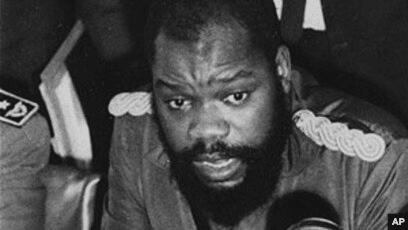
In the grand theater of African history, few figures loom as large or as complexly as Chukwuemeka Odumegwu Ojukwu. Often simplified by history books as merely the face of a secessionist movement, Ojukwu was, in reality, a man of profound intellectual depth, a product of dual worlds, and a leader who attempted to bridge the gap between ancestral roots and modern professional relevance.
Learn How to Leverage Your Story through our Story To Asset Framework.
To understand the story of Nigeria, one must understand the story of the man who refused to be a shadow of his father’s immense wealth, choosing instead to become the architect of a sovereign dream.
On a recent episode of The Obehi Podcast, Michael Ukwuma, a distinguished Human Rights Educator and Global Operations Leader, joined the conversation to peel back the layers of Ojukwu’s life.
See the full podcast interview with Michael Ukwuma
Ukwuma, whose own mission centers on creating the next generation of African leaders, brings a “Narrative Empowerment” lens to Ojukwu’s biography. He argues that Ojukwu’s life is not just a lesson in history, but a great example in Self-mastery and Legacy Building for the modern African professional.
The Man Behind the Uniform: Roots of a Rebel
To truly connect with the points shared by Michael Ukwuma, one must first connect with the man himself. Ukwuma is a Development Sector Leader with over a decade of experience designing and scaling program operations across Africa.
As the founder of SEVICS and a Country Lead for HundrED, his expertise lies in turning complex strategies into measurable execution. When he speaks of Ojukwu, he isn’t just recounting dates; he is analyzing the organizational transformation of a man who moved from the “soft life” of an Oxford graduate to the rugged trenches of a civil war.
See also Chukwuemeka Emeka Odumegwu Ojukwu (Former Governor of Eastern Region, Nigeria) Call from Exile
Ukwuma describes Ojukwu as the “ideal Nigerian” who spent his formative years in the North, spoke flawless Yoruba, and possessed a British polish that made him a “white man in a black skin.”
This unique background created what we called the “Generational Accord,” a bridge between his elite upbringing and his deep-seated responsibility to the common man. He was a man who slapped a colonial teacher at King’s College not out of arrogance, but as a visceral reaction against the indignity of the colonial system.
Institutional Wisdom: From Privilege to Service
The first major lesson in Ojukwu’s methodology is what we at AClasses Academy call Mission Clarification. Ojukwu was the son of Sir Louis Ojukwu, the richest man in Africa at the time. He could have easily coasted on his father’s laurels, yet he chose a path of Sovereign Learning.
He rejected his father’s wish for him to study law, opting instead for modern history at Oxford. He realized that while law taught one how to argue within a broken system, history taught one how to build a new one.
This drive to be his own man led him to the Nigerian Civil Service and eventually the Army. Ukwuma recounts a pivotal story from Ojukwu’s time as an administrative officer in Udi. Despite his Oxford degrees and his father’s Rolls-Royce, Ojukwu would take off his suit and help the local villagers dig gutters and build bridges.
This was Message Crafting in its rawest form. He wasn’t just a leader by title; he was a leader by labor. He understood that to own your story, you must first walk the soil of the people you intend to lead.
The Conflict of Vision: The Road to Biafra
As we analyze the “Golden Thread” of Ojukwu’s life, we find a man constantly seeking Message Activation. After the 1966 coups and the subsequent pogram against Easterners, Ojukwu found himself thrust into a role he did not initially seek: the leader of a fledgling nation.
The conflict between Ojukwu and Yakubu Gowon was more than a military struggle; it was a clash of philosophies. Ojukwu believed in a negotiated, restructured Nigeria, while the central government, backed by colonial interests, demanded total submission.
The declaration of the Republic of Biafra was not an act of “Hope Marketing.” It was a calculated, albeit desperate, attempt to protect a people from extermination. Ojukwu’s leadership during the three-year war demonstrated a repeatable methodology of collective growth.
See also 50 Years Secrete Messages From The Biafran War That Has Remain Hidden Till Now
He formed councils of elders, listened to the wisdom of the common person, and turned a fragmented group of professionals and tradesmen into a “Client Acquisition Machine” for freedom.
The Story to Asset Framework™ in Ojukwu’s Journey
Obehi’s proprietary system, developed over ten years of research and 1,000 interviews, perfectly mirrors the phases of Ojukwu’s transformation:
- Mission Clarification: Ojukwu identified the “Golden Thread” of his life as Justice. He moved beyond being the “rich man’s son” to becoming a servant of the people.
- Message Crafting: He turned his unscalable military expertise into a Signature Asset—the Ahiara Declaration—which provided a philosophical framework for African sovereignty.
- Message Activation: He moved from the theoretical “hope” of a fair Nigeria to the practical “activation” of a defense system that held a much larger, better-equipped army at bay for three years.
The Generational Anchor: Lessons for the Diaspora
For the millions of Africans in the diaspora, Ojukwu’s life offers a Generational Anchor. He proves that your background is a tool, not a cage.
Whether you are a high-level entrepreneur in London or a professional in New York, the lesson is the same: Own your story. Ojukwu’s return from exile in 1982 to a hero’s welcome showed that a legacy built on genuine connection with the people is indestructible.
His refusal to compromise on principles, even at the cost of his inheritance, is the ultimate example of Self-mastery. He didn’t just consume the British education he was given; he used it as an architect to design a vision of a restructured, equitable Africa.
Conclusion: From Consumer to Architect
Chukwuemeka Odumegwu Ojukwu remains a “Master’s Workshop” of leadership. He reminds us that true sovereignty comes when we stop trading our time for money and start building assets that define our legacy.
His life was a journey “from roots to relevance,” proving that the African diaspora possesses the institutional wisdom to reshape the continent.
See also General Murtala Muhammed, The 4th Head of State of Nigeria – 1975 To 1976
At AClasses Academy and The Obehi Podcast, we have documented over 1,000 such stories to help you move from being a consumer of your circumstances to an architect of your destiny. Ojukwu’s story is a call to action: will you remain a passenger in your life, or will you design the asset that tells your story for generations to come?
Are you ready to turn your wisdom into a legacy that withstands the storm?
Book your free 15-minute Legacy Strategy Call today to design the asset that will tell your story and position you as the ultimate authority in your industry. Book Your Free 15-Min Legacy Call Now