The Sculptor and the Stranger: Marco Danielon on Veronetta – New Faces Of a Neighborhood
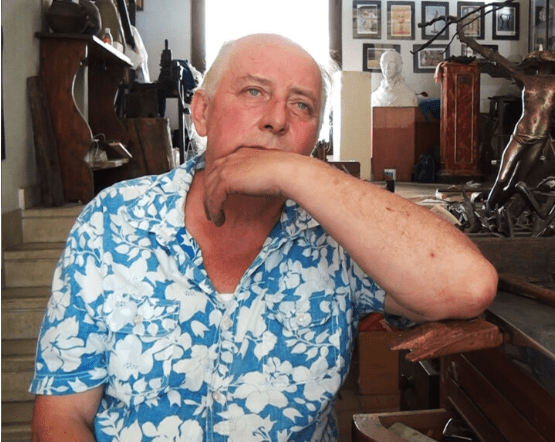
For more than ten years, the cobblestone streets of Verona and the industrial settings of Northern Italy have provided a dynamic environment for Obehi Ewanfoh‘s work. Initiated in 2012 as a local filmmaking endeavor, this project has evolved into an international campaign focused on Institutional Sovereignty. Marco Danielon was among the earliest contacts interviewed during the second phase of the project, which was titled Veronetta – New Faces of a Neighborhood.
Learn How to Leverage Your Story through Our Story To Asset Framework.
The Journey began as an inquiry into the African experience in Northern Italy, but it has since blossomed into a multifaceted powerhouse.
Through the AClasses Academy and the Obehi Podcast, Ewanfoh is teaching the Diaspora to exit the fragile state of “Economic Tenancy”, relying on structures they do not own and instead construct a Fortress of Peace.
By converting narrative into equity, Ewanfoh is proving that the African story is the greatest asset the community possesses.
Excavating the Soul of Veronetta: The Testimony of Marco Danielon
Marco Danielon is a local artisan and sculptor who has lived in the Veronetta district of Verona since 1983, and his observations provide a rare, high-resolution mirror into the friction and fusion of immigration in Veronetta.
See also Reinforcing The Architect of Resilience in the Diaspora: Ethiel France on The Color of Our Children
Through Ewanfoh’s lens, Danielon is not just a witness; he is a philosopher of the street. He describes the pre-migration Veronetta as a world of “stagnant water”, a place where identity was localized, protected, and ultimately brittle.
“If I thought of the neighborhood of Veronetta… without immigration, it would immediately come to mind that it would be a nightmare,” Danielon reflects in the transcripts.
“A nightmare because it would be a territory where the water would be stagnant. There would be no flow of living water.”
Ewanfoh uses Danielon’s testimony to illustrate Phase 1: Excavation of his framework. By identifying the “stagnation” of the host society, he reveals why the arrival of the Diaspora is not a burden, but a vital infusion of energy.
A Lesson in Misunderstood Genius
Perhaps the most poignant moment in the archives of The Journey is Danielon’s account of a young Cameroonian man in the courtyard of the San Nazzaro church. For two days, the young man knelt on the ground, meticulously removing weeds from between the ancient stones.
The local response was a textbook example of what Ewanfoh calls the “Security Mindset.” The church authorities did not see a contributor; they saw a potential liability. Danielon recalls the chillingly dismissive response from a church official:
“Leave he there, you’ll see that sooner or later he will have need of us and will come to ask us… he will come for alms.”
They could only frame the young man’s presence through the lens of deficiency. However, when Danielon finally spoke to him, the Translation (Phase 2) occurred. The man was not a beggar; he was a medical student on a scholarship, a Christian who simply wanted to care for a house of God.
Ewanfoh highlights this story as a warning to the Diaspora: when you do not own your narrative, your gratuitous gifts will be translated as “needs” or “begging.” The medical student was operating from a place of Sovereignty, but the environment was conditioned to see him as an “Economic Tenant.”
The “Weak Identity” and the Fear of the Other
Ewanfoh’s research delves deep into the psychology of the host society. Danielon observes that the difficulty in dialogue between Italians and migrants stemmed from what he calls a “weak identity.”
He suggests that the local population was built on an identity so self-centered that any encounter with the “other” felt like a threat of erasure.
“The dialogue had difficulties in this transition… because we are built on a very personal identity, centered on ourselves,” Danielon notes.
“To meet a boy of color at that moment meant the fear of getting involved… and losing a bit of what is ‘us,’ let’s say our identity. Because we have a weak identity, there’s nothing to be done about that.”
This is where Ewanfoh’s Phase 3: Alignment becomes critical. For the migrant to thrive, they must understand that the friction they encounter is often not a reflection of their own lack, but a reflection of the host society’s internal fragility.
By aligning one’s personal mission with this reality, a member of the Diaspora can navigate the “Neighborhood Lab” without losing their sense of self.
From “Total Rebellion” to the Midnight Party
The research records a visceral example of this alignment in action. When a Ghanaian family moved into Danielon’s apartment building, the reaction from the Italian residents was “total rebellion.”
The initial attempts at interaction were clumsy and rooted in a hierarchy of pity, the Italians offered used clothes, which the Ghanaian mother firmly rejected.
The breakthrough, Phase 4: Creation, happened not through a formal integration program, but through the “Desire to Live.” On New Year’s Eve, the Ghanaian family hosted a celebration that broke the silent, rigid norms of the building.
“At a certain point… there was a party in the apartment next door, of those songs, of those screams… We looked at each other and said, ‘Let’s go inside too.’ We knocked and they opened the door and we had the party until 4 in the morning… What I discovered is this: the desire to live. Africa brings us the desire to go forward, to live. To not have fear.”
Ewanfoh posits that this “Vitality” is one of the Diaspora’s greatest intangible assets. When the Diaspora stops trying to “fit in” and instead shares the fullness of their cultural joy, they transform the territory around them.
The Legacy: AClasses Academy and the Obehi Podcast
Over the last decade, Obehi Ewanfoh has taken these localized stories from Verona and scaled them into a global infrastructure for self-improvement. He recognized that the challenges faced by the medical student in San Nazzaro or the Ghanaian family in Veronetta were universal.
See also Verona University Screens Veronetta: The New Face of a Neighborhood, A Documentary By Obehi Ewanfoh
Through the Obehi Podcast, he has interviewed over 1,000 protagonists of the Diaspora experience, creating a massive digital archive of resilience.
His books act as manuals for this new “Sovereign” way of living, and his non-profit, WeDiasporan, serves as a community hub for those navigating the complexities of migration.
However, his most strategic contribution is the AClasses Academy. Here, the Story to Asset™ Framework is taught as a formal discipline. Ewanfoh mentors entrepreneurs, creators, and professionals on how to:
- Excavate their origin stories from the “red soil” of their heritage.
- Translate their resilience into brand messages that command premium value.
- Align their work with long-term legacy goals.
- Create high-impact content that establishes authority.
- Establish a Fortress of Peace—a state of institutional and psychological independence.
The “So What?”: Owning the Genius
The ultimate goal of Ewanfoh’s decade-long journey is to answer one question for the reader: “How does this help me own my genius and protect my family’s future?”
Ewanfoh’s work argues that the Diaspora must stop viewing themselves as “foreigners” or “migrants” and start viewing themselves as Narrative Strategists.
As Danielon noted, a trip to a diverse market in Veronetta is a “trip around the world without spending a cent.” This diversity is a marketplace of ideas, and those who know how to package their story are the ones who will own that market.
Every interview transcript, every video screened at the University of Padua, and every podcast episode is a brick in the “Fortress of Peace.” Ewanfoh has moved beyond the “Nightmare of Stagnant Water” into a future where the African Diaspora is the architect of its own institutional reality.
“How can one be indifferent? How can we promote ourselves further in the moments when we encounter the tears of the other?” Danielon asks in his final reflections. “The human being, the dignity, must be at the center… because another is like me.”
Conclusion: Joining the Journey
Obehi Ewanfoh has spent ten years proving that our stories are not just memories—they are equity. From the early research in 2013 to the international reach of AClasses Media today, his work serves as a bridge for anyone seeking to transition from “Economic Tenancy” to “Institutional Sovereignty.”
See also The New Face of the Neighborhood: A Screening and Dialogue on “Veronetta” in Gorizia
The journey is continuous. It is a process of moving from the desert to the university, from the “weeds” to the “sculpture.” For those ready to stop being a footnote in someone else’s history and start becoming the protagonist of their own, the path is clear.
Take the Next Step
The Story to Asset™ courses at AClasses Academy are the definitive guide to this transformation. We invite you to explore the legacy of The Journey and begin building your own Fortress of Peace.