The Political Mask of Faith: Rev. Dr. Charles Erhabor on Murdered in the Name of God
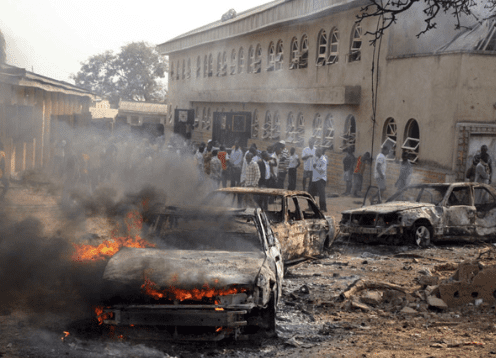
The narrative of religious conflict in Nigeria is often presented to the global community as a simplistic clash of civilizations, a binary struggle between the Cross and the Crescent. However, for those who dig beneath the surface of the headlines, a more complex and calculated reality emerges.
Learn How to Leverage Your Story through our Story To Asset Framework.
Obehi Ewanfoh, a Storytelling Legacy Consultant and Narrative Strategist, has dedicated over a decade to unearthing these hidden narratives. His landmark research project, “Murdered in the Name of God,” was born out of a necessity to understand the recurring cycles of violence in Northern Nigeria and their implications for the African Diaspora.
Through his work, Ewanfoh moves the conversation away from “Economic Tenancy” where Africans are subjects of external narratives toward “Institutional Sovereignty,” where the community owns its history and its peace.
Background On Religions Violence in Nigeria
The prevailing international narrative often reduces Nigeria’s instability to a “Christian genocide,” a claim bolstered by recent U.S. airstrikes on Christmas Day 2026 targeted at Islamist positions.
However, a deeper analysis reveal a humanitarian emergency that defies simple religious categorization. UN Resident Coordinator Mohamed Malik Fall emphasizes that while attacks on Christian worshippers, such as the abduction of 160 people in Kaduna this January are horrific, the violence is “untargeted” and ubiquitous.
In reality, the vast majority of the 40,000 people killed since the insurgency began are Muslims, often attacked within their own mosques. This indicates that the violence is not merely a clash of faiths, but a systemic breakdown of security affecting all Nigerians regardless of creed.
As Obehi Ewanfoh’s research suggests, when we mislabel political and criminal chaos as purely religious, we fail to address the root “invisible forces” that profit from a destabilized state.
The human cost of this multi-fronted conflict has transitioned millions of Nigerians into a permanent state of “Economic Tenancy,” where they own neither their safety nor their livelihoods.
Currently, Nigeria grapples with 3.5 million internally displaced persons (IDPs) nearly 10% of all displacement across the African continent. This crisis has moved beyond the Northeast into the Northwest, where “banditry” has displaced another one million people, and into the Middle Belt, where climate-driven clashes over land persist.
The economic fallout is staggering: 36 million Nigerians are projected to face food insecurity in the coming months, while funding for humanitarian aid has collapsed from $1 billion annually to less than $200 million in 2026.
For the African Diaspora, these statistics are a clear call. We cannot remain tenants of global aid systems that are shifting focus to other regions; we must instead build sovereign institutions and narrative strategies that protect our communities from the inside out.
The Research: Unmasking the “Invisible Force”
In 2013, Ewanfoh’s research took him from his base in Italy back to Nigeria after conducting a series of interviews to better understand what was going on. See other reports in this series: Murdered in the Name of God.
One of the pivotal voices in this investigation was Rev. Dr. Charles Erhabor of Victory Christian International Ministries in Verona.
See also Religion And Spirituality in Ancient Kemet with Dr. Kiatezua Lubanzadio Luyaluka
As a leader within the Nigerian Diaspora, Dr. Erhabor provided a unique vantage point: the ability to see Nigeria through the lens of international comparison and the deeply personal concern of a son of the soil.
According to Dr. Erhabor, the “religious” nature of these conflicts is often a carefully constructed façade. He noted:
“There is a political undertone. There are certain powerful forces that are behind this. People are behind this. The only way they can paint the ugly picture to the world and to get the attention of the whole world is to make it religious, to make it look like Muslims are fighting Christians and Christians are fighting Muslims.”
This observation aligns with the reality on the ground even today in 2026. While headlines frequently focus on sectarian labels, the data tells a story of systematic destabilization.
According to recent reports, while Christian communities in the Middle Belt face horrific attacks, the majority of the over 40,000 people killed in the long-standing insurgency in the Northeast have been Muslims. The violence is not a product of faith; it is a product of power dynamics and resource competition.
The Reality of Coexistence
Dr. Erhabor emphasized that the daily lived experience of Nigerians contradicts the “war of religions” narrative:
See also Talking About Religion, Pluralism, and Democracy: Kofi Annan Series
“We have a lot of nations in the world where Muslims and Christians are living together in peace, not just in Nigeria alone… If we can live together with our work neighbors peacefully, we do business together, we go to the marketplaces; we buy from the same traders, what stops us from living together in peace and harmony?”
The Silence of Leaders and the Culture of Fear
A significant finding in Ewanfoh’s research is the paralysis of leadership. Dr. Erhabor highlighted a troubling trend: both political and religious leaders often remain silent, either out of fear or complicity.
- The Law Enforcement Gap: Citizens are frequently told to report “Strange movements” to agencies, yet there is a profound lack of trust. The perpetrators of violence often live within the communities they haunt.
- The Faceless Enemy: One of the greatest hurdles to peace is the “faceless” nature of insurgent groups. As Dr. Erhabor pointed out:
“The government is confused; the people are confused because you don’t dialogue with faceless people. If I have to dialogue with you, I must know you… but this set is faceless. You want to use force, innocent lives, the blood of innocent people will be shared because you are fighting an invisible force.”
In 2026, this “invisible force” has evolved. Groups like ISWAP have escalated their tactics, utilizing armed drones and sophisticated technology to bypass traditional security.
The government’s response, often shifting between military force and calls for dialogue, remains hampered by what Dr. Erhabor calls a lack of sincerity.
The Situation on the Ground in 2026
The research Ewanfoh began years ago remains more relevant than ever. Recent data from the HumAngle Security Tracker and international observers highlights a devastating toll:
- Fatality Statistics: In 2025 alone, thousands of fatalities were documented across Nigeria. The North Central region (Middle Belt) has become a “slaughterhouse,” with over 90,000 Christians displaced in recent months due to attacks on farming communities.
- Economic Impact: The violence has moved from urban centers to the “frontlines” of survival, the farmlands. Militias now harvest the crops of displaced farmers, effectively using hunger as a weapon of war.
- A National Emergency: In early 2026, the Nigerian government declared a national security emergency. Yet, as Dr. Erhabor warned years ago, until the enablers and sponsors of terror are identified and prosecuted, these declarations remain empty.
For the African Diaspora, this instability creates a state of “preoccupation.” Many, like Ewanfoh himself, moved to Europe but remain tethered to their fatherland. Dr. Erhabor captured this sentiment perfectly:
“I’m highly preoccupied, highly preoccupied because if you are not sure of your safety in your own country… for people like us who have not abandoned our fatherland, it’s worrisome.”
From Economic Tenancy to Institutional Sovereignty
Obehi Ewanfoh’s work through the Obehi Podcast which has now surpassed 1,000 episodes and AClasses Academy emphasizes that peace is a prerequisite for sovereignty. If a community does not own its safety, it cannot own its economic future.
“Economic Tenancy” is the state of living in a system where you pay “rent” but own nothing, no land, no narrative, and no security. To transition to “Institutional Sovereignty,” African professionals and business owners must:
- Own the Narrative: Stop accepting the “religious war” label and start identifying the political and economic drivers of conflict.
- Build Transnational Institutions: The Diaspora must move beyond sending remittances for consumption and start building institutions that protect their interests.
- Practice Narrative Strategy: Use storytelling to bridge gaps. As Dr. Erhabor suggested, faith should be a matter of personal conviction and prayer, not a reason for conflict:
“To try to make somebody believe in what you believe in by fighting is not in any way from God whether Muslim, Christian, pagan or otherwise.”
Practical Application for Business Owners and Professionals
Ewanfoh’s “Story to Asset” framework isn’t just for history; it’s for the modern marketplace. Here is how you can apply these insights to your professional life:
| Strategy | Actionable Step |
| Conflict Resolution | In your business, identify if a “clash of personalities” is actually a “clash of systems.” Fix the system (the politics) to stop the fighting. |
| Community Trust | Build “Interfaith/Intercultural” networks. Diversity in your professional circle is a hedge against the radicalization of thought. |
| Sovereign Branding | Ensure your business story is not being told by your competitors. Own your “why” so others cannot misinterpret your “how.” |
| Risk Assessment | Understand that “faceless” problems in a company (like poor culture) cannot be fixed with force. They require deep investigation and sincerity. |
The Power of Sincerity
The research concludes that the “menace” of division will only stop when there is sincerity between the governed and the governors. For the professional, this means operating with high transparency. As Dr. Erhabor concluded:
“The government should be sincere; we governed should also be sincere and this menace will stop. Until we are all sincere, until we are all determined, we will continue to wallow in this mess.”
See also The Mind as a Stronghold: A Black Perspective on Faith, Trauma, and Self-Actualization
Conclusion: Building a Legacy of Peace
Obehi Ewanfoh’s journey from the research of “Murdered in the Name of God” to interviewing global leaders on the Obehi Podcast highlights a singular truth: Your story is your most valuable asset. When you allow others to write your story as a victim of religious war or a tenant in a foreign land, you lose your power.
By reclaiming the narrative, the African Diaspora and the Global Majority can move from being observers of their own tragedies to architects of their own institutions. Peace is not just the absence of war; it is the presence of justice and the ownership of one’s future.
Are you ready to stop being a tenant in your own industry and start building a sovereign legacy?
Obehi Ewanfoh helps professionals and business owners transform their unique experiences into a “Story to Asset” framework that stands for the test of time and competition. Book Your Free 15-Min Legacy Call Now