How Storytelling and Community Action Can Solve Africa’s Sickle Cell Crisis – George Oche
How will storytelling and community action solve Africa’s sickle cell crisis and how would that translate to your current life even in other areas today? Many high-level professionals and founders in the African diaspora operate as “Genius-for-Hire” laborers. They trade their hours for money, building value on digital or corporate platforms they do not own. This state of High-Value Tenancy means that when they stop working, their institutional wisdom is lost.
Is your story a liability or an asset? Take the 3-Minute Sovereign Audit to see if your legacy is secure.
Reclaiming your reach heritage requires turning your real-world experience into a Signature Asset that creates lasting change. By looking at how grassroots leaders solve deep cultural and health crises, we can learn to own our power, protect our communities, and move from information consumers to real architects of legacy.
The Master’s Workshop: Meet George Oche
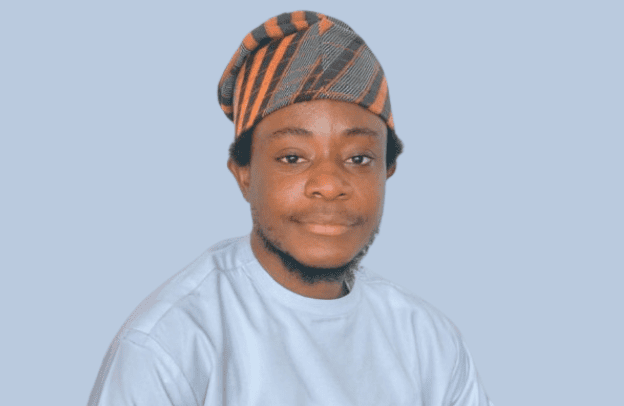
What happens when a professional refuses to accept the status quo and decides to change his community from the ground up? Meet George (Omaji) Oche, a dedicated public health researcher and the General Manager of The Rabiu Olowo Foundation.
Based directly on the ground in Lagos, Nigeria, George is also the founder of the I-LAMP Initiative. His life work focuses on a major health challenge affecting millions of families across the African continent and its diaspora: Sickle Cell Disease (SCD).
George’s journey is deeply tied to his personal story. Growing up in an economically disadvantaged background while living as a sickle cell warrior himself, he chose to turn his personal struggle into a blueprint for community health.
See also The Immortal Institution: Why The Sovereign Oracle is a Debt We Pay to the Future
Today, he combines scientific research at the Nigerian Institute of Medical Research with grassroots advocacy, helping underprivileged children get free health insurance, education, and mentorship. George does not just study public health; he lives it, shapes it, and uses the power of storytelling to unlock doors that many think are permanently locked.
The Hidden Connection: From Roots to Relevance
To truly understand why sickle cell disease is so common in Africa, we must look at our geographical roots. There is a deep biological connection between our ancestral history and our current health realities. George explains that the high presence of the sickle cell gene in Nigeria and other parts of Africa is actually an evolutionary story of survival.
“Now, normal red blood cells are circle. They’re round. And when you have a malaria parasite, your round blood cells are a very good place for them to grow. And so with time, our body started to adjust and so the body sort of tried to mutate the red blood cells to become sickle, just so that it can fight off these malaria parasites.”
This adjustment helped our ancestors survive high malaria regions, creating a natural shield. However, what began as a tool for survival in the tropics became a generational challenge when two people carrying the sickle cell trait (AS) marry and pass the mutated gene down to their children, resulting in Sickle Cell Disease (SS).
This is the perfect example of a Generational Anchor that requires modern awareness to handle. By understanding where we come from, we can make better, more informed choices for our future.
The Core Concept: Breaking Down Blood Genotypes
The biggest obstacle to solving the sickle cell crisis is not a lack of medicine, but a lack of basic education. Many people confuse their blood group with their genotype. This confusion leads to incompatible marriages and the continued spread of the disease.
See also Designing Your Sovereign Enterprise: From Economic Tenancy to Architectural Ownership
To make this clear for everyone, George uses a simple illustration that anyone can understand:
- The Round Cells: Normal red blood cells are round and flexible. They move smoothly through the body’s pipes, carrying oxygen to every organ. They live for about 120 days.
- The Sickle Cells: Sickled red blood cells are shaped like a crescent moon or a C-shape. They are stiff and sticky. Instead of moving smoothly, they get tangled up and stick to the walls of the blood vessels.
- The Logjam: Imagine sharp, pointed sticks floating down a narrow river. They easily clump together and block the flow of water. This block stops oxygen from reaching vital organs, causing severe pain and organ damage. Furthermore, these sickled cells die in just about 20 days, leaving the body constantly short of blood.
The Story to Asset Framework™ in Action
George Oche’s work perfectly models how to turn personal narrative into an institutional asset that solves community problems. At AClasses Academy, we use the Story to Asset Framework to help diasporan leaders move from temporary influence to permanent ownership. Here is how George’s methodology maps directly onto this framework:
1. Mission Clarification (Solving Narrative Fragmentation)
Many professionals have scattered stories. They do what we call “Hope Marketing,” wishing that people will see their value without a clear plan. George solved this by finding his “Golden Thread,” which is his shared experience as both a sickle cell warrior and a trained researcher. He stopped sharing random updates and focused his message entirely on health equity, education, and community prevention.
2. Message Crafting (Building a Signature Asset)
Instead of keeping his knowledge locked in a laboratory, George turned his expertise into repeatable community programs. The HIT-SCD Project is a prime example of a Signature Asset. By creating a clear, branded project that provides one year of free health insurance to children, he built a tangible system that corporate partners and international donors could easily understand, trust, and fund.
3. Message Activation (Releasing the Client Acquisition Machine)
George moved away from standard, sterile communication. He took his real-life stories from the streets of Yaba and Lagos and published them directly on LinkedIn. He uses clear human language to explain complex biological systems.
“I like to tell stories of my day-to-day life. I like to tell stories of lived experiences. I craft the stories. I post them on LinkedIn… It’s quite interesting how much funds I’ve been able to raise, how much support I’ve been able to garner, how much access, how many doors I’ve been able to open for the people I support.”
The Lesson: Moving From Tenancy to Ownership
Our target audience of African diaspora business owners and founders often fall into the trap of Knowledge Incineration. They sell their premium hours to western companies or build their entire brand presence on social media platforms where the digital landlord can change the algorithm and evict them overnight.
See also Jackie Morrison, Registered General Nurse, And Independent Health Visitor Talks About Her Experience
True Sovereign Learning and self-mastery mean codifying your life’s work into assets that you own completely. Just as George built an independent foundation to protect African children, diasporan leaders must build their own independent platforms, books, frameworks, and academies.
We must practice Ubuntu, realizing that our individual success only matters when it is used to build collective wealth and protect our institutional memory.
Your Blueprint for Action
To protect your family and community from the storms of life, you must act on what you know. If you want to manage communal health or scale your own business legacy, use this three-step blueprint:
- Know Your Code: Just as every young adult needs to test and know their genetic makeup before marriage to prevent disease, every business leader must audit their intellectual property to stop knowledge loss.
- Tell Lived Stories: Stop trying to sound academic. Use simple everyday analogies. Share your daily wins, your struggles, and your community work. Authenticity builds deeper connections than corporate jargon ever will.
- Build Tangible Assets: Do not leave your genius in your head. Write the book, launch the program, or structure the foundation. Build something that operates even when you are not in the room.
Connect, Learn, and Grow
This conversation is a small piece of a much larger puzzle. Over the years, The Obehi Podcast has hosted over 1,000 interviews with professionals across the African diaspora, and AClasses Academy has published over 2,000 educational articles dedicated to shifting our community from platform dependency to total ownership. We are here to help you dig up your ancestral roots and turn them into modern relevance.
Do not let your institutional wisdom disappear when you stop working. It is time to step out of High-Value Tenancy, claim your heritage, and become the true architect of your life and business.
Book your free 15-minute Legacy Strategy Call today to design the asset that will tell your story and position you as the ultimate authority in your industry.