The Mirror of the Nile: Race, Power, and the Battle for Ancient Egypt
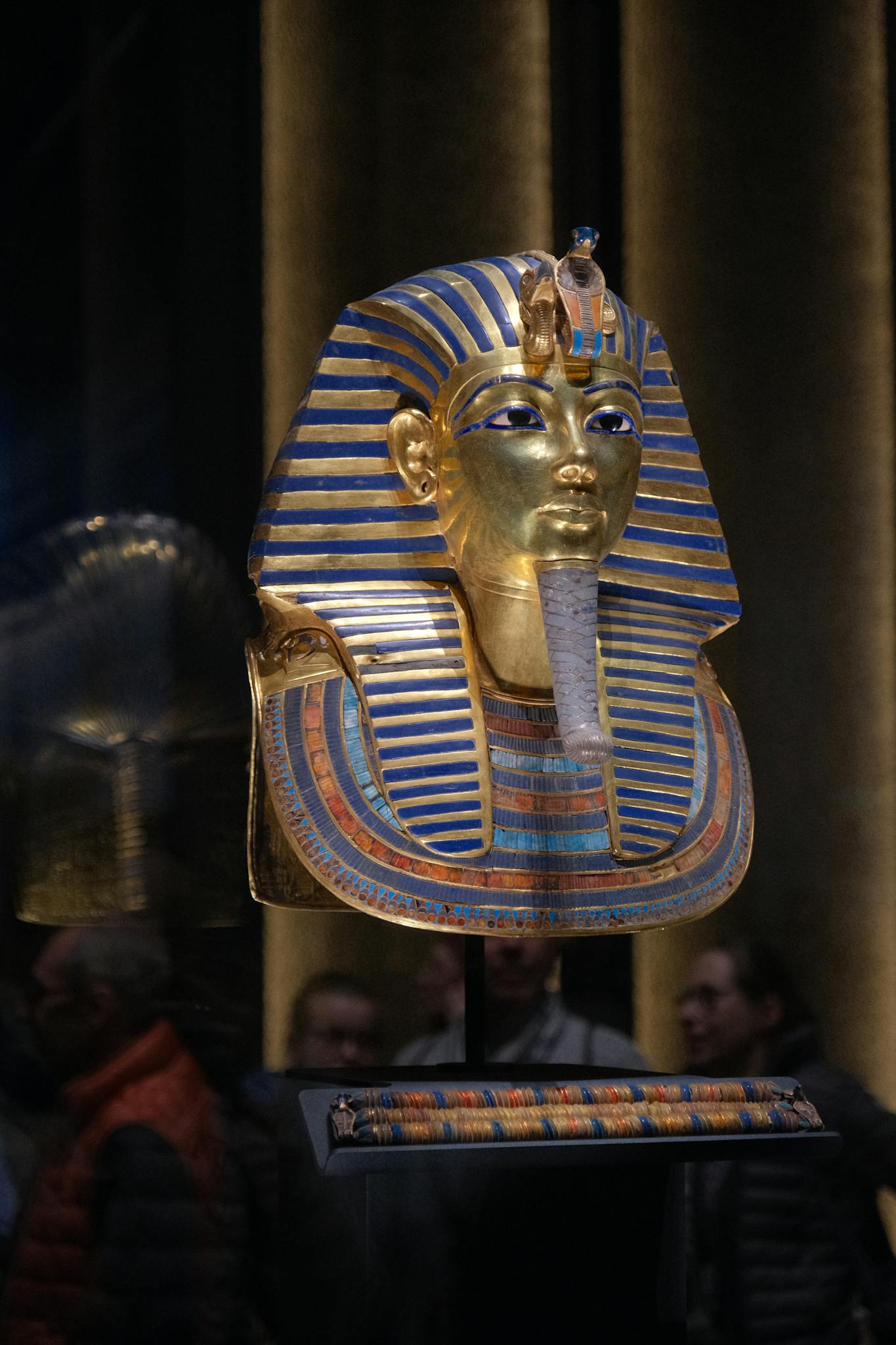
For several centuries, the golden sands of Egypt have yielded far more than just mummies and monuments; they have served as a high-stakes mirror reflecting the deepest social anxieties of the modern world. As Africans, we have seen how the identity of the ancient Egyptians has been drafted into a war they never fought: the modern struggle for racial legitimacy.
Learn How to Leverage Your Story through our Story To Asset Framework.
When we argue about whether the Pharaohs were “Black” or “White,” we aren’t really talking about the DNA of Ramses II. We are talking about the lecture halls of Harvard, the Jim Crow laws of the American South, and the colonial boardrooms of Europe.
The story of Egyptology from 1890 to 1960 is not just a history of archaeology; it is a history of how we use the past to justify the present.
The Architecture of the “Great White Race”
In the early 20th century, American Egyptology was born from the minds of two academics: James Henry Breasted and George Reisner. Breasted, the founder of the University of Chicago’s Oriental Institute, and Reisner, a Harvard professor, were fierce rivals who shaped how millions of people understood human history.
Breasted’s influence peaked with his 1916 textbook, Ancient Times. In the first edition, he described the Egyptian peasants as “brown.” It was a sensible observation. However, by the 1935 revision, Breasted’s world had darkened.
The U.S. had passed the 1924 Immigration Act, and “scientific” racism spearheaded by men like Madison Grant and the Klansman-scholar Lothrop Stoddard was the law of the land.
Breasted succumbed to the pressure of his era. He formally annexed Ancient Egypt into what he called the “Great White Race.”
In his maps, Breasted drew a line across the Sahara Desert, claiming it was a biological barrier. He argued that the “Great White Race” created civilization, while “the teeming world of black Africa” remained uninfluenced.
By doing this, he wasn’t just recording history; he was creating a psychological safety net for a white-dominated world. If Egypt, the fount of wisdom, geometry, and law wasn’t “white,” then the entire narrative of Western superiority would crumble.
The Afrocentric Reclamation: W.E.B. Du Bois
While Breasted was whitening the Nile, W.E.B. Du Bois was launching a counter-offensive. Du Bois, a Harvard contemporary of Reisner, published The Negro in 1915. He recognized something the specialists ignored: race is a “shifting social construct,” not a fixed biological fact.
Du Bois pointed out the glaring hypocrisy of the American “one-drop rule.” In 1930, the U.S. Census decided that anyone with any African ancestry was “Negro.” Du Bois essentially said: Fine. If you use that rule to oppress us in the present, then by that same rule, the Pharaohs were ours.
“Egyptology,” Du Bois noted, “grew up during the African slave trade… Few scholars during the period dared to associate the Negro race with humanity, much less with civilization.”
Du Bois highlighted the 25th Dynasty, the Kushite Kings from modern-day Sudan. These were black-skinned rulers from the south who conquered Egypt and restored its ancient traditions.
While Breasted’s textbooks often ignored this dynasty or treated it as a “foreign” interruption, Du Bois saw it as proof that the heart of Egyptian power was fundamentally African.
The “Sons of the Pharaohs”: The View from Cairo
If you were to walk through Cairo today and ask if King Tut was Black or White, you would likely be met with confusion. For modern Egyptians, the “Black vs. White” debate is an American and European obsession.
In the Nile Valley, identity has historically been shaped by religion and language, not the specific shade of one’s skin.
- The Religious Paradox: For many devout Muslims and Christians, the “Pharaoh” is a complicated figure. In the Quran and Bible, he is the tyrant who defied Moses. Yet, he is also a source of immense national pride.
- The Mother of the World: Egyptians call their country Umm al-Dunya (Mother of the World). They see themselves as a unique blend, neither purely “white” in the European sense nor purely “sub-Saharan.”
However, we must be honest: Egypt is not immune to prejudice. While Egypt never had the legal “color line” of South Africa, a subtle hierarchy has long existed. The Arabic word ‘abd (slave) is still sometimes used as an insult against darker-skinned people.
In the 1920s, as Egypt struggled for independence from Britain, light-skinned Egyptian elites often looked down on their Sudanese neighbors.
Political cartoons from the era depicted “Egypt” as a refined, light-skinned aristocratic lady, while “Sudan” was portrayed as a “savage” or a “dark urchin.” This reveals that the “anxiety” about race wasn’t just a Western export; it was used by Egyptians to claim their own “civilizing mission” over the rest of Africa.
The Tragedy of Ludwig Borchardt: When “Race” Destroys the Scholar
Perhaps no story illustrates the cruelty of these racial anxieties better than that of Ludwig Borchardt, the man who discovered the famous bust of Nefertiti.
Borchardt was a scholar of German archaeology. But because he was Jewish, the Nazi regime, which saw Ancient Egypt as a precursor to their “Aryan” fantasies, erased him from history.
In 1936, the University of Berlin even expelled the 81-year-old Adolf Erman, the very professor who had taught Breasted and Reisner, because he had one Jewish grandmother.
By 1938, Borchardt was a hunted man. He died in Paris, a man without a country, trying to trade his massive library and estate for citizenship in a land that would protect him. George Reisner tried to convince Harvard to take Borchardt’s legacy, but the American State Department, fueled by its own anti-Semitic and isolationist anxieties, refused.
This is the dark irony of Egyptology: the very people who spent their lives uncovering the truth of the Pharaohs were often destroyed by the racial lies of their own time.
Ancient Realities vs. Modern Myths
To truly understand Ancient Egypt, we must look past the 20th-century labels. The Egyptians themselves had a very different view of the world. They depicted their men as reddish-brown and their women as pale yellow. They stereotyped the Libyans to the west as light-skinned and the Nubians to the south as black with distinct features.
On King Tutankhamen’s footstool, he symbolically trampled both Asiatic and Nubian captives. This wasn’t “racism” in the modern sense; it was imperialism. To the Pharaoh, anyone who wasn’t Egyptian was an outsider, regardless of their skin color.
| Era of Scholarship | Dominant Racial Theory | Purpose of the Theory |
| 1850s (Morton/Nott) | Polygenism (Races are different species) | To justify American Slavery |
| 1920s (Breasted) | The “Great White Race” | To justify Colonialism & Immigration Acts |
| 1950s (Diop/Du Bois) | Afrocentrism | To empower Decolonization movements |
| Modern Science | Indigenous Nile Valley Population | To understand human migration & DNA |
The Healing Power of History
The “anxiety” Donald Reid described in his lectures is the fear of being “left out” of greatness. If the West couldn’t claim Egypt, it felt its foundations were weak. If Africa couldn’t claim Egypt, it felt its history was stolen.
Egypt is big enough for everyone. It is a Mediterranean civilization, a Middle Eastern civilization, and crucially an African civilization.
The obsession with “Black” or “White” tells us nothing about the pyramids, but it tells us everything about the people who look at them. We have used the Pharaohs to build walls between us for too long.
It is time we see them as they were: a diverse, brilliant, and deeply human people who lived along a river that flows through the heart of a continent.
By unmasking these racial anxieties, we don’t just learn about the past; we begin to heal the wounds of the present. Ancient Egypt is not a trophy to be won by one race; it is a legacy for all of humanity to study with humility.