The Life & Legacy Of Anthony Anenih, former Nigerian Minister of Works and Housing
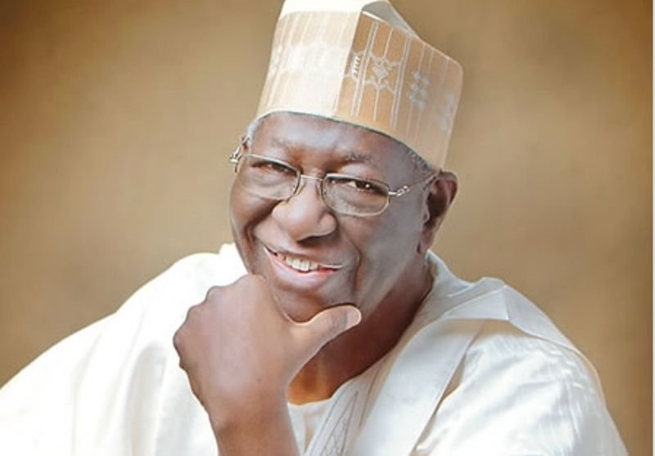
What do you know about Anthony Akhakon “Tony” Anenih, the late Nigerian politician who was appointed Minister of Works and Housing in 1999? What do you remember him for what does he represent to the Esan people of Nigeria?
From Political Influence to Your Professional Legacy.
You’re reading about a master of strategy and influence. But how do you become the undisputed “go-to” expert in your own industry?
The Story to Asset Framework™ is our system for diaspora founders, coaches, and consultants to turn their expertise into a client acquisition system built on authority and influence. The first step is a free, 15-minute strategic call to map your legacy.
Book Your Free 15-Min Legacy Call
In the high-stakes world of Nigerian politics, one name commanded a unique mixture of awe, respect, and fear: Anthony Akhakon “Tony” Anenih.
Known by the powerful moniker “Mr. Fix It,” Anenih (1933-2018) was a political juggernaut, a man who navigated the complex, often treacherous, currents of power with an unmatched astuteness. He was a kingmaker, a strategist, and a colossus who, as one former minister noted, “traversed our country, Nigeria menacingly and emphatically recording historic political victories.”
You might also like How $3.2 Million Transformed Nigeria’s Energy Market and Sparked a Multi-Billion Dollar Investment Wave
When Anenih declared, “there was no vacancy in Aso Rock,” it wasn’t just political rhetoric; it was a statement of fact from the man who fixed the locks.
But for all his influence, from his time as Minister of Works and Housing to his role as Chairman of the PDP’s Board of Trustees, Anenih’s life also teaches a more profound, more urgent lesson. It’s a lesson not just for politicians, but for every established Diaspora leader, every successful CEO, and every multi-generational family business.
It is the critical, non-negotiable lesson of legacy: If you do not meticulously craft and control your own story, your critics, your competitors, and the simple passage of time will write it for you.
The Ascent: From Police Orderly to Political Juggernaut
To understand Anenih’s power, one must look at his foundation. His journey didn’t begin in a boardroom or a dynasty; it began with the discipline of the Nigeria Police Force. After training at home and abroad—from Ikeja to England and Washington D.C.—he rose through the ranks.
Significantly, he served as a police orderly to Dr. Nnamdi Azikiwe, Nigeria’s first Governor-General. This was no small role. It was a front-row seat to the mechanics of a new nation, an education in the language of power, and a lesson in proximity.
This dual-pronged experience, the structured discipline of a police commissioner and the nuanced observation of a statesman’s aide, created the perfect foundation for a political operator.
When he entered politics, he rose rapidly. He wasn’t just in politics; he was a central cog:
- State Chairman of the National Party of Nigeria (NPN), helping elect a governor.
- National Chairman of the Social Democratic Party (SDP), supporting Moshood Abiola’s historic (though tragically annulled) presidential run.
- A foundational member of the Peoples Democratic Party (PDP), serving as deputy national coordinator for Olusegun Obasanjo’s victorious campaigns in 1999 and 2003.
He was the “go-getter,” the man who, as Delta State Governor Ifeanyi Okowa noted, had an “ability to consistently… resolve knotty political puzzles.” He was, by all accounts, the man you wanted on your side.
The Problem: When Controversy Clouds the Narrative
But here is the central tension of Anenih’s legacy. For all his “fixing,” his public narrative was constantly under attack. His story became a battleground.
- The N300 Billion Probe: In 2009, a Senate committee report implicated him, among others, in an investigation into the transport sector during his time as minister, alleging contracts were awarded without budgetary provision.
- The CBN Debtors List: The same year, his name was linked via a company, Mettle Energy and Gas Limited, to a ₦2.06 billion debt, a claim he vehemently denied.
- The 18-Month Detention: Perhaps most tellingly, Anenih was detained for 18 months by the military regime of Muhammadu Buhari in 1984.
Anenih’s own account of this detention, published in his autobiography, is a crucial piece of his narrative. He wrote that he was arrested simply “on the basis of an anonymous petition that as a prominent and wealthy politician… the military administrator would not find his footing unless I was removed from the scene.”
His own explanation was stark: “My crime was that I was a wealthy, influential and highly respected politician.”
See also Whitney Houston: The Life and Legacy of an Incredible Voice
Whether you accept his account or his critics’ is almost irrelevant. The point is this: a man of immense power found his legacy defined not by his victories, but by accusations and controversies. His “wealth and influence,” the very things that proved his success, were reframed by his opponents as a “crime.”
This is the danger that every successful Diaspora founder and every tenured family business faces. Your success makes you a target. Your 20, 30, or 50 years of work can be distorted, misunderstood, or deliberately maligned by a single headline, a disgruntled former employee, or a market competitor.
The “Mr. Fix It” Final Move: The Power of the Written Word
Anenih, the master strategist, understood this threat. He knew that political power fades, that influence is temporary, and that “Mr. Fix It” could not fix the passage of time.
So, he made his final strategic move. In 2016, he released his autobiography, “My Life and Nigerian Politics.”
This was not a retirement project; it was a legacy asset. It was his last, most important act of “fixing”, this time, fixing his own story for posterity.
He understood that all his work, his title as the Iyasele of Esanland, and his role in shaping the Fourth Republic could be reduced to a few controversial headlines if he did not provide the definitive, first-person account.
He “bowed out” of politics, as he said, but he refused to let his narrative be written by others.
This is the exact challenge facing our two key audiences:
- For the Established Diaspora Leader: You have spent 20+ years building your business, your reputation, and your expertise. You are the “Mr.” or “Mrs. Fix It” in your industry. But have you packaged that hard-won knowledge? Have you written your story? Or are you leaving it to chance?
- For the Multi-Generational Family Business: Your 50+ year history is your single greatest marketing asset. It is your proof of quality, resilience, and trustworthiness. But is that story locked away in the memory of a retiring patriarch? Is it a collection of anecdotes? Or is it a powerful, professionally crafted asset that builds unshakeable trust and justifies your premium price?
Your Legacy is Your Most Valuable Asset. Define It.
The life of Anthony Anenih is a powerful case study in the difference between influence and legacy. Influence is what you do; legacy is the story of what you did.
See also Why the Rise of Black-Owned Businesses Is a Legacy Story We Can’t Afford to Lose
Anenih’s final move was to transform his influence into a legacy, to codify his life and his message into a Legacy Book. This is the ultimate authority-building asset. It’s your unique message, your experience, and your lessons for the next generation.
At AClasses Academy, we believe your story is your most permanent and powerful asset. We specialize in helping established leaders and family businesses do what Anenih did in his final act: architect their own legacy.
We help you transform your decades of knowledge into a Legacy Signature Program, creating a proprietary methodology that is uniquely yours. We partner with you to craft your definitive Legacy Book, making you the undeniable authority in your field. And we immortalize your “why” in a cinematic Legacy Film, connecting your brand’s journey to generations yet to come.
Your life’s work is too important to be left to chance, to be defined by critics, or to be forgotten by time.
Your legacy is your most valuable asset. Before you print another brochure, let’s talk about how to immortalize it. Book your free 15-minute Legacy Strategy Call today to design the asset that will tell your story for the next 50 years.