Redefining the African Diaspora Narrative from Migration to Mastery: Dr. Beyene Zerazion on The Journey – Africans in Verona
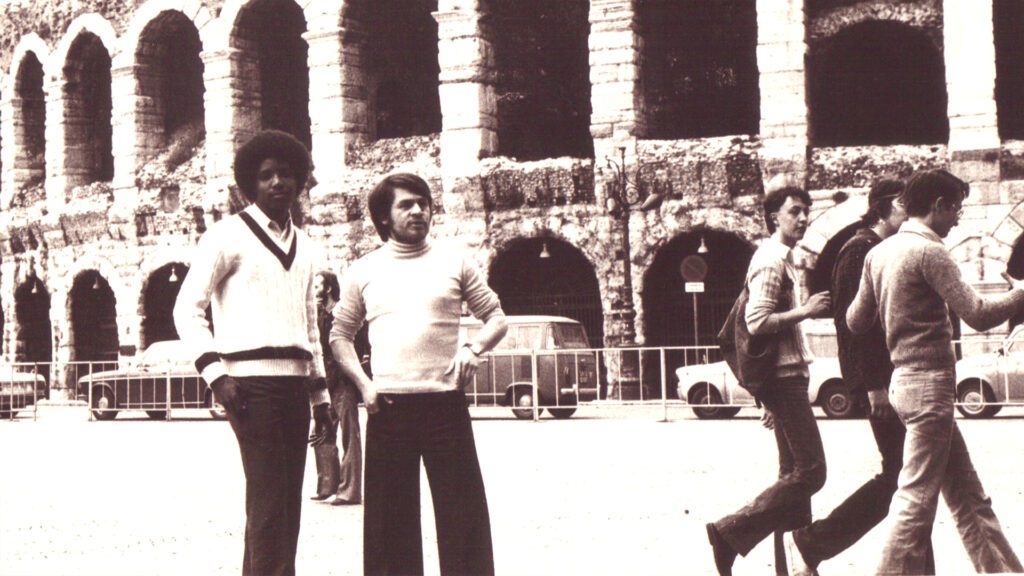
For more than ten years, Obehi Ewanfoh has worked to help people turn their life stories into professional strengths. He created a method called “Story to Asset™” to show how the difficult experiences of moving to a new country can be transformed into tools for success and independence. Instead of just seeing migration as a struggle, he teaches people how to use their unique background to build a better future for themselves and their families.
Learn How to Leverage Your Story through our Story To Asset Framework.
To understand how he does this, we have to look back at his original research project called “The Journey.” Started in 2013, it began as a small study about Africans living in Verona, Italy. Since then, it has grown into a massive international collection with over 1,000 interviews.
Obehi has talked to African leaders and business owners in the UK, Canada, and the USA, creating a global library of wisdom and experience.
The foundation of this work comes from the stories of early pioneers like Dr. Beyene Zerazion, an Eritrean eye doctor. His life is a perfect example of Obehi’s method in action. Dr. Beyene’s story shows how a person can face hard times, adapt to a new culture, and eventually take full control of their own destiny.
The Shattered Dream of Return
When we apply Ewanfoh’s Excavation Phase, we look for the origin story buried beneath the surface. For Dr. Beyene, who arrived in Italy on October 25, 1986, the “why” was not a simple desire for European luxury. It was a forced detour caused by political instability.
“I had no intention of coming to live in Europe,” Beyene recalls. “I thought of doing a short course of one or two years… then returning to my country. But then the war came… we had to abandon our studies and work and leave the country.”
This is what Ewanfoh identifies as the shift from a planned life to an accidental journey. Beyene’s “European dream” was never about seeking a new home; it was a “camouflaged” escape from international injustice.
For the ordinary person, this lesson is clear: Your starting point might be a crisis, but your origin story is the foundation of your future asset.
Navigating the Two Faces of Society
In the Translation Phase, Ewanfoh teaches how to turn lived experiences, even the bitter ones, into clear messages of survival and market awareness. Beyene’s arrival in Verona was met with a literal and metaphorical gloom.
“For almost 15 days, I had not seen the sun. It was October, rain, rain, and clouds… It depressed me.”
Beyond the weather, Beyene encountered the “Two Faces” of society. He shares a harrowing story of seeking an apartment in 1978. An agent, eager to help, sent him to a relative’s house just minutes away (within the Verona city center).
“When he saw me… he looked scared. He told me, ‘Oh, I just rented it; it’s already taken.’ In two and a half minutes, he managed to rent the house. This opened my eyes: society often has two faces, the beautiful one and the real one.”
Through Ewanfoh’s lens, this isn’t just a story of discrimination; it is a lesson in Market Positioning. Beyene learned early on that to survive in an environment that may not initially welcome you; you must understand the “real” rules of the game.
Alignment – From Economic Tenancy to Sovereignty
Beyene’s journey highlights a crucial transition Ewanfoh advocates for: moving from Economic Tenancy (being a temporary guest in someone else’s system) to Institutional Sovereignty.
In the late 70s and 80s, the African community in Verona was small but highly organized. Beyene remembers about 15-16 Eritreans, 6-7 Somalis, and a few Nigerians. They didn’t just meet for coffee; they organized political discussions and literacy classes.
“I found my compatriots already organized… we had meetings for literacy and political discussion on the current affairs of our country.”
Ewanfoh argues that this level of community organization is the first step toward sovereignty. By aligning their personal goals with the collective strength of the diaspora, these pioneers were building a “Fortress of Peace” long before the term was popularized.
Creation – The Competitive Edge
As the project “The Journey” grew, Ewanfoh’s research began to influence his Creation Phase. He realized that for the diaspora to thrive, they must move beyond “just having arms” for labor. To that effect, it’s important to consider Dr. Beyene’s advice to the next generation, blunt and necessary:
“Someone who comes to Europe must be prepared academically, culturally, and professionally. You must be competitive. If you come only with your arms (manual labor), it is an obstacle. It does not help you realize your dreams.”
This insight is the cornerstone of AClasses Academy. It is the realization that your story is only an asset if it is backed by high-level skills and narrative strategy.
Ewanfoh’s work with the Obehi Podcast, which now spans over 1,000 episodes, serves as a digital library of this “competitive edge,” showcasing leaders who have turned their migration history into global business ventures.
He even takes it further, through the AClasses Co-creation Strategy, Obehi now co-creates courses with different professionals, business owners, cultural custodians and community leaders to solve the problems often discussed in the podcast. You too can do the same. Refine your skills and position yourself in the market.
Legacy – The New Veronese
The final phase of the framework is Legacy. Ewanfoh looks at the generation born in Italy who are, as Beyene puts it, “Veronese in every effect.”
“Their head is Veronese… their city is Verona because they grew up and were born here. They are Veronese, but a bit different.”
This “difference” is not a deficit; it is a superpower. Ewanfoh views these children as the ultimate “Story to Asset” success.
They embody the fusion of African heritage and European reality. They are the ones who will lead the Diasporan vision and carry forward the “Institutional Sovereignty” that their parents fought for.
Why This Matters to You
You might ask: “How does the story of an Eritrean doctor in 1986 help me own my genius today?”
The answer lies in the Sovereign lens. Dr. Beyene’s story teaches us that:
- Time transforms the temporary: What starts as a “one-year course” can become a 40-year legacy. You must plan for the long term from day one.
- Economics dictates acceptance: As Beyene noted, when the economy is good, migrants are seen as “wealthy labor.” When it’s bad, they are seen as a “cost.” True security comes from owning your own “Institutional Sovereignty,” so you aren’t at the mercy of economic shifts.
- Your Story is your Fortress: By documenting these journeys, Obehi Ewanfoh ensures that the diaspora is no longer just a footnote in European history, but a central protagonist in a global success story.
The Path Forward
Obehi Ewanfoh has spent a decade proving that your experiences, the rain, the closed doors, the community meetings, are not just memories. They are raw data waiting to be translated into a brand, a business, or a legacy.
Dr. Beyene lives for the one month a year he spends in Eritrea, but his life in Verona is a great example of the resilience of the human spirit. Through the Story to Asset™ methodology, you can ensure that you aren’t just “living in waiting,” but actively building your own future.
Are you ready to stop being an “Economic Tenant” in your own life? The bridge from where you are to where you want to be is built with the right strategy.
Explore the Story to Asset courses at AClasses Academy. Let Obehi Ewanfoh show you how to excavate your unique journey and align it with your highest goals.