Attaining Inclusive Education in the Veneto Region of Italy: Ernesto Passante on The Color of Our Children
In the expansive research of Obehi Ewanfoh’s “The Journey,” the narrative often oscillates between the lived struggle of the migrant and the social policies of the state. However, to understand how a community truly takes root, we must look at the institutional architect: the one responsible for the “software” of the next generation, Education.
Learn How to Leverage Your Story through our Story To Asset Framework.
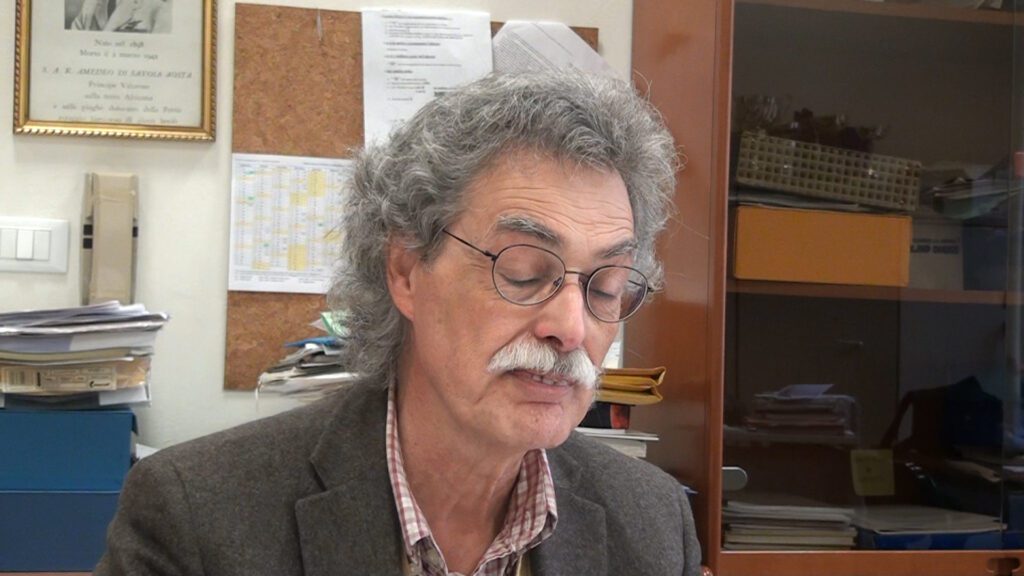
Ernesto Passante, the longtime Headteacher of the Veronetta school district in Verona, serves as a vital witness in “The Color of Our Children”, Phase 3 of the research project. The Journey explores the experiences of Africans in Verona and northern Italy since 1976.
Managing a complex “Istituto Comprensivo 18” that oversees hundreds of children from the ages of 3 to 14, Passante has sat at the desk where the demographic future of Italy is being written.
Through the Story to Asset™ framework, Passante’s testimony reveals that the school is not just a building; it is the primary site where Economic Tenancy (being a guest in a system) is traded for Institutional Citizenship (owning your place in society).
Excavation – The Language Myth vs. the “Family Investment”
In the Excavation Phase, Obehi Ewanfoh’s methodology requires us to dig past common excuses to find the true root of professional success.
For years, the Italian public discourse has focused on “the language barrier” as the primary reason for the academic struggle of children of African origin. Passante, with the clarity of a veteran educator, deconstructs this myth.
See also Decoding the Igbo Origins, Language, Culture & Identity as a Signature Asset | Derick Ofodirinwa
“For those of the second generation, the Italian language is not a problem… they often learn Italian even before their mother tongue. The real problems are of a cultural nature, deriving from a different approach to the school itself. For some, school is a priority; for others, it is an afterthought. It all depends on the ‘Family Investment.'”
Passante excavates a vital truth for the Diaspora: Professionalism is a family culture. In the Story to Asset™ world, Sovereignty is not something granted by a passport; it is built through the “investment” a family makes in the educational process.
See also From Tenant to Sovereign: Reclaiming the Soul of African Education with Jeewan Chanicka
If a family views the school merely as a “daycare” while they focus only on “bringing home the bread” (la pagnotta), the child remains a tenant in the classroom. True sovereignty begins when the parents align their home life with the academic rigor of the institution.
Translation – Fear is an Adult Construction
Phase 2 (Translation) involves interpreting the friction of a multicultural neighborhood. Veronetta was the first district in Verona to become a “reception neighborhood” in the early 1990s.
While politicians and the media translated this as a “threat,” Passante translated it as an Enrichment Opportunity. He notes that the “fear” often discussed in Italian society is an adult invention, passed down like a virus to children who don’t naturally possess it.
“The fear is an unjustified perception because the children know how to live together better than adults are capable of. If children absorb this fear, they absorb it from the grown-ups. It is their parents who communicate it to them. I see it every day; if you give them the possibility to relate, grave problems generally do not exist.”
Passante translates the classroom into a Laboratory of Coexistence. He views the “Color of Our Children” not as a problem to be “solved,” but as a “World Class” advantage.
He argues that having children from different parts of the world in one room is the best way to “know the world” without leaving the city limits.
Alignment – The Two Commandments of Parental Sovereignty
In the Alignment Phase, Ewanfoh emphasizes that for a story to become an asset, the individual must align their behavior with the values of the institution they wish to master. Passante is explicit about the “Social Contract” required for a child to succeed. He identifies two “Sovereign Actions” that parents must take to align with the school:
- Shared Values: “The first thing teachers expect is that parents share the values of the school, the importance of being there and learning what the school proposes.”
- The “Backpack” Responsibility: “The second is that they follow the children… helping them organize. Sometimes children are abandoned to themselves. They don’t even know what to put in their backpacks. In the beginning, you need the parent to help.”
Passante identifies that the cartella (the school bag) is a metaphor for life. If a parent is too busy to help a child organize their tools today, the child will not know how to organize their professional assets tomorrow.
See also Is Your Education a Trap? Reclaiming Your Intellectual Sovereignty with Professor Oluwafemi Esan
Sovereignty is found in the details, the homework check, the presence at the meeting, the shared value of curiosity.
Creation – The School as a World Map
In the Creation Phase, the curriculum is reimagined as a global asset. Passante notes that the presence of diverse cultures forces the school to create a more expansive piano didattico (teaching plan).
“We have the fortune of having people who come from various parts of the world. Therefore, our knowledge of geographic, historical, and political characters of various states becomes real.”
However, he offers a candid critique of the institutional “Creation” process. He admits that while the people inside the school have changed, the institution is slow to update its “hardware.”
“I am 60 years old. I grew up in a school where the main value was obedience. In 1956, there were 44 children in one class. Today, the furniture and the external appearance of the school still look quite like they did 50 years ago. The school is a bit behind; it hasn’t changed that much.”
For the Diaspora, this means you cannot rely solely on the physical school to innovate. You must create the “updated software” (cultural pride, digital literacy, and global networking) within your own “Fortress of Peace” at home.
Legacy – Moving from Obedience to Agency
The final phase, Legacy, looks at the fundamental shift in how the next generation is being formed. Passante reflects on the death of the “Obedience Model.”
“In my time, the value was obedience. Now, we don’t talk about obedience anymore.”
This shift is the core of Ewanfoh’s Institutional Sovereignty. The old model of the “obedient tenant” who follows rules without question is being replaced by the model of the “Sovereign Agent” who participates, organizes, and creates.
Passante’s legacy in Veronetta is the transition of a “migrant arrival zone” into a “World Map” of citizens. He has spent his career ensuring that the children of the Diaspora are not just “guests” in the Italian school, but its most vibrant and prepared students.
Strategies for the Sovereign Family
Obehi Ewanfoh’s reporting on Ernesto Passante’s institutional experience provides three definitive tactical steps for every Diaspora leader:
- Stop Blaming Language; Start Auditing Investment: If your child is struggling, look first at the “Family Investment.” Are you treating the school as a Sovereign Institution or a daycare? Your child’s “backpack” is the first test of their future professional organization.
- Filter the “Parental Virus” of Fear: Do not pass your trauma, your “unjustified perceptions,” or your fear of the system to your children. They are naturally equipped for the “World Class.” Let them lead the way in social integration.
- Bridge the Institutional Delay: The physical school system is 50 years behind. You must be the bridge that provides the “Sovereign Data”—the history of your people, the pride of your heritage, and the skills for the 2026 market—that the “1956 model” school cannot give them.
Your Next Step Toward Sovereignty
Ernesto Passante reminds us that school is a mirror of the family. If the parent is absent or disorganized, the child is “abandoned to their inexperience.”
Are you ready to become a Sovereign Partner in your child’s education? Are you ready to move from “Economic Tenancy” (just being glad they are in school) to “Institutional Sovereignty” (ensuring they own the tools of the world)?
The bridge to your family’s Fortress of Peace is built in the small, daily acts of organization and value-sharing. At AClasses Academy, we help you bridge the gap between the “1956 model” of traditional schooling and the “2026 model” of global leadership.