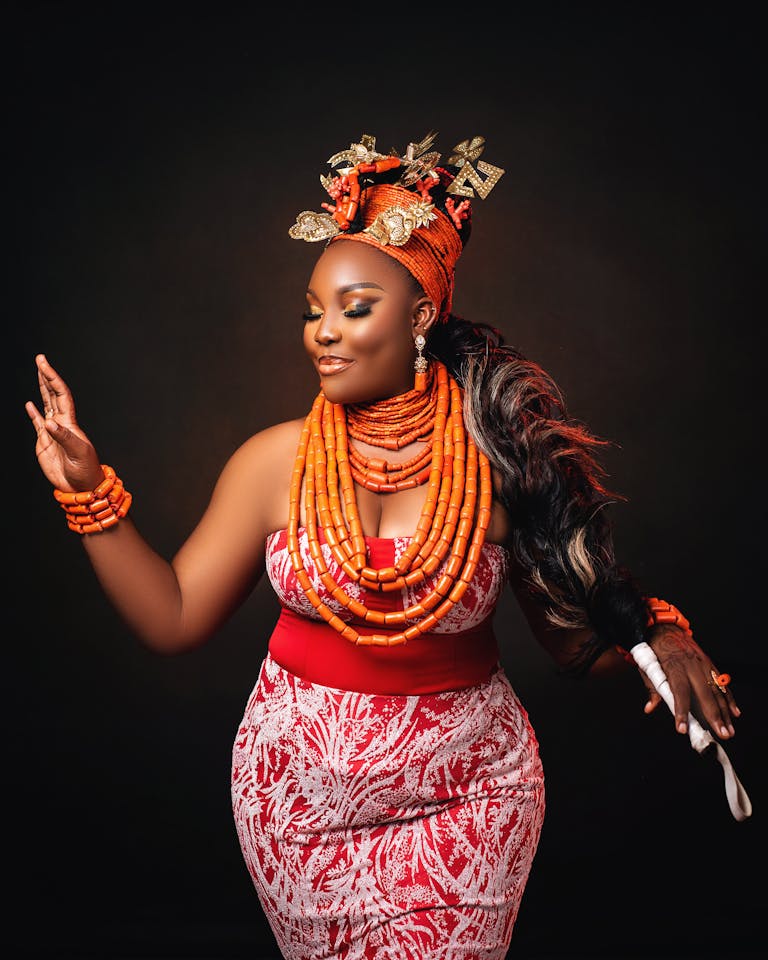
The Etymology of Excellence: Why ‘Esan’ Represents the ‘Fleeing’ to Freedom

In the heart of Edo State, Nigeria, lies a people whose very name speaks to the power of self-determination. To the casual observer, “Esan” is simply an ethnic group or a language. But to the student of legacy and the builder of generational wealth, Esan is a philosophy. It is a verb. It is the ancestral blueprint for anyone who has ever looked at an oppressive system and decided, “I will build my own.”
Learn How to Leverage Your Story through our Story To Asset Framework.
For the modern Diaspora leader or the head of a multi-generational family business, understanding the root of “Esan” isn’t just a history lesson.
It is a mirror. It reflects the journey of the expert fleeing the “9-to-5” or the corporate grind to create a proprietary asset that no one can take away.
The Origin: The Great Escape from the Benin Empire
The word Esan translates literally to “those who fled” (Esan fua). To understand why they fled, we must look at the mid-15th century during the reign of Oba Ewuare the Great of the Benin Empire.
Oba Ewuare was a transformative but incredibly stern monarch. Historical records and oral traditions, such as those documented by renowned historian, Jacob Egharevba in A Short History of Benin, reveal a pivotal moment in the 1460s.
After the tragic death of his two sons, the Oba imposed a period of mourning that was practically unbearable: for three years, there was to be no drumming, no dancing, and no intimate relations.
Faced with these draconian laws, a significant portion of the population, skilled artisans, warriors, and thinkers, chose a path of radical autonomy.
See also How George Washington Carver’s Legacy Transforms Modern Business Strategies and Sustainability
They didn’t stay to rebel and be crushed; they “fled” into the lush forests to the northeast. They chose the uncertainty of wilderness over the certainty of oppression. These “flee-ers” became the Esan people.
The Spiritual Principle: ‘Esan’ as the Act of Preservation
In African spiritual and social thought, fleeing is rarely seen as an act of cowardice. Rather, it is often viewed through the lens of Strategic Preservation.
In many West African traditions, there is a belief that your Ori (destiny) or Chi (personal god) cannot flourish in a space where your spirit is stifled. The Esan people understood that to preserve their lineage and their wisdom, they had to physically remove themselves from a structure that no longer served their growth.
This mirrors the modern Diaspora Leader. You spent 20 years in corporate boardrooms in London, New York, or Toronto. You climbed the ladder, but you realized the ladder was leaning against a wall that wasn’t yours.
Like the original Esan ancestors, the modern expert “flees” the 9-to-5, not because they are afraid of work, but because they are hungry for Ownership.
The Modern Parallel: Fleeing the 9-to-5 to Build an Asset
Today, “oppression” looks different. It isn’t a royal decree forbidding drumming; it is a corporate contract that owns your intellectual property even after you leave. It is a “glass ceiling” that limits your impact.
See also The Biopsychosocial-Spiritual (BPSS) Model of Personal Change Management. Professor Oluwafemi Esan
When an established founder or coach decides to package their 20 years of experience into a Legacy Book or a Signature Program, they are performing a modern “Esan.” They are moving their value out of the “Empire” (the job market) and into their own “Forest” (their proprietary brand).
“The hardest move for a successful person to make is the move from being a ‘High-Earner’ to being a ‘Legacy Builder.’ It requires the courage to flee the safety of a monthly paycheck to establish a territory that your children can inherit,” Obehi Ewanfoh, a Story Legacy Consultant in Verona, Italy.
Why the ‘Forest’ is Where the Magic Happens
The Esan people didn’t just run; they built. They established autonomous kingdoms (Uromi, Irrua, Ekpoma) that developed their own unique political systems and cultural identities. They took the “Benin Excellence” they had acquired and refined it into something new.
For the multi-generational family business, your “Forest” is your unique methodology. It is the “way we do things” that has kept your business alive for 50 years.
- Photo Elicitation Technique (PET): Just as the Esan used their history to ground up their new settlements, we use PET to help founders look back at their journey. By analyzing the visual milestones of your career, we uncover the “hidden gold” in your story that becomes your competitive advantage.
- Interview Methodologies: We extract the tacit knowledge, the things you know but don’t know how to explain and turn it into a structured asset.
The Three Pillars of Your Legacy ‘Kingdom’
To truly follow the Esan path of excellence, you cannot simply leave your old life; you must build a structure that lasts. At AClasses Academy, we help you build that structure through three specific high-value assets:
1. The Legacy Signature Program
The Esan people didn’t just survive in the forest; they thrived by creating new laws and ways of life. Your Signature Program is your “Law.” It is the proprietary solution you have developed over the years.
Instead of selling your hours, you are selling a transformation based on your unique methodology. This is how you stop being a “consultant” and start being an “Authority.”
2. The Legacy Book
A book is your “Great Walls of Benin.” It is a permanent record of your message. For the Diaspora leader, a Legacy Book ensures that your 20+ years of navigating Western markets while maintaining your African identity isn’t lost.
It becomes the manual for the next generation of leaders. According to research by Harvard Business Review, leaders who document their experiences are 50% more likely to be perceived as industry authorities.
3. The Legacy Video
If a picture is worth a thousand words, a cinematic legacy video is worth a thousand years of memory. In Esan culture, oral tradition was the heartbeat of the community. Today, we use a film to immortalize your “Why.”
For a multi-generational family business, this video is the ultimate trust-builder. It shows your clients that they aren’t just buying a product; they are joining a story that began decades ago.
Why It Matters Now
Research shows that 70% of wealthy families lose their wealth by the second generation, and 90% lose it by the third. Why? Not because they lack money, but because they lack a Shared Narrative.
See also The Great Pivot: What the World’s Wealthiest Families Are Telling Us About Your Legacy in 2026
The Esan people succeeded because they knew exactly who they were: they were the people who chose freedom.
They had a shared story of courage. When you build a legacy asset, you are giving your children and your clients a narrative to buy into. You are moving from a “business” (which can be sold or closed) to an “institution” (which lives on).
Connecting with the Spirit of Excellence
In the Esan language, there is a deep respect for the elder (Odion) and the wisdom they carry. This cultural value is the cornerstone of how we work at AClasses Academy. We don’t just “write content”; we perform a digital version of Photo Elicitation.
We look at where you have been, the struggles, the “fleeing” from the corporate world, the moments of doubt, and we frame them as your greatest strengths.
Whether you are a Black CEO in London or a 3rd-generation furniture manufacturer in Verona, your story is your only true “moat.”
In an era of AI-generated content and generic businesses, the “Esan factor”, your unique story of fleeing the ordinary to build the extraordinary, is what makes you undeniable.
Conclusion: Will You Flee or Will You Build?
The etymology of Esan reminds us that sometimes, the most courageous thing you can do is leave. Leave the status quo. Leave the “standard” way of doing business. Leave the anonymity of being “just another coach” or “just another company.”
But leaving is only the first half of the journey. The second half is building your kingdom. Your legacy is not something that happens after you die; it is the asset you create while you are here. It is the book your grandchildren will read.
It is the methodology your clients will swear by. It is the video that will make a stranger trust you in five minutes. Your story is the bridge between your past success and your future significance.
Your Legacy is Your Most Valuable Asset
Before you spend another year trading your precious time for a paycheck or letting your family’s 50-year history fade into obscurity, let’s talk about how to immortalize your journey. Your experience is a proprietary solution waiting to be packaged.
Book your free 15-minute Legacy Strategy Call today to design the asset, whether it’s a Signature Program, a Book, or a Cinematic Video that will tell your story for the next 50 years. Book Your Free 15-Min Legacy Call Now