Reinforcing The Architect of Resilience in the Diaspora: Ethiel France on The Color of Our Children
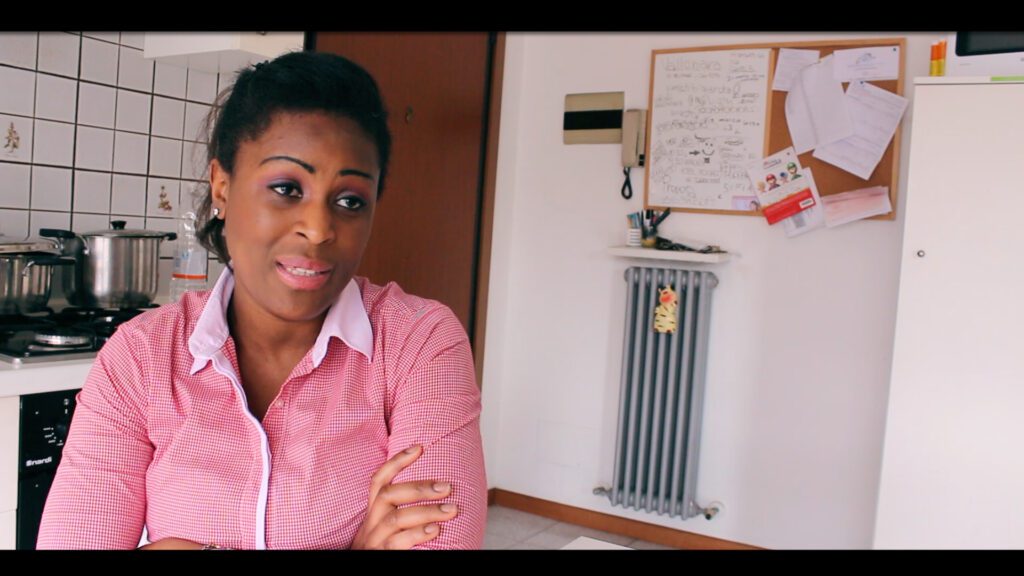
In the course of Obehi Ewanfoh’s core research project, The Journey, one narrative beats with the raw intensity of a heart uncovered: the story of Ethiel France. While many others offer academic and institutional context, Ethiel performs a profound “excavation” of a decades-old wound. Two decades ago, in a small province of Vicenza, her experience is far more than a haunting memory of discrimination.
Learn How to Leverage Your Story through our Story To Asset Framework.
Ethiel’s story reveals a deep psychological warfare and victory at the same time. It’s a story of how a mother’s Personal Sovereignty dismantled the walls of Institutional Exclusion to build a “Fortress of Peace” for her children.
Excavation – The Sunday School Rejection
In the Excavation Phase of the Story to Asset™ framework, we look for the origin story that creates the mission. For Ethiel, that moment occurred at the age of six. Her family, newly arrived in Vicenza from Napoli, was navigating a season of extreme vulnerability.
Her father had recently survived a serious accident, and her mother was still finding her voice in a new language. They sought the most basic right of a citizen: a place for their children in the local school.
The rejection they met was not bureaucratic; it was visceral. The priest heading the local school stated plainly that he could not accept “colored” children. His reasoning? He claimed the Italian children had never seen an African child before and would find it too difficult to socialize with them.
“I stayed at home for a whole year because my brother was not accepted into the kindergarten for the same reason… he would have been the only black child,” Ethiel recalls.
This was a total failure of the institution to recognize the Sovereign Rights of a human being. Ethiel excavates a painful truth: she didn’t start primary school at age six with her peers; she was forced to wait.
When she finally entered the system, she was nearly eight years old, the “big girl” in the class, a living reminder of a year stolen by institutional fear.
Translation – The “Game” of Home Schooling
Phase 2 (Translation) is about how we process trauma and turn it into an asset of resilience. This is where Ethiel’s mother emerges as a legendary strategist in the Ewanfoh narrative.
Instead of allowing her children to be crushed by the weight of being “unwanted,” she translated the exclusion into an opportunity for family bonding and early mastery.
“My mom simply went to the stationery shop on the corner… she bought all these notebooks, the ones you color and complete. She came back with a pack and began to teach us to read and study at home.”
Ethiel’s mother was not a trained pedagogue. She didn’t have the “techniques” of the Italian school system. Instead, she used the tools at her disposal. She learned the material alongside her children and used pasta pieces to teach them how to count.
By making the “lost year” feel like a privileged game, she protected her children’s self-esteem. She translated a Social Barrier into a Family Asset.
By the time Ethiel finally set foot in a formal classroom, she hadn’t just learned to read; she had learned that her education was a fortress that her family would defend at any cost.
Alignment – The “Uomo Nero” and the Social Mask
In the Alignment Phase, we look at how an individual navigates the existing social fabric to protect their future. When Ethiel finally entered school, she was met with the “ignorance of a rural context,” where being different was equated with being a character from a fable.
To survive and be accepted, Ethiel had to align herself with the limited imagination of her peers. She speaks of the “Uomo Nero” (the boogeyman) game, where she was naturally cast in the title role.
“I always played the part of the ‘Uomo Nero.’ I did it with joy and sympathy because I wanted to be accepted, to not be isolated. If the teachers or the community had realized the weight of that, they would have changed the game.”
Ethiel identifies a critical lesson for the Diaspora: Fear is a taught behavior. She recounts how Italian children would “lick” her brother, genuinely curious if he was made of chocolate.
“Children stay where you put them… they don’t have fear unless you tell them: ‘When you see that black person, run away.’ If you describe us as living in trees, that is the idea they carry in their heads.”
Creation – The Fight for the Sovereign Identity
In the Creation Phase, the individual must secure a legal and social identity that matches their internal reality. For Ethiel, this was the “hot argument” of Citizenship.
“Citizenship gives you strength, an identity. Inside, children feel Italian, but they are treated as immigrants because they have a residence permit. Without it, you risk being kicked out of the only country you know.”
Ethiel creates a powerful “So What?” regarding the absurdity of the “Economic Tenancy” status. After 18 years in Italy, she became an independent adult but remained an “immigrant” in the eyes of the law.
She recalls paying exorbitant fees for a residence permit and being told she might be “repatriated” to Ghana, a country she had no memory of.
“To me, it seemed like a joke… Have you ever seen an Italian who was kicked out of Italy?”
In the Story to Asset™ framework, legal citizenship is the final “Sovereign Tool” that protects the professional fortress. Ethiel’s struggle highlights why the African Diaspora must be legally and professionally proactive, moving from “Permit Holders” to “Decision Makers.”
Legacy – Moving Toward Automatic Sovereignty
The final phase, Legacy, is about ensuring that the next generation does not have to play the “Uomo Nero” to find a seat at the table.
Ethiel’s legacy is her role as the main protagonist of this research. By documenting the Vicenza rejection, she has turned her personal history into a tool for institutional reform.
“I hope that for children born here… citizenship will be automatic. It is difficult for a child born here to ‘return’ to their country.”
See also Esan is Known for Greatness: How to Build a Brand Identity as Strong as a Tribe
Ethiel France has evolved from the child who was “too colored” for a classroom into the Voice of a Movement. She has turned her “lost year” into a narrative asset that now educates teachers, directors, and policymakers across Europe.
Lessons for the Sovereign Professional
Obehi Ewanfoh’s reporting on Ethiel France provides three definitive tactical lessons for the African Diaspora:
- Build the “Home School” Mentality: If an institution rejects your child or fails to challenge them, do what Ethiel’s mother did. The “stationery shop” is always open. Your child’s intellectual development is a private Sovereign Asset that no public official can take away.
- Narrative Protection: Children are “blank slates.” As a parent, you must be the primary author of your child’s identity before the “Uomo Nero” games of society begin. Protect their self-image by making excellence the standard at home.
- Aggressive Pursuit of Identity: Do not treat citizenship or legal status as a “given.” Like Ethiel, you must recognize that “identity is strength.” Secure your legal and professional “Fortress” early to avoid being treated as a tenant in your own home.
Your Next Step Toward Sovereignty
Ethiel France’s journey is a reminder that being “rejected” is often the catalyst for being “extraordinary.” She didn’t just join the school system; she eventually stood above it to tell its story.
You might also Exploring the Universal Concept of the Gift: How Talent, Divine Endowments, and Agency Shape Identity and Community Building
Are you ready to stop being a tenant of other people’s prejudices? Are you ready to take the “notebooks and pasta” of your life and turn them into a Sovereign Narrative?
The bridge to your Fortress of Peace is built on the courage to say “we will change the school; we will change the place.” At AClasses Academy, we help you bridge that gap. Join the Story to Asset™ movement and become the protagonist of your own journey.