The Rhythm of Sovereignty among Africans in the Diaspora: Falilou Cissé on Veronetta – New Faces Of a Neighborhood
What began as a localized study of a neighborhood in Verona has evolved into a global manifesto for the African Diaspora. When Obehi Ewanfoh first interviewed Falilou Cissé for his project “The Journey,” he discovered more than just the story of a Senegalese musician in Italy; he found the “Rhythm of Sovereignty.”
Learn How to Leverage Your Story through our Story To Asset Framework.
Years later, Cissé’s perspective anchors Ewanfoh’s work with a diaspora of hundreds of millions. Using the proprietary Story to Asset™ methodology, Ewanfoh reclaims the narrative. He argues that the modern African experience must move beyond the precariousness of “Economic Tenancy.”
By converting lived experience into institutional power, the diaspora can finally stop renting space in someone else’s story and start building their own.
The Paradox of the “Pink-Skinned” Guest
Ewanfoh’s work in the neighborhoods of Veronetta and Arcella serves as a sociological excavation, uncovering the primary narratives of the first African arrivals in Northern Italy.
In documenting these pioneers, particularly through the lens of Falilou Cissé, Ewanfoh identifies a critical psychological transition: the movement beyond the “spectacle of the stranger” toward the “quiet sovereignty of the neighbor.”
Cissé recalls his arrival in Italy with a sense of bittersweet nostalgia:
“I remember entering places with my hair like this; it was interesting. They wanted to know me… they asked if I was half-Indian, perhaps a bit ‘pink-skinned.’ There was always sympathy for the people. It was easy to socialize in those times because there weren’t many immigrants.”
Ewanfoh identified this as the Novelty Stage of Tenancy. When an individual is “the only one,” they are treated as a cultural curiosity. However, Cissé uses a biting French metaphor to describe the inevitable shift in the host society’s psyche:
“There is a saying: you see one ant passing by, and you find it charming. But when you see a line of ants in your house, what do you do? You throw them all out. That is the natural mentality of man.”
For Ewanfoh, this excavation is vital. It teaches the Diaspora that “sympathy” is a volatile currency. To move from the “ant” to the “architect,” one must build structures of value that cannot be “thrown out.”
Translation – Music as the Universal Brand Message
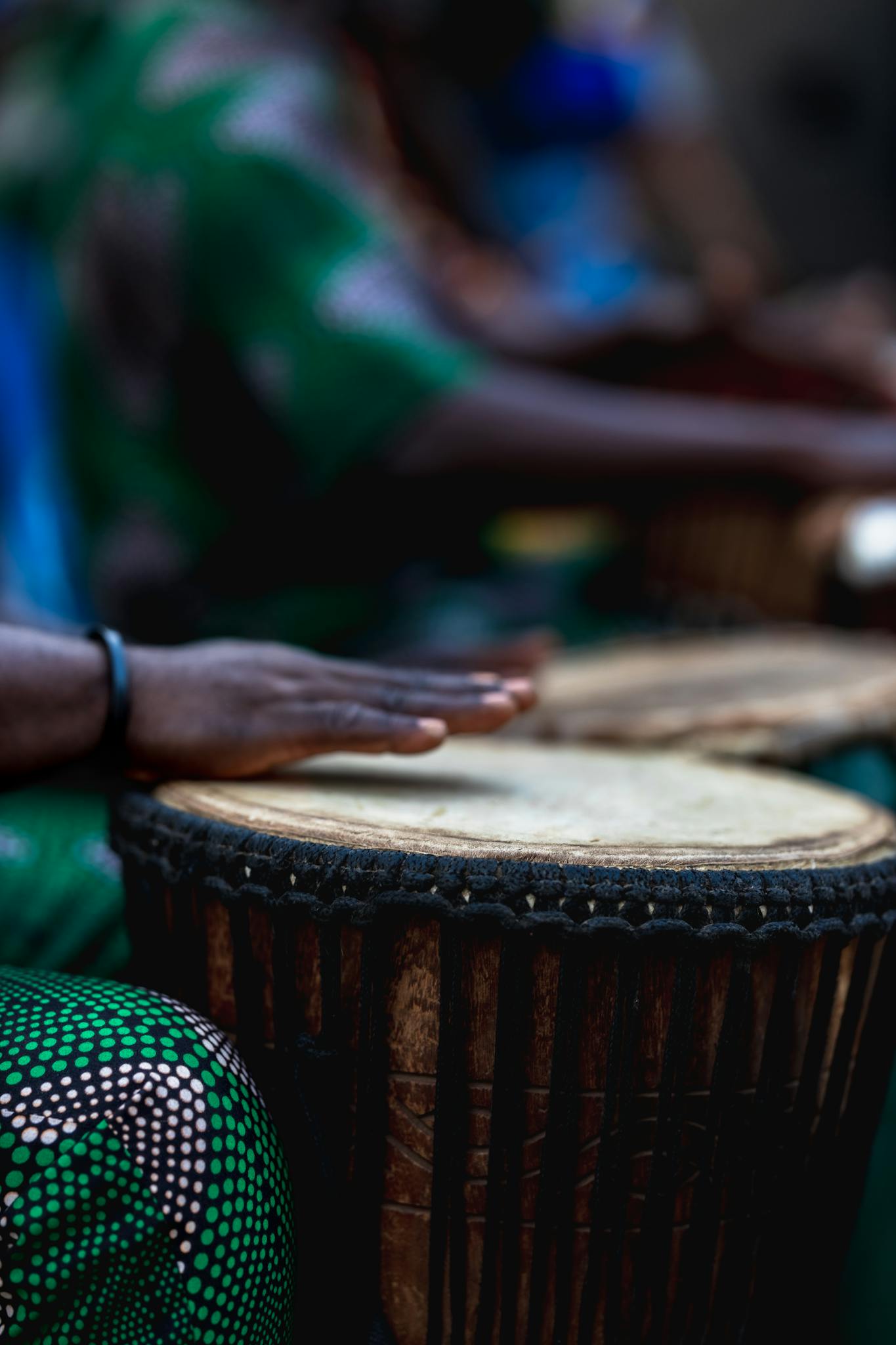
A story only becomes an asset when it is translated into a language the market understands. For Cissé, a man trained in the music academies of France before descending into the vibrant, chaotic energy of Naples and finally Verona, his “translation” was sonic.
He didn’t just tell people about Senegal; he made them feel it.
“I started playing in the music academy in France, touring various cities. When I arrived in Italy, I met guys in Naples, and then I came here to Verona. We played in many clubs… every Saturday and Sunday was ‘Reggae Night.’ Many young Italians came to have fun with us.”
Ewanfoh notes that Cissé was performing Narrative Strategy long before the term was popularized. By claiming the stage in Piazza Bra, Piazza dei Signori, and Piazza Dante, Cissé was translating the “African Presence” from a statistic into a lifestyle. He made his presence a “Vibrant Asset” to the city’s social economy.
If the local Verona residents were “not curious,” as other interviewees in Ewanfoh’s project suggested, Cissé’s music forced curiosity. You cannot ignore the rhythm in the town square.
Alignment – Piercing the “Closed” Mentalities of the North
One of the most profound discoveries in Ewanfoh’s decade-long research is the realization that Northern Italy’s legendary “closedness” was not a weapon forged specifically for Africans. It was a pre-existing condition.
Cissé’s observations align perfectly with Ewanfoh’s findings on neighborhood fragmentation:
“The mentality was closed… not just with us, but among themselves. ‘We are Vicentino, we are Veronese.’ There was a distance, a conservative tradition. Communication was not easy. But because we were musicians, it was easier. Everyone came. They all said, ‘You are good.'”
Ewanfoh teaches that Institutional Sovereignty requires aligning your unique “Genius” with a solution to a local problem. The “problem” in Verona and Vicenza was social isolation, a lack of dialogue even between Italians. Cissé aligned his music to fill that silence.
See also Reinforcing The Architect of Resilience in the Diaspora: Ethiel France on The Color of Our Children
However, as the “ants” increased, political forces began to “magnetize” the people, as Cissé puts it. They began to align the narrative of the migrant with delinquency and job loss. Cissé’s response is a great example of sovereign reasoning:
“They say immigrants bring drugs. That is something to verify. How can Africans fill planes with drugs from Colombia? If it happens, it means the people here are passionate about it. The world has changed.”
Creation – Veronetta as a Laboratory of the Future
In the “Story to Asset” framework, Creation is the act of building a “Fortress of Peace” within a chaotic environment. Ewanfoh’s research highlights Veronetta, often unfairly maligned in the local press, as a pinnacle of this creation.
For Cissé, Veronetta is not a “ghetto” but a “Global Village.”
“I go there to buy things. The Arab butcher for products you don’t see elsewhere, halal salami, green tea. The Chinese shop for manioc. A Nigerian shop. I like it. It is the most animated zone in Verona.”
This is the creation of a Parallel Economy. While the mainstream media focused on the friction of integration, Ewanfoh and Cissé saw the creation of a new, sovereign ecosystem. In Veronetta, the African Diaspora has moved beyond “Economic Tenancy.” They are landlords, shop owners, and creators.
Cissé highlights the “Relational Asset” of African culture that brings this neighborhood to life:
“It is animated because you see a person and you stop to tell stories, ‘I just got back from my country’, and you communicate. Someone else passes, ‘Hey, ciao!’ and they stop, and suddenly you are a group. Africans are cordial. In Africa, if you pass an elder and don’t greet them, you are uneducated.”
Ewanfoh argues that this Cordiality is a business asset. In a world of digital isolation, the ability to build “groups” and “community” is the ultimate competitive advantage.
Legacy – Moving from “Saints” to “Sovereigns”
The final phase of the framework is Legacy. It asks: How does this protect my family’s future? For Falilou Cissé, legacy is a grounded, intellectual honesty. He does not ask for the Diaspora to be treated as “saints,” but as humans with the right to sovereignty.
“We must tell the truth. We are all children of God, but we aren’t all saints. There are good and bad people everywhere.”
By rejecting the “Model Minority” myth and the “Criminal” myth alike, Cissé establishes a legacy of Authenticity. This is the core of Ewanfoh’s mission with AClasses Academy and WeDiasporan. The goal is not to “integrate” into a system that views you as an “ant,” but to build an “institution” that commands respect.
Over the 1,000+ episodes of his podcast, Obehi Ewanfoh has seen hundreds of “Falilous”, leaders who have navigated the “Journey” from the streets of Italy to the boardrooms of London and Toronto.
See also From Tenant to Sovereign: Reclaiming the Soul of African Education with Jeewan Chanicka
Cissé’s journey from a “pink-skinned curiosity” to a respected trade unionist and cultural icon is the embodiment of the Story to Asset™ methodology.
Owning Your Genius in the Modern World
The story of Falilou Cissé, as reported through Obehi Ewanfoh’s research, provides three critical lessons for any member of the African Diaspora today:
- Identify the “Ant” Paradox: Recognize when you are being treated as a “guest” and begin the work to become a “stakeholder.”
- Translate Your Roots: Don’t hide your heritage; package it. Cissé’s music was his brand. Your “Journey” is yours.
- Build Your “Veronetta”: Create or support ecosystems where your culture is the primary currency, not a secondary thought.
Building Your Fortress of Peace
Obehi Ewanfoh has spent over a decade documenting the “Journey” so that you don’t have to travel alone. Through AClasses Academy, he has turned his research into actionable strategies, creating courses with fellow members of the diaspora community to teach others how to navigate the system. The transition from “Migration” to “Sovereignty” is not a dream; it is a process.
Whether you are a business owner in the UK, a professional in Canada, or a creative in the US, your story is your most valuable asset. But an asset left “un-excavated” is just a story.
Are you ready to turn your “Journey” into an “Asset”?
Join AClasses Academy Today and discover the “Story to Asset” courses that will help you own your genius, protect your legacy, and move from being a tenant in the global economy to becoming a Sovereign leader.