Trump vs Greenland: Why the World’s Largest Island Is a Must-Have Deal
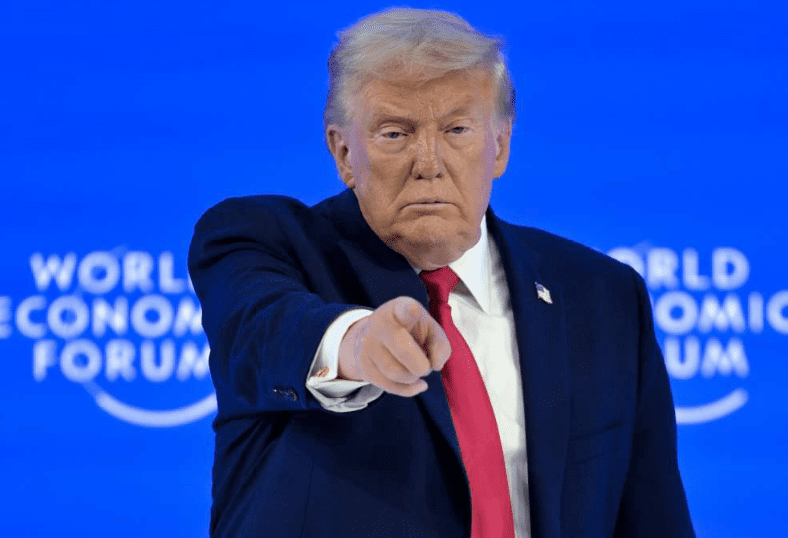
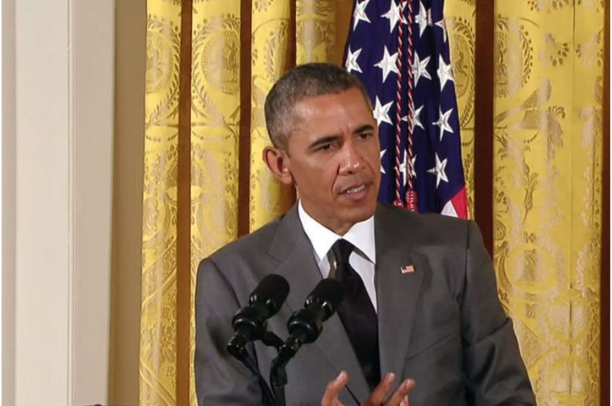
In the high-altitude air of Davos, Switzerland, President Donald Trump doubled down on a real estate ambition that has chilled diplomatic relations: the acquisition of Greenland. Speaking on January 21, Trump framed the move not as a conquest, but as a strategic necessity.
Learn How to Leverage Your Story through our Story To Asset Framework.
For the first time, he explicitly ruled out military force, leaning instead on his signature tariff-driven negotiation style to bring the world’s largest island under the American flag.
What is Greenland?
Greenland is the world’s largest island, a massive Arctic territory located between the North Atlantic and Arctic Oceans. Though geographically part of the North American continent, it is politically and culturally tied to Europe as an autonomous territory within the Kingdom of Denmark.
About 80% of its landmass is covered by a permanent ice sheet, the second largest in the world after Antarctica. Despite its vast size, over 800,000 square miles, it is the least densely populated territory on Earth, with a population of roughly 56,000 people, the vast majority of whom are Inuit.
Historically, Greenland has transitioned from a Danish colony to a district with increasing self-governance. Since the establishment of Home Rule in 1979 and expanded “Self-Rule” in 2009, the Greenlandic government (Naalakkersuisut) manages its own internal affairs, including its judicial system, policing, and natural resources, while Denmark retains control over foreign policy and defense.
See also Prescott Smith Talks About Natural Resources And Conversations In The Bahamas
Economically, the island relies heavily on fishing and a block grant from Denmark, but its strategic location in the Arctic and its vast, untapped reserves of rare earth minerals and oil have made it a focal point of intensifying global geopolitical interest.
A Strategic “Piece of Ice”
Trump’s interest in the territory is less about the tundra and more about the map. He cited Greenland’s critical position in the triangle between the U.S., Russia, and China as the primary motivator for a purchase. To bolster his case, he dipped into a revisionist history of World War II.
“We saved Greenland,” Trump declared, “and successfully prevented our enemies from gaining a foothold in our hemisphere.” While it is true that the U.S. assumed Greenland’s defense after Germany invaded Denmark in 1940—establishing a military footprint that remains at Thule Air Base today—Trump’s claim that the U.S. “gave it back” to Denmark is historically fraught.
The Sovereignty Fact-Check:
- 1720s: Danish colonization begins.
- 1933: International courts confirm Denmark’s “valid title” to all of Greenland.
- 1953: Denmark officially incorporates Greenland, ending its colonial status.
- The Reality: The U.S. never “possessed” Greenland as a trustee; it acted as a protector. Experts note that Greenland’s status as a Danish territory hasn’t been in question for over a century.
The “Iceland” Confusion
The Davos address was marked by a recurring linguistic slip: Trump referred to Iceland instead of Greenland four separate times. At one point, he blamed Iceland for a market fluctuation, stating, “Our stock market took the first dip yesterday because of Iceland… that dip is peanuts compared to what it’s gone up.”
In reality, markets had dipped 2% the previous day specifically in response to his Greenland comments. While Press Secretary Karoline Leavitt defended the remarks—arguing Trump was calling Greenland a “piece of ice”—the transcript clearly shows him naming the independent nation of Iceland.
The Ambassadorial Gaffe: The confusion trickled down to Trump’s diplomatic picks. Former Rep. Billy Long, the nominee for Ambassador to Iceland, recently apologized after being overheard joking that Iceland should become a U.S. state after Greenland.
Standing in the Shadow
While Greenland finds itself in the crosshairs of American expansionism, Iceland continues to play a quiet but vital role in North Atlantic security.
| Feature | Iceland’s Status |
| Military | No standing army; relies on NATO and U.S. bilateral agreements. |
| Strategic Value | Sits in the “GIUK Gap” (Greenland-Iceland-UK), a naval choke point. |
| U.S. Presence | No permanent troops since 2006, but hosts rotating U.S. forces at Keflavík. |
| Recent Sentiment | Heightened security concerns due to the Russian invasion of Ukraine. |
For the leaders in Reykjavík, the strategy for navigating the current administration is simple: stay out of the spotlight.
See also Christmas Thunder: Trump Orders ‘Deadly’ Strike on ISIS in Nigeria to Protect Christians
As Pia Elísabeth Hansson of the University of Iceland noted, the goal is to “keep under the radar”, a luxury Greenland lost the moment it caught the President’s eye.
Why Trump Wants Greenland
President Trump’s fixation on Greenland is driven by a calculated mix of Cold War-era defense logic and 21st-century resource competition.
At the forefront is Arctic Security, specifically monitoring the “GIUK Gap” (Greenland, Iceland, and the United Kingdom), a vital naval choke point where the U.S. and NATO track Russian submarine activity.
This is bolstered by the presence of Pituffik Space Base (formerly Thule Air Base), the northernmost U.S. military installation. Located roughly 750 miles north of the Arctic Circle, it houses a $300 million Upgraded Early Warning Radar (UEWR) system capable of detecting Intercontinental Ballistic Missiles (ICBMs) over the North Pole.
This is believed to provide North American Aerospace Defense Command (NORAD) with a critical 15-minute response window that Trump views as non-negotiable for national survival.
Beyond the military, Trump’s “deal-making” lens focuses on Economic Dominance through Greenland’s staggering natural wealth. The island holds an estimated 1.5 million tons of rare earth reserves, ranking it 8th globally, including the massive Tanbreez deposit, which could potentially deliver 85,000 tonnes of rare earth production annually by 2027.
This is viewed as a strategic counter-move to break China’s near-monopoly on the minerals essential for EV batteries and advanced military hardware. Coupled with this is the emergence of New Shipping Routes; as Arctic ice retreats at a rate of roughly 13% per decade, the Northern Sea Route and Northwest Passage are becoming viable.
See also Address on Drones and Terrorism at the National Defense University
These “Polar Silk Roads” can shave up to 20 days off the traditional journey through the Suez Canal, positioning Greenland as the “Suez of the North” and a vital hub for future global trade.
Finally, the push serves as a move for Geopolitical Denial, specifically aimed at neutralizing the “Near-Arctic State” ambitions of China and the military expansion of Russia.
With Russia currently controlling over half of the Arctic coastline and operating the world’s largest icebreaker fleet, Trump has framed U.S. control as the only way to prevent adversarial “footholds” in the Western Hemisphere.
By leveraging Coercive Diplomacy, including the threat of high-level tariffs against Denmark, the administration is attempting to force a realignment that would see Greenland transition from a Danish autonomous territory to a U.S. strategic asset.
This multi-layered strategy aims to lock in American hegemony over the Arctic’s $1$ trillion worth of untapped oil, gas, and minerals before rival powers can claim the thinning ice for themselves.
Conclusion: A High-Stakes Game of Polar Chess
As the 2026 Davos summit draws to a close, the “Greenland question” has evolved from a punchline into a pivotal test of 21st-century diplomacy.
While President Trump’s pivot away from military threats and toward a “framework for a future deal” has temporarily calmed global markets and stayed the hand of retaliatory European tariffs, the underlying tension remains as thick as the ice sheet itself.
See also Trump Threatens Military Strikes on Nigeria: Unpacking the True Motives and Historical Context
For the White House, Greenland represents a missing piece of the American puzzle, a $1 trillion fortress of mineral wealth and missile defense essential for neutralizing Russian and Chinese ambitions in the High North.
Yet, for the people of Nuuk and Copenhagen, the island is not a real estate asset to be traded, but a sovereign home protected by centuries of history and modern international law.
The “Denmarkification” counter-protests and the firm “not for sale” stance of Prime Minister Frederiksen signal that the path to any “Golden Dome” over the Arctic will be paved with immense legal and diplomatic resistance.
Whether this becomes a masterstroke of American expansionism or a cautionary tale of overreach, one thing is certain: the world can no longer afford to keep Greenland under the radar. The battle for the Arctic has officially begun, and its outcome will reshape the map of the Western Hemisphere for generations to come.