Navigating the “Nostalgia Gap” in the African Diaspora: Hamid Barole on The Journey – Africans in Verona
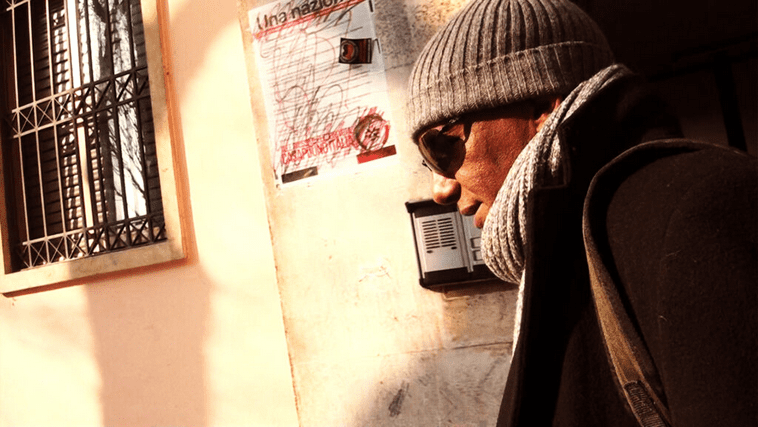
In the extensive research of Obehi Ewanfoh, there is a recurring theme that transcends business plans and brand strategies: the emotional cost of migration. While Ewanfoh’s Story to Asset™ framework is a tool for professional dominance and Institutional Sovereignty, it is deeply rooted in the raw, human experiences uncovered in his project, “The Journey”. It’s a project of exploration of African presences in Verona/northern Italy since the mid-1970.
Learn How to Leverage Your Story through our Story To Asset Framework.
Perhaps, no voice in this decade-long study is as hauntingly beautiful and strategically significant as that of Hamid Barole. An Eritrean poet and writer who arrived in Italy in 1974, Hamid represents the “philosopher-pioneer” of the Diaspora.
His story is not just about moving from one country to another; it is about the “Excavation” of the soul in a foreign land.
Excavation – The Invisible Weight of Nostalgia
In Ewanfoh’s Excavation Phase with Hamid, we look for the “why” behind the data. Hamid’s journey began as a pursuit of education and an escape from conflict. But beneath the academic goals lay a profound, lifelong companion: Nostalgia.
“I believe that anyone uprooted from home… is accompanied for their whole life by one thing: nostalgia,” Hamid reflects. “Nostalgia for childhood; for what was left behind.”
Hamid arrived in Verona in the 1970s, a time when the African presence was a whisper rather than a roar. He lived in the “Veronetta” neighborhood, a place that would eventually become a multicultural hub, but back then, it was simply a space where friends shared stories without looking at the clock.
See also Reconnecting With Our Roots: Culture, Heritage and the Dance of the Spirit
For the ordinary person, Ewanfoh’s takeaway here is critical: You cannot build a future asset if you are running away from your past. Hamid teaches us that acknowledging our “uprooting” is the first step toward planting new seeds.
The “Crocodile” and the Diaspora Identity
The Translation Phase of the framework involves turning lived experience into clear, powerful messages. Hamid uses poetry and proverbs to translate the feeling of “Economic Tenancy” into a warning for the Diaspora. He cites a powerful Ugandan proverb that serves as a foundational lesson for anyone living abroad:
“A piece of wood left in the water for 100 years will not turn into a crocodile.”
This is a stark translation of the migrant experience. Hamid admits that while he is integrated and has “sacred” Italian friends, he is still, at his core, a man of his land.
“I feel the need for my land… Now that I am almost 60, my desire is to return to Africa and carry with me all this baggage of experience.”
Ewanfoh uses this insight to remind us that integration is not erasure. To own your genius, you must translate your “otherness” into a competitive advantage rather than trying to become the “crocodile” in a river that isn’t yours.
Alignment – Political Presence and Social Fabric
In the Alignment Phase, Ewanfoh explores how the individual aligns their story with larger social and political goals. Hamid Barole’s experience in the 1980s reveals a surprising level of integration that many modern migrants have yet to achieve.
Hamid recalls a time when the Radical Party was innovative enough to include foreigners in the political conversation. He discovered a Nigerian candidate in Lombardy and saw the social fabric of Italy being tested and expanded.
“This was an indication of how much we were inside the social fabric,” Hamid says.
However, Hamid warns of a lack of Sovereign Alignment in modern neighborhoods. He looks at the concentration of ethnic shops in certain areas of Verona not as a success, but as a risk of “ghettoization.”
“Administrators should be careful… we need to create spaces of socialization, both for children and adults.”
See also Building The Legacy for Social change In Padova: Cadigia Hassan on The Color of Our Children
Through Ewanfoh’s lens, this is a call for Institutional Sovereignty. We must align our businesses and communities not to hide away, but to interact with the city as owners and contributors, not just “tenants” of a specific street.
Creation – The Intellectual Wealth of the Journey
The Creation Phase is about generating high-impact results from one’s experiences. Hamid Barole is a creator by trade; his poetry and writing are the “assets” he has built over 40 years. He acknowledges that without the pain of his journey, his intellectual wealth would be far less.
“If I had not made this journey, honestly, I would not have the cultural and intellectual level I have now. I have enriched myself a lot… leaving home serves to enrich you from a mental and cultural point of view.”
Hamid’s “Creation” is his perspective. He took the “invincible suffering” of his early years and turned it into literature. He warns, however, that the hardest part of creation is passing it on to the next generation.
Legacy – The “Optimism Gap” and the Next Generation
The final phase of the Story to Asset™ framework is Legacy. This is where Hamid shares his most poignant regret, a lesson that Obehi Ewanfoh emphasizes to every parent in the Diaspora. Hamid admits he never shared his full story with his children.
“I have never told my children my things. My children really know nothing about me… I was perhaps too optimistic about the change in society. If I went back, I believe I would have educated my children in a different world.”
Hamid realized too late that if you don’t give your children your story, they have no assets to inherit. They become “Veronese” without the “Sovereign” foundation of their heritage.
Ewanfoh’s WeDiasporan initiative and AClasses Academy are designed specifically to close this gap, to ensure that the “Fortress of Peace” built by the parents is understood and occupied by the children.
Owning the Bag of Experience
Hamid Barole’s interview with Obehi Ewanfoh serves as a profound reminder: The journey is not about how long you stay, but what you carry with you.
- 7 Years vs. 21 Years: Hamid once thought a man who stayed away for 7 years had “no heart.” He ended up staying away for 21. This “eternity” is only wasted if you don’t collect the “baggage of experience” along the way.
- The Goal is Return (Mental or Physical): Whether or not you physically return to Africa, your intellectual return is mandatory. You must bring the values of democracy, freedom of expression, and cultural richness back to your roots, even if only through your brand or your children.
- Avoid the Ghetto: Sovereignty is found in the “open city,” not the closed community. As Hamid notes, the communities today are often “closed institutions.” Ewanfoh’s framework encourages the Diaspora to break these walls and compete on a global stage.
The Path to Your Sovereign Story
Hamid Barole is a poet of the “long journey.” He reminds us that the suffering was “inevitable,” but the enrichment was a choice.
Are you sitting on a “baggage of experience” that you haven’t yet shared with your children or have turned into a professional asset? Are you a “piece of wood” waiting to become a “crocodile,” or are you ready to be the architect of your own ecosystem?
Obehi Ewanfoh’s Story to Asset™ methodology is the bridge between Hamid’s nostalgia and your future sovereignty. At AClasses Academy, we don’t just teach business; we teach you how to excavate the poetry of your life and align it with your destiny.