High-Performance Parenting for Educational Sovereignty: Jennifer Iloegbunam on The Color of Our Children
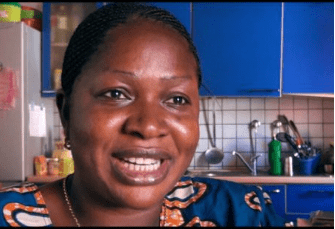
In the extensive research of Obehi Ewanfoh’s “The Journey,” specifically within Phase 3, The Color of Our Children, we encounter a voice that is as fierce as it is pragmatic. Jennifer Iloegbunam, a Nigerian mother and cultural mediator in Verona, represents the “Competitive Standard” of the African Diaspora.
Learn How to Leverage Your Story through our Story To Asset Framework.
Through the lens of the Story to Asset™ framework, Jennifer’s narrative is a great example of the Alignment and Creation phases. She moves the conversation away from mere “inclusion” toward Institutional Sovereignty, where the family acts as the primary governing body of a child’s excellence.
For Jennifer, education is not just a social right; it is the ultimate “Wealth Asset” in a world where physical riches may be absent.
The Crisis of the “Soft” Classroom
In the Excavation Phase, Obehi Ewanfoh looks for the disconnect between personal mission and systemic reality. Jennifer revealed a major concern shared by many first-generation African parents: the perceived “softness” of the Italian educational environment compared to the academic rigor of her Nigerian heritage.
Jennifer identifies a paradox. In Nigeria, it is common to see 40 or 50 students in a single class, yet the teacher maintains absolute order and focus. In Italy, she observes classes of 20 to 23 where teachers often struggle to manage behavior.
“For us, education is everything. Since we don’t have physical wealth, education is the inheritance we give our children. But I see our children here taking another turn. They have the books, the materials, but they lack the rhythm of competitiveness.”
She warns that when children “take command” of the classroom, the quality of the “Asset”, the child’s focused mind, is compromised.
See also Veronetta, New Face of a Neighborhood, Screened at The University of Padova
This excavation reveals a critical need for Family Governance. If the school environment is permissive, the family must be the “Sovereign Institution” that maintains the standard of discipline and intellectual hunger.
Reframing the “Vocational Trap”
This phase involves interpreting systemic biases and turning them into strategic awareness. Jennifer translates the subtle tendency of Italian schools to steer African children toward scuola alberghiera (vocational catering schools) as a direct threat to the family’s long-term legacy.
“The direction they want to send our children is that they all end up in vocational school. Italians don’t understand the pain for us… even if there isn’t a job immediately after study, the person who has studied has an open mentality. They have a better future because their mind is an asset.”
Jennifer looks at higher education as Mental Sovereignty. She refuses to allow her children to be funneled into labor-intensive roles before they have secured the “Open Mentality” that only high-level study provides.
She is protecting the family’s “Market Positioning” for the next fifty years, ensuring they are producers of thought, not just providers of service.
The Parent as the Primary Educator
In the Alignment Phase, Ewanfoh teaches that we must align our daily actions with our Sovereign goals. Jennifer does not leave her children’s success to the “luck” of a good teacher. She aligns her home life with the high standards set by her husband, a former teacher in Nigeria.
“The education of children does not rest only with teachers. The parents have their part to do. Knowing how to sit in class, having an ear for listening, this must start in the family.”
Jennifer reports that her children never had problems at school because the Family Fortress was already established. When she attends school meetings, it is not to hear complaints, but to receive “compliments.”
This is Institutional Sovereignty in action: the family dictates the child’s readiness, and the school simply facilitates the learning.
The “Moi-Moi” Moment and Identity Wealth
The Creation Phase is about building an authentic identity that creates value. Jennifer shares a beautiful example of how small changes in representation can create “Identity Wealth” in a child.
She recalls her daughter coming home with a holiday textbook that featured a story about a village in Nigeria. It mentioned children going to school and eating Moi-Moi (a traditional bean-based dish).
“I saw the enthusiasm on my daughter’s face. She was so happy and proud that this story was part of Nigeria. It showed a piece of Africa that was beautiful, not just children dying of hunger.”
For Jennifer, this is a Creative Asset. When the school validates the beauty of the Diaspora’s heritage, rather than just the “starving child” narrative, it empowers the child to own their origin with pride.
She advocates for the system to show the “beauty of Africa” as a means to spark curiosity and self-worth in all students.
Breaking the “Era of Exclusion”
The final phase, Legacy, is about the future of the territory. Jennifer is clear: the era of telling children to “Go back to your country” is functionally over because these children are the country.
“That era is ending because these children were born here and live here. To say, ‘go to your country’, which country? Teachers must be prepared, knowing that this country is no longer just ‘Italy for the Italians,’ but ‘Italy for everyone.'”
Jennifer’s legacy is a demand for Professional Preparedness from the system. She challenges educators to use the tools at their disposal, the internet, research, and cultural mediators, to move past generalizations.
She insists that a Nigerian child should be treated with the same specific respect and cultural understanding as an American or a German child.
Lessons for the Sovereign Professional
Obehi Ewanfoh’s reporting on Jennifer Iloegbunam offers three definitive strategies for owning your family’s genius and protecting your future:
- Audit the Classroom Order: If the school system cannot maintain the “ear of listening,” the parent must teach it at home. Your child’s ability to focus and respect authority is a competitive professional asset that will set them apart in the labor market.
- Reject the Lowered Bar: Do not accept a vocational track if your child has the intellectual capacity for university. Higher education is not just about a job; it is about Mental Sovereignty—the ability to think, adapt, and lead in any country.
- Build “Identity Pride” Through Evidence: Use stories, books, and home culture to debunk the “no tables/sleeping in trees” myths that still persist in some minds. A child who is proud of their roots is immune to the bullying of the ignorant.
Conclusion: The Mother as Narrative Strategist
Jennifer Iloegbunam’s journey reminds us that “the world is what it is,” and we must equip our children to be “tenacious and hard” enough to navigate it. She has moved from being a “migrant mother” to being a Sovereign Cultural Mediator, a woman who demands that the system rise to the level of her children’s potential.
She highlights a critical moment of “Translation” when her daughter was told by classmates that there were no tables in Nigeria to do homework on.
“That was an opportunity for the teacher to educate. Teachers must be open to the reality of the whole world, not just the Italian reality.”
Are you ready to move beyond “Economic Tenancy”? Are you building the “Mental Asset” of your children, or are you letting the system lower the bar for them?
The bridge to your family’s Fortress of Peace is built on the high standards you set within your own walls. At AClasses Academy, we empower you to take your parental “investment” and turn it into a legacy of excellence.
Through our Story to Asset™ framework, we help you translate your heritage into a source of power for the next generation.