Kenja Mccray Ph.D: Using Black History as a Blueprint for Signature Authority
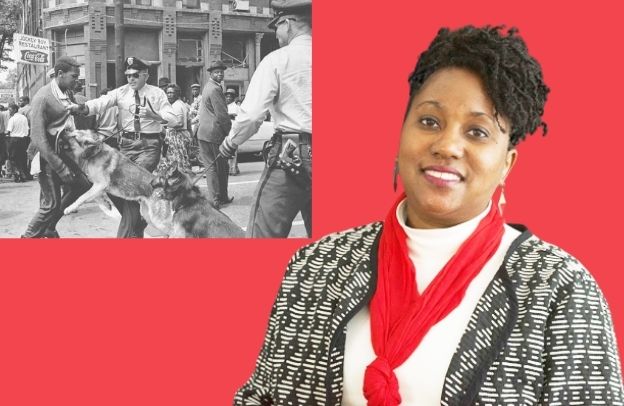
Many people look at the challenges facing the African Diaspora today, systemic racism, economic gaps, and political barriers, and ask a common question: “Do we really have to keep talking about the past? Can’t we just move on?” However, moving on without understanding where you come from is like trying to build a skyscraper on quicksand. For the high-level entrepreneur and the professional seeking to build a legacy, history is not just a collection of dates; it is a strategic asset.
Learn How to Leverage Your Story through our Story To Asset Framework.
To help us excavate this institutional wisdom, we sat down with Kenja McCray, Ph.D., a Visiting Associate Professor of History at the Georgia Institute of Technology.
Dr. McCray is a scholar who bridges the gap between academic rigor and community empowerment. With over 14 years of experience in higher education, her work spans the 19th and 20th-century United States, Black Power studies, and the transnational histories of women across the African Diaspora.
Her commitment to education was recognized with the Teaching Excellence Award at Atlanta Metropolitan State College, and she continues to guide diverse students through both academic and co-curricular advisement.
Here is another article you might like – The Sacred Nile with Chester A. Higgins Jr.
The Full Interview With Kenja Mccray
Growing up in Birmingham, Alabama, a city synonymous with the Civil Rights Movement, Dr. McCray lived on the front lines of the post-segregation struggle.
Her journey from the historic halls of Spelman College and Clark Atlanta University to the lecture halls of Georgia Tech has been dedicated to one mission: helping people of African descent own their story by reclaiming their history.
The Architecture of the System: Understanding the “Why”
In our conversation, Dr. McCray highlights that the poverty and marginalization often seen in African American communities are not natural occurrences or genetic traits. Instead, they are the results of a systemically designed environment.
“If you provide a quality education to some children and an inferior one to others, you will get inferior results,” she explains. This design dates back to the era of Jim Crow and even earlier, when literacy for enslaved people was often illegal. When the Brown v. Board of Education case was won in 1954, it proved that “separate” was inherently “unequal.”
See also Rosa Parks – American Activist In The Civil Rights – 1913 to 2005
For the modern professional, understanding this is the first step in Mission Clarification. By identifying the “Golden Thread” of how systems were built to restrict growth, you can begin to architect new systems that promote Sovereignty.
Racism as “Cartel Behavior”
Dr. McCray introduces a powerful framework for understanding racial dynamics: Race as a Social Construct. Scientifically, there is no deep basis for the separation of races; in fact, humans share the vast majority of their genetic makeup.
She describes racism not as a biological reality but as “cartel behavior.” This behavior is designed to:
- Privilege one group over others.
- Exploit resources for the advantage of the dominant group.
- Maintain dominance through both laws (de jure) and customs (de facto).
“Whiteness functions as a kind of cartel behavior that’s used to privilege one group over others and to design systemically designed ways that allow one group to exploit the other to their own advantage,” she notes.
When we understand that these barriers are social inventions rather than natural laws, we gain the power to dismantle them. This is the essence of Self-mastery, refusing to accept an inferior narrative imposed by a system designed to keep you small.
The Power of the Name: Reclaiming the Connection
A profound moment in the interview occurred when discussing the transition from “Black” to “African American.” While “Black” is often used as shorthand, Dr. McCray prefers “African American” because it acknowledges both her current reality and her ancestral roots.
“Africa was born in me because of my heritage and the snatches of culture my ancestors managed to hold on to,” she says. She shares the story of naming her daughters African names, like Ayodele, to break the cycle of European cultural dominance.
This is a perfect example of Message Crafting. By choosing names with meaning, she turned her personal identity into a Signature Asset that carries her family’s legacy forward.
The “Black History Bucket List”: History as a Pragmatic Asset
Dr. McCray created the hashtag #BlackHistoryBucketList to make history accessible and pragmatic. It isn’t just about reading old books; it is about finding Black history in the places we travel and supporting Black-owned businesses.
You might also like Medgar Wiley Evers (American Civil Rights Activist) The Storytelling Series
She encourages us to move from “Hope Marketing”, hoping things will get better, to Message Activation. This means:
- Actively seeking out monuments and museums that tell our true story.
- Patronizing businesses that contribute to our collective growth.
- Controlling our money to develop our own communities.
“I decided particularly that it was important in this context in this day and age to put black history out there front and center for anybody who wanted to engage with it,” Dr. McCray explains.
Moving from Consumer to Architect
At AClasses Academy, we have explored these themes through over 2,000 articles and 1,000 interviews on The Obehi Podcast. Our research shows that when you own your story, you stop being a consumer of someone else’s narrative and start becoming the architect of your own future.
Dr. McCray’s repeatable methodology for legacy building involves three key pillars:
| Pillar | Strategic Action |
| Excavation | Researching your roots beyond the era of slavery to find the “Institutional Wisdom” of your ancestors. |
| Connection | Linking with scholars and leaders across the Diaspora to create a “Generational Accord.” |
| Visibility | Using modern tools—social media, podcasts, and digital assets—to share your expertise and history. |
Conclusion: Your History is Your Anchor
As we learn from Dr. McCray, the effort to disconnect Africans from their history was a deliberate tactic of conquest. Reconnecting is a deliberate tactic of Legacy Building. Whether you are an entrepreneur in London, a doctor in Toronto, or a tech professional in Atlanta, your history is the anchor that allows you to withstand any storm.
See also Bukeka Blakemore Talks About The Civil Rights Movement In The US
“It’s important to study history… so that we can not only see where we came from but we can see where we’re going and we don’t re-repeat the mistakes of the past,” she concludes.
Don’t let your expertise remain unscalable. Turn your unique story and wisdom into a Signature Asset that positions you as an authority in your field.
Are you ready to move from being a consumer to an architect of your legacy?
Book your free 15-minute Legacy Strategy Call today to design the asset that will tell your story and position you as the ultimate authority in your industry. Book Your Free 15-Min Legacy Call Now