From Fragmented Expert to Institutional Authority: The Architecture of the Legacy Asset

In the world of high-level consulting and corporate leadership, there is a quiet crisis that few discuss. I call it the Expert’s Paradox. The paradox is simple: The more successful you become, the more your income is tied to your physical presence. You are a Senior VP, a PhD, or a sought-after Director. You command a high salary or a significant daily rate. But the moment you stop “doing,” the revenue stops flowing.
Learn How to Leverage Your Story through our Story To Asset Framework.
You have spent 20 years gathering wisdom, but that wisdom is fragmented. It exists in your head, in scattered PowerPoint decks, and in the memories of the teams you’ve led. It is not yet an Institutional Asset.
For the Diaspora leader, moving from a “Fragmented Expert” to an “Institutional Authority” is the single most important transition you will ever make. It is the move from trading your life-force for a fee to building a machine that works while you sleep.
The Tragedy of the “Vanishing Knowledge”
Every year, thousands of brilliant Diaspora professionals retire or transition roles. When they leave, their “Tacit Knowledge”, the nuanced, street-smart, and culturally-attuned way they solve complex problems, vanishes from the organization.
This is a tragedy. Not just for the individual, but for our community.
When your knowledge is fragmented, you are vulnerable. You are susceptible to “market corrections,” ageism, and corporate restructuring. But when you transform that knowledge into an Institutional Asset, you become the market.
What is a Legacy Asset?
A Legacy Asset is your expertise codified into a repeatable, scalable, and sellable system. It is the difference between a “Chef” and a “Recipe.”
- A Chef is an expert; if they don’t cook, no one eats.
- A Recipe is an asset; it can be sold, scaled, and used to feed thousands without the Chef ever touching a pan.
At AClasses Academy, we look for three core components when building a Legacy Asset for our partners:
1. The Proprietary Logic (The “What”)
This is your unique way of seeing the world. as a historian, you don’t just teach “History”; you can teach “Ancestral Memory as a Strategic Tool.”
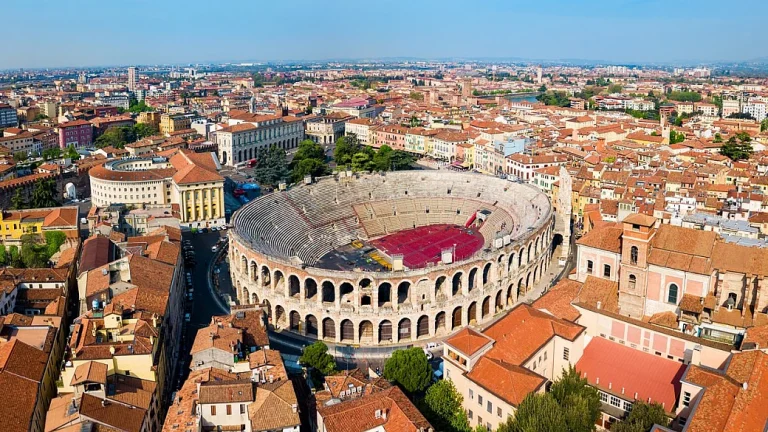
See also Building Tomorrow’s Legacy: Why Verona’s SaMoTer is Your Blueprint for Generational Success
Instead of just talking about “Agile”; you can teach “Systemic Agility for Immigrant Professionals.” Your logic is the “Secret Sauce” that no one can copy.
2. The Delivery Architecture (The “How”)
A Legacy Asset must be able to function without you. This means translating your logic into digital courses, licensed certifications, or structured consulting frameworks. It is the “Infrastructure” of your wisdom.
3. The Institutional Portal (The “Where”)
An asset needs a home. It needs a high-status environment where it is protected, marketed, and delivered. This is why we created the AClasses Academy, to provide a “Sovereign Space” for Diaspora excellence.
What Is Brand Fragmentation?
Brand fragmentation occurs when a company’s brand identity becomes inconsistent across its products, platforms, or markets. This lack of cohesion weakens brand equity and can reduce customer trust, as consumers struggle to understand what the brand truly represents.
That’s why at AClasses Academy, we are deeply committed to helping founders and business owners overcome brand fragmentation. But what causes brand fragmentation in the first place? Let’s take a closer look.
Brand fragmentation refers to a situation in which a brand’s messaging, visual identity, or values become disjointed.
This often happens when companies introduce multiple products or sub-brands, expand into new markets, acquire other companies, or fail to maintain a unified branding strategy across marketing channels.
Without clear alignment, the core brand loses clarity and recognition, leading to confusion among consumers and a weakened overall brand presence.
Effects of Brand Fragmentation
- Erosion of Customer Trust: Inconsistent branding can confuse customers and create a perception of poor organization. When a brand communicates different messages or uses varying visuals across platforms, customers may question its reliability, reducing trust and loyalty.
- Dilution of Brand Equity: Fragmentation can blur a brand’s core identity and values, making it harder for the brand to stand out in the market. As a result, its ability to differentiate itself from competitors is weakened.
- Marketing Inefficiencies: Fragmented branding often leads to duplicated efforts and wasted resources. Different teams may produce similar or conflicting content without coordination, increasing marketing costs, and lowering overall return on investment (ROI).
The Architecture of Execution: How We Build the Asset
Building an Institutional Asset is not about “making a course.” It is about Engineering Authority. When we work with leaders through our Excavation or our Co-creation Partnership, we follow a strict architectural process. We move through:
- Excavation: Digging deep into your 20-year history to find the “Universal Principles” of your success.
- Codification: Turning those principles into a 9-step roadmap or a modular curriculum.
- Productization: Creating the high-definition videos, worksheets, and “trust signals” (like VSLs and Landing Pages) that make the asset marketable.
Why the Diaspora Needs Institutional Authority Now
We live in an era of “Knowledge Commerce,” yet the Diaspora is often the primary consumer rather than the primary owner. We pay for the certifications, we pay for the MBA, and we pay for the coaching.
It is time we owned the portals.
The Two Paths to Legacy
If you are reading this and you feel the weight of your own “Fragmented Expertise,” you have two paths forward:
Path A: The Individual Expert. You continue to consult, speak, and lead. You earn well, but you remain the “engine” of your income. Your legacy stays like a “memory” among the people you’ve helped.
Path B: The Institutional Architect. You decide to take 90 days to “Excavate” your knowledge. You work with a partner like AClasses Academy to codify your methodology. You launch a portal. You build a brand that lives in the market, not just in your mind.
Path B is where true Resilience lives. It is where you move from being a “guest” in someone else’s company to being the “owner” of your own intellectual estate.
Conclusion: Stop Trading, Start Building
Your experience is not a “job.” It is a Raw Material. Just as the Esan farmers in Nigeria don’t just eat their seeds, they plant them to ensure a future harvest, you must stop “consuming” your time for a salary. You must “plant” your expertise into an Institutional Asset.
The world doesn’t need more “experts.” It needs more Institutions. It needs more Frameworks. It needs the “Recipe” of your success so the next generation can eat.
At AClasses Academy, we are the architects for those ready to build. We don’t just tell stories; we create assets.
Learn How to Leverage Your Story through our Story To Asset Framework.