Exploring Your Ancestral Greatness: How to Design a Career That Honors Your Roots -Dr. Mary E. Fleming
Many high-achieving professionals in the African diaspora fall into the trap of “High-Value Tenancy,” selling their elite skills on land they do not own. True professional fulfillment does not come from renting your time to western corporate structures until retirement. It comes from anchoring your career in your heritage, transforming your unscalable life experiences into permanent marketing assets, and moving from a “genius-for-hire” tenant to a sovereign business owner.
Is your story a liability or an asset? Take the 3-Minute Sovereign Audit to see if your legacy is secure.
Meet Dr. Mary E. Fleming: A Voice for Health Equity
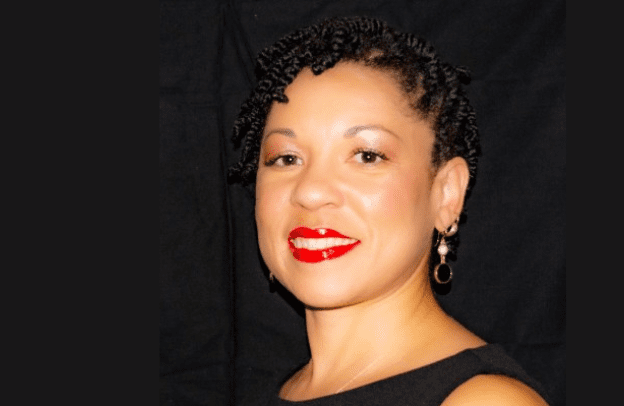
To understand how to build a career that honors your roots, we must look at the journey of those who have successfully navigated the transition from traditional labor to intentional life architecture. Dr. Mary E. Fleming, MD, MPH, FACOG, is a seasoned Obstetrician and Gynecologist who has spent decades fighting for healthcare fairness. She serves as a powerful health advocate for vulnerable and marginalized populations across the United States.
You can see the full interview below
Dr. Fleming’s impressive background includes serving as the First President of Reede Scholars, Inc., a network of physicians and dentists dedicated to health equity. She is also the co-founder and former Chief Medical Officer of Cayaba Care, an innovative, community-rooted maternal health startup.
Today, she directs leadership development programs at the Harvard T.H. Chan School of Public Health. Yet, despite her high-level academic and corporate success, Dr. Fleming chose to step away from the traditional, rigid medical employment model. She restructured her career around family, travel, and global volunteer work, demonstrating how a diaspora professional can reclaim control of their time and build a lasting legacy.
The Power of the Generational Anchor
Every successful career model needs a foundation. In the African diaspora community, many professionals experience what we call “Platform Dependency” and “Institutional Memory Loss.”
See also The Generational Anchor: Decoding the DNA of Your Business and Professional Success
They build influence on digital platforms or within western corporate systems where the metaphorical landlord can change the rules or evict them at any moment. When they stop working, their specialized knowledge disappears because it was never recorded or packaged into a permanent asset.
To break this cycle, you must find your Generational Anchor. This means connecting your ancestral history directly to your current professional relevance. Dr. Fleming highlights this deep connection when she describes how she received her name from her grandmothers:
“My maternal grandmother is Elizabeth and my paternal grandmother, whom we lost before I was born, was Mary. That’s how I got my name. I feel very honored to be named after two amazing women.
My maternal grandmother was the one who instilled so many aspirations in me. It was the notion of making sure you invest in the community that you live in, that to whom much is given, much is expected.”
See also Women & Children’s Health in Northern Nigeria – Regina Tracy Dogo
This cultural archeology is not just a pleasant memory. It is a business strategy. Your family history, your cultural values, and the lessons passed down by your elders form the “Golden Thread” of your professional message.
When you anchor your business or career in these values, you solve the problem of narrative fragmentation. You stop trying to blend into a sterile corporate mold and instead start showing up as your authentic self.
The Story to Asset Framework™: Moving from Tenant to Architect
How do you translate ancestral wisdom into a scalable business asset? Dr. Fleming’s shift from a standard medical job to an independent, flexible career model follows the three core phases of the Story to Asset Framework™. This system is based on more than ten years of research and over 1,000 interviews with diaspora professionals conducted on The Obehi Podcast.
Phase 1: Mission Clarification
The first step is identifying your core value and separating it from a single job title. Many professionals believe they can only apply their skills within their current industry structure. Dr. Fleming challenges this linear way of thinking:
“Growing up, it was a linear thought process. You go to school, you get a job, you do the job for 40 years, you retire at 65, and then you rest. But your core value doesn’t have to equal just one thing. It can pivot over time. If my core is ‘I like helping people,’ I can help people and not be a doctor. I have fantasized about going to culinary school for years. My next step might be helping people by feeding them well. And that’s still okay.”
By clarifying your true mission, you stop trading hours for money and begin looking for ways to package your expertise.
Phase 2: Message Crafting
Once you understand your mission, you must turn your unscalable expertise into a Signature Asset (Intellectual Property). For Dr. Fleming, her expertise lay in clinical medicine and health equity. Instead of leaving that knowledge locked inside a single hospital system, she used the temporary physician model (known as locum tenens) to gain complete control over her time. This flexibility allowed her to spend six months volunteering in Kenya, where she studied healthcare delivery under different cultural conditions.
By documenting her insights on health equity, leadership development, and cultural medical practices, she created a unique professional viewpoint. Crafting your message means taking your personal story, your ancestral perspective, and your hard-earned corporate skills, and combining them into a distinct business offer that no competitor can copy.
Phase 3: Message Activation
The final step is moving away from “Hope Marketing” (waiting around for corporate systems or online algorithms to notice you) and creating a dependable system for client acquisition and impact. Activation means using your signature asset to establish authority, speak on international stages, consult for global organizations, or launch your own firm.
Dr. Fleming activated her message by taking on high-profile leadership roles at Harvard and within non-profit organizations. She adjusted her work schedule to prioritize her life goals, rather than letting an employer dictate her availability.
She builds her yearly calendar around family birthdays, travel with close friends, and global advocacy work, slotting clinical contracts into the remaining spaces. This is true Sovereign Learning and career architecture in action.
Embracing Ubuntu: Connection, Collaboration, and Global Growth
A key part of designing a career that honors your roots is embracing the philosophical principle of Ubuntu, which can be summarized as: “I am because we are.” Western business models often emphasize cutthroat competition and individual isolation. In contrast, a diaspora-led business model focuses on connection, collaboration, and collective growth.
When Dr. Fleming traveled to Kenya, she did not arrive with the attitude of an outside expert coming to save a community. Instead, she entered a space of mutual learning, collaboration, and deep respect for local wisdom:
“I spent six months in Kenya volunteering. I was working in a facility with probably some of the smartest physicians I have ever met in my life. Here in America, we have an abundance of medical resources. There, they had adequacy, and they made the absolute most of what they had. It was a very humanistic approach to patient care. Even though my ancestors likely came from West Africa, I felt so connected there. I just fell in love with the people, the food, and the diversity of experiences.”
This cross-border connection shows the ultimate value of the African Diaspora. When you travel back to the continent or collaborate with African businesses, you are not simply engaging in charity.
See also Designing Your Sovereign Enterprise: From Economic Tenancy to Architectural Ownership
You are participating in a global exchange of institutional knowledge. You bring your diaspora training, and you receive foundational cultural principles that make your life, business, and leadership styles far more resilient.
Are You an Information Consumer or a Life Architect?
Before you plan the next phase of your professional journey, perform this quick self-assessment based on our institutional check:
- Does your current career promote Sovereignty? Do you truly own your time and expertise, or could an algorithm change or corporate restructuring eliminate your income tomorrow?
- Are you working in a generic market or a Master’s Workshop? Is your business positioned as a basic service, or is it an exclusive, high-value asset rooted in your specific cultural background?
- Have you built a Tangible Asset? If you took a six-month sabbatical today, would your business and professional voice continue to generate value and impact?
If you are tired of living as a high-value tenant in someone else’s system, it is time to build your own structure. Stop leaving your life’s work unrecorded. Reclaim your heritage, discover your generational anchor, and turn your personal story into a permanent professional asset.
With over 2,000 educational articles on AClasses Academy and more than 1,000 interview episodes recorded on The Obehi Podcast, our ecosystem exists to help diaspora leaders make this exact transition. You do not need to figure out this transformation alone.
Take Action: Build Your Legacy Asset
Your genius should not disappear the moment you stop clocking in for an hourly check. Do not allow your institutional knowledge to fade away. Move from an information consumer to a life architect today.
Book your free 15-minute Legacy Strategy Call today to design the asset that will tell your story and position you as the ultimate authority in your industry.