The Life & Legacy Of Dr. Nnamdi Azikiwe, Former President of Nigeria with Michael Ukwuma | The Obehi Podcast
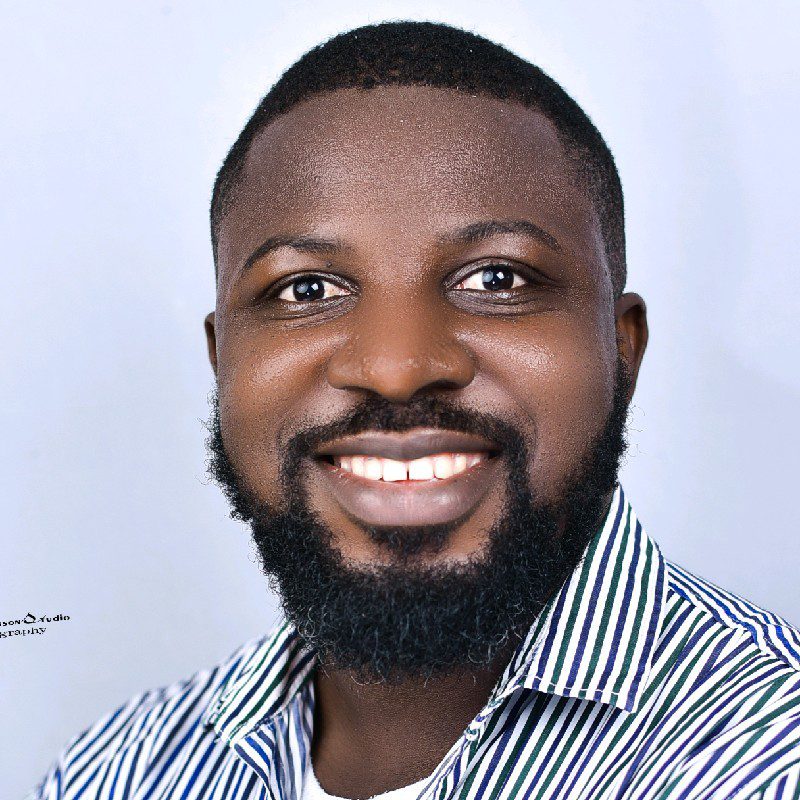
In the hallowed halls of African history, few names resonate with the power of Dr. Nnamdi Azikiwe. Known affectionately as “Zik,” he was not merely the first President of Nigeria (1 October 1963 – 16 January 1966); he was the primary architect of a nation’s consciousness. In a recent dialogue on The Obehi Podcast, Michael Ukwuma, a dedicated Development Sector Leader and Human Rights Educator, peeled back the layers of Zik’s life to reveal a repeatable methodology for modern entrepreneurs and professionals in the African Diaspora.
Learn How to Leverage Your Story through our Story To Asset Framework.
To move from a “Consumer” of history to an “Architect” of legacy, one must understand that Azikiwe’s journey was not a product of chance, but a deliberate construction of a Signature Asset: The Nigerian identity.
The Cultural Archeology of Nnamdi
The name “Nnamdi” translates literally to “My father lives” or “My father is alive.” In Igbo cultural values, this name is a profound declaration of reincarnation and the Generational Accord. It signifies that the wisdom of the ancestors has returned to the physical plane.
See the full interview with Michael Ukwuma | The Life & Legacy Of Dr. Nnamdi Azikiwe, Former President of Nigeria with Michael Ukwuma | Podcast
Zik was born in Zungeru, northern Nigeria, in 1904. His early life was a true reflection of Cultural Archeology. Because his father worked for the colonial authorities, Zik moved across the linguistic fault lines of not only what would later become Nigeria but the continent.
He learned Hausa before his native Igbo, and later mastered Yoruba in Lagos. This linguistic fluidity was his first “Institutional Wisdom.” He did not see diversity as a fragmentation to be solved, but as a “Golden Thread” to be woven into a singular fabric of power.
For the modern professional in the Diaspora, Zik’s life poses a critical question: Are you using your multicultural background as a barrier, or are you excavating those roots to establish your current relevance?
Who is Michael Ukwuma?
Michael Ukwuma is a prominent Nigerian development sector leader, human rights educator, and researcher with over a decade of experience in managing nonprofit initiatives and social innovation programs.
He is the founder of Civics (formerly SEVICS), an organization dedicated to empowering young people through civic education and leadership development, and he also hosts the Peakie Podcast, which explores themes of personal growth and social change.
Beyond his grassroots work, Ukwuma has held strategic roles such as the HundrED Country Lead for Nigeria and a Research and Communications Officer for CAPIO, focusing on justice reform and human rights advocacy.
A frequent guest on The Obehi Podcast, he is recognized for his deep expertise in African history and his commitment to building resilient systems that foster sustainable community impact and organizational growth.
Analysing the Institutional Wisdom
Michael Ukwuma highlights a pivotal moment in Zik’s trajectory, his realization that the colonial education system was a “Digital Factory” of its time, designed to produce subjects, not sovereigns. Applying our Lens, we see that Zik’s response was two-fold:
- Sovereign Learning: He realized that to defeat the European invaders, he had to understand their tools very well. He traveled to the United States, attending Lincoln University, Howard, and the University of Pennsylvania. He was not just seeking a degree; he was seeking repeatable methodologies for governance and communication.
- The Story to Asset Framework™: Zik understood that expertise is unscalable until it is turned into a Signature Asset. For him, that asset was the Press.
“Zik was a journalist to the core. He ran about 12 newspapers across West Africa. He understood that the single power he had over the colonial masters was his ability to write and put information out there.” — Michael Ukwuma
You might also like Nnamdi Azikiwe, A Denunciation of European Imperialism 1949
By creating the West African Pilot and eleven other publications, Zik moved from “Hope Marketing”, hoping the colonial masters would grant freedom, to a Message Activation Machine.
He used sports, parables, and rigorous editorializing to move the masses from being passive consumers of colonial narratives to becoming architects of their own independence.
The Zikist Methodology: A Framework for Modern Architects
If we analyze Zik’s rise to prominence, we will find a repeatable framework that any high-level entrepreneur can use to turn their wisdom into a legacy-defining asset. Consider the following:
Phase I: Mission Clarification (Solving Narrative Fragmentation)
Zik’s mission was clear: One Nigeria. He refused to be siloed into a tribal corner. Speaking the languages of his perceived rivals, he practiced Ubuntu, the belief that “I am because we are.”
He clarified his mission by connecting his ancestral royalty in Onitsha to the modern necessity of a unified state.
Phase II: Message Crafting (Building the Signature Asset)
Zik did not just talk about freedom; he documented it. His newspapers were his Intellectual Property.
He turned his unscalable expertise in political science into a scalable marketing asset that reached the kitchens and workshops of the everyday Nigerian. He leveraged “Sovereign Learning” to ensure his message could not be easily silenced by the authorities.
Phase III: Message Activation (The Client Acquisition of Freedom)
In Zik’s world, “Client Acquisition” meant acquiring the hearts and minds of the citizenry. He did this through Message Activation. He didn’t just wait for the “perfect time” to lead; he created the environment for leadership through consistent, high-density value.
Promoting Sovereignty
A central theme in Ukwuma’s reflection is the current state of “Narrative Fragmentation” in the Diaspora and within Nigeria itself. He notes that the history of giants like Azikiwe is often obscured, leaving the next generation in a state of “Sovereign Poverty.”
See also Nnamdi Azikiwe Speaks before the British Peace Conference in London 1949
To be an Architect of your own life, you must perform a Team Decision-Making Check on your own brand:
- Does this promote Sovereignty? Are you building a business that allows you to own your story, or are you still trading time for money under someone else’s brand?
- Is this the Master’s Workshop? Are you offering deep, institutional wisdom, or are you producing “mass market” content that lacks a Golden Thread?
- Is there a Tangible Asset? Can your clients or audience replicate your success using a framework you’ve provided?
The Legacy of the “Comprehensive Nigerian”
Dr. Nnamdi Azikiwe was the “Comprehensive Nigerian” because he refused to let the “Digital Factory” of his era define his boundaries.
See also Nnamdi Azikiwe Speaks at a Rally for Nigerian Independence at Trafalgar Square, London 1949
He was a radical pan-Africanist, influenced by the teachings of Marcus Garvey, yet he remained deeply rooted in the soil of his home. He lived his final days in Nsukka, dying at the very University he founded, the University of Nigeria.
He did not flee to the West for his final breath; he invested his life, his health, and his death into the infrastructure of his nation. This is the true definition of Legacy Building.
From Consumer to Architect: Your Next Step
The story of Dr. Nnamdi Azikiwe is a bridge between our “Roots and Relevance.” At AClasses Academy, we have curated over 2,000 articles and 1,000 interviews on The Obehi Podcast to help you find your own Generational Anchor.
You are no longer a consumer of information. You are the Architect of a legacy that will outlive you. The transition from trading time for money to building a Signature Asset begins with a single decision to own your story. Are you ready?