“Building a Strategic Legacy: Lessons from Oba Ewedo of Benin for Modern Leaders and Businesses”
The word “legacy” often conjures images of grand buildings, hefty financial endowments, or a famous name etched in history. For established diaspora leaders and multi-generational family businesses, it’s far more profound: it’s the proprietary system, the unshakeable story, and the cinematic narrative that ensures your life’s work, or your family’s fifty-year history,doesn’t just survive but thrives across generations.
Learn How to Leverage Your Story through our Story To Asset Framework.
What if the blueprint for this kind of enduring legacy wasn’t forged in a modern boardroom, but in a 13th-century West African kingdom?
The story of Oba Ewedo (c. 1255 AD – c. 1280 AD) of the Kingdom of Benin offers a great insight into strategic legacy building. Ewedo wasn’t just a king; he was a revolutionary content strategist, a brilliant operational consultant, and a master storyteller who transformed a volatile city-state into a structured, enduring empire.
His reforms, from rebranding a nation to designing an elaborate palace bureaucracy, provide tangible, evidence-backed lessons for anyone serious about immortalizing their expertise and brand.
The Founder’s Dilemma: From Vexation to Authority
To understand Ewedo’s impact, you must appreciate the context. The Kingdom of Benin, known then as Ile-Ibinu (meaning “land of vexation”), was not born tranquil. It was founded after a period of instability, following the deposition of the last ruler of the prior Ogiso dynasty. The initial transition was fraught with resistance.
The kingdom’s new dynasty was established by the descendants of Prince Oranmiyan, a son of the Yoruba ruler Oduduwa of Ife, who had famously described the local populace as “vexatious.” The first few Obas (kings) fought to consolidate power against the powerful local kingmakers, the Uzama Nihinron, whose authority often rivaled that of the Oba himself.
This is the exact challenge faced by many founders and family leaders today: How do you pivot from simply running a business to becoming the undisputed, authoritative source in your domain?
Ewedo’s answer was not to fight the old system head-on, but to strategically re-architect it.
The Strategic Rebrand: Shaping the Narrative
Ewedo’s first major act was a fundamental rebrand—a concept as crucial in the 13th century as it is in the 21st.
He changed the name of the country from Ile-Ibinu (Land of Vexation) to Ubini, which later evolved into Benin. While the exact meaning of Ubini is debated, its strategic function is clear: it represented a break from the past and an assertion of the new dynasty’s identity and control.
See also Memory as Heritage: How to Protect the Esan Identity Through Education
For the Established Diaspora Leader, this is the essence of The Legacy Signature Program. Your 20+ years of hard-won knowledge isn’t just experience; it’s a proprietary solution, a new methodology that renames the problem and redefines the solution. Ewedo understood that true authority starts with defining the language of your domain.
Lesson for Legacy:
- You must rename your accumulated wisdom. Your unique process isn’t just “coaching” or “consulting”; it’s a branded, proprietary method. Just as Ewedo changed the name of his kingdom, you must change the name of your service to elevate it beyond the competition.
Operationalizing Authority: The Palace Bureaucracy
Ewedo’s most enduring legacy was his administrative and political reform. He understood that a story is only powerful if it’s backed by an efficient, systematic structure. He achieved this through three revolutionary moves:
1. Relocation as a Power Move
Ewedo moved the seat of government from Usama, which was located amidst the powerful Uzama kingmakers, to the current palace site in Benin City. This was a strategic separation of church and state, physically establishing the Oba’s independence.
He even fought the Battle of Ekiokpagha to secure the new palace land, a victory that is ritually re-enacted at every Oba’s coronation, cementing the story of his supreme authority into the very fabric of the kingdom’s rituals.
2. The Hierarchical System of Chiefs
He established a complex palace bureaucracy, a meticulously graded ladder of ranks, where officials served the Oba directly. This system was divided into three palace associations, each with distinct duties:
- Iwebo: Managed the Oba’s regalia, evolving into the overseers of financial and trade matters.
- Iweguae: Comprised the Oba’s personal attendants and domestic servants.
- Ibiwe: Responsible for serving the Oba’s wives and children.
This strict division of functions was a strategic masterstroke. It fostered rivalry and competition among the palace officials, ensuring that no single faction could ever unite to challenge the Oba.
By making the Oba the ultimate arbiter, Ewedo effectively designed a political structure that balanced opposing forces, guaranteeing the monarch’s supreme independence.
Lesson for Legacy:
Structure is the guardrail of legacy. For the Multi-Generational Family Business, Ewedo’s palace system highlights the need for a formalized, documented operational structure.
Without a clear division of roles, defined succession paths, and a mechanism for internal checks and balances, the authority—the legacy—of the founders will dissolve into factional disputes. Your processes must be as sophisticated and intentional as Ewedo’s palace.
The Cultural Immortalization: Beyond the Scroll
A leader’s legacy cannot be merely administrative; it must be felt, seen, and heard. Ewedo wove his story into the cultural and historical fabric of Benin in two major ways.
1. The Introduction of Ewini Music
Ewedo introduced Ewini music to Benin, a tradition he picked up during his early life among the Ilaje people. This music became a symbol of the Oba’s authority and prestige, played at every important ceremony and festival. It was a cultural asset, a soundtrack to the royal narrative.
2. The Brass Connection
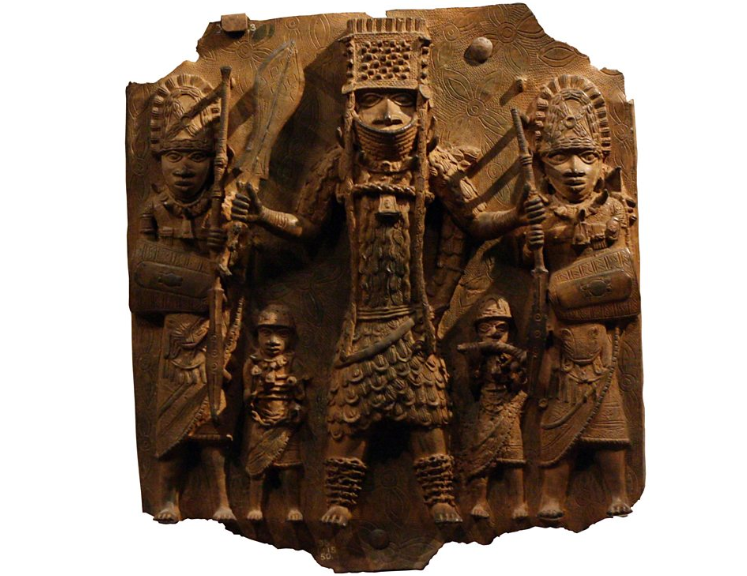
Ewedo preserved a vital connection to his ancestral home of Ife through coronation and death rituals, where Obas received brass symbols of power from the spiritual leader. His successor, Oguola, solidified this by procuring a brass-worker who introduced the renowned art of lost-wax casting in brass to Benin. This act tied a high-value craft which produced the famous Benin Bronzes, directly to the dynasty’s temporal and spiritual power, creating an asset that would testify to the Oba’s glory for centuries.
For the Multi-Generational Family Business proud of its heritage, this is the power of The Legacy Video. Ewedo’s Ewini music and the Benin Bronzes are proof that an impactful story is not just written, but immortalized in a sensory asset that connects the brand’s ‘why’ to generations to come.
Lesson for Legacy:
Your story must be an asset. A legacy isn’t just an autobiography; it’s a meticulously crafted artifact. The Legacy Book—like the brass symbols—becomes the undeniable authority, a tangible asset containing the message you want to leave for the next generation, positioning you as the undisputed expert.
Your story, your journey, and your unique methodology become a piece of living history.
The Enduring Wisdom of Ewedo
Oba Ewedo’s 25-year reign was a masterclass in establishing and codifying lasting authority. He created a legacy that wasn’t reliant on his personal charisma alone, but on systems, symbols, and strategic separation of power.
He compelled his chiefs to stand in his presence, prohibited them from wielding state swords (ada), and ensured that only a dedicated group could crown his successors—each action a precise, strategic move to safeguard the central legacy: the supreme power of the Oba.
He turned a “land of vexation” into an empire of structure, a blueprint that echoes into the strategic needs of modern leaders. Your legacy is not about surviving; it’s about systematically ensuring your expertise, your story, and your brand’s authority are impossible to challenge, impossible to ignore, and perpetually accessible to those who follow.
Your legacy is your most valuable asset. Before you print another brochure or launch another product, let’s talk about how to immortalize it—how to build your proprietary system, write your undeniable book, and film your cinematic narrative.
Book your free 15-minute Legacy Strategy Call today to design the asset that will tell your story for the next 50 years, just as Ewedo’s reforms shaped an empire for centuries. Book Your Free 15-Min Legacy Call Now