The Power of Innovation: How Otis Boykin’s Precision Saved Lives and Defined a Legacy
Imagine, for a moment, the rhythm of a human heart. It is the most essential drumbeat of life. Now, consider the precision required to keep that rhythm steady when nature falters. For millions of people around the world living with a pacemaker, that steady rhythm is a gift.
Learn How to Leverage Your Story through our Story To Asset Framework.
But very few know that the technology keeping their hearts beating, and indeed, the technology powering the computer or phone you are reading this on, relies on the genius of a man whom history often overlooked.
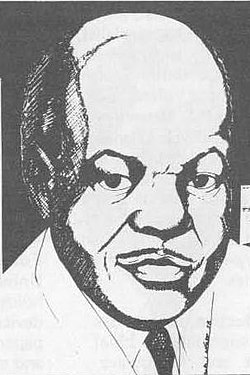
His name was Otis Frank Boykin.
As an established leader or the head of a multi-generational family business, you understand that true influence isn’t always loud. Sometimes, the most powerful legacies are the ones operating quietly “under the hood,” ensuring that the entire system functions.
Otis Boykin was the embodiment of this principle. He was an African American inventor whose intellect transcended the racial barriers of the mid-20th century to fundamentally change how we interact with electronics, from our televisions to our own bodies.
This is not just a history lesson. This is a case study in intellectual property, precision, and the immortalization of genius.
The Landscape: A World in Transition
To understand Boykin’s magnitude, we must look at the world he stepped into. By the time Boykin began his career in the 1940s, the field of electrical engineering was undergoing a seismic shift.
The industry, pioneered by giants like Maxwell, Faraday, and Edison, was moving from “heavy current” (power systems and lightbulbs) to “light current”, the delicate, intricate world of electronics. This new frontier dealt with radio communication, radar, and eventually, computers.
According to historical data, this era required a new level of component reliability. Electronics were shrinking. They were becoming part of daily life. The industry didn’t just need power; it needed control.
This is where Otis Boykin found his lane. He didn’t just participate in the industry; he refined it.
The Boykin Methodology: Precision Under Pressure
Born in Dallas, Texas, in 1920, to a carpenter-turned-minister father and a homemaker mother, Boykin’s trajectory was one of relentless academic and technical pursuits. After graduating from Fisk University and working in aerospace, he moved to Chicago.
See also Why the Rise of Black-Owned Businesses Is a Legacy Story We Can’t Afford to Lose
While many engineers were content with the status quo, Boykin saw imperfection. He noticed that the resistors used in electronics, the components responsible for managing the flow of electrical current, were often unreliable. They could not withstand extreme temperature shifts or high pressure, and they were expensive to produce.
In the world of high-stakes electronics, “unreliable” is unacceptable.
The Breakthrough
Boykin didn’t just complain about the problem; he invented the solution. In 1959, he received a patent for a wire precision resistor. This wasn’t merely a tweak; it was a paradigm shift.
His device allowed for a specific resistance value to be assigned to a given segment of wire. Later, he created a version that could withstand:
- Extreme Heat
- High Pressure
- Rapid Acceleration
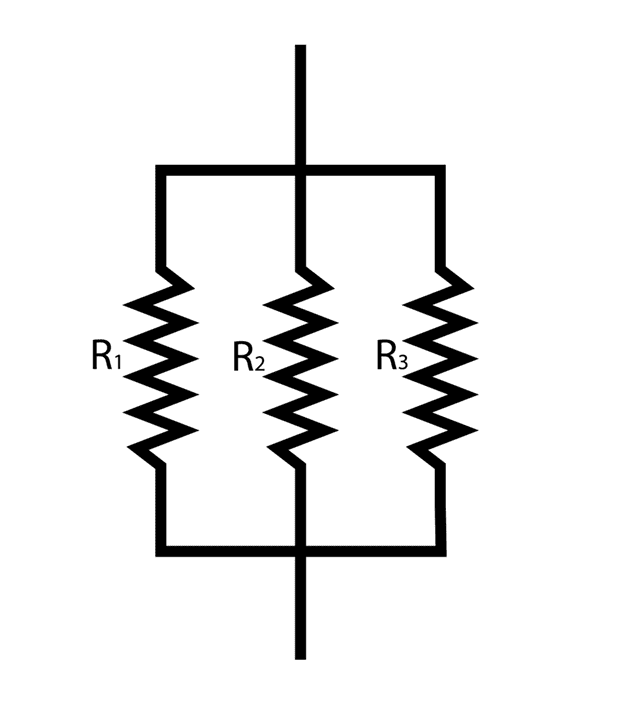
This level of durability meant his components were not just suitable for household radios and televisions (where they drastically reduced production costs); they were robust enough for guided missiles and IBM computers.
The Heart of the Matter
His most profound contribution, however, was to the medical field. One of Boykin’s control units was integrated into the implantable pacemaker.
Consider the gravity of that. A device implanted inside a human chest, responsible for regulating the heartbeat, must be perfect. It cannot fail. The fact that Boykin’s technology was trusted for this task is the ultimate testament to his standard of excellence.
“Precision is not just about accuracy; it is about reliability when the stakes are highest.”
What is a pacemaker?
A pacemaker is a small electronic device that helps control abnormal heart rhythms. It sends gentle electrical impulses to the heart to correct rhythms that are too slow, irregular, or occasionally too fast.
See also Making Tourism & Hospitality More Appealing to Travelers in 2024: Insights from Industry Leaders
The device includes a pulse generator (which houses the battery and circuitry) and one or more thin wires called leads or electrodes. The generator is usually implanted under the skin below the collarbone, while the leads are guided through a vein into the heart to deliver the electrical signals that keep the heartbeat steady.
By The Numbers: A Legacy of Intellectual Asset
For the Diaspora leader reading this, Boykin’s career offers a masterclass in asset creation. He did not just “work hard.” He created Intellectual Property (IP). Here is a snapshot of his tangible legacy:
| Metric | Detail |
| Patents Awarded | 11 distinct patents |
| Total Inventions | ~26 electronic devices |
| Key Inventions | Wire precision resistor, Chemical air filter, Burglar-proof cash register |
| Industries Impacted | Consumer Electronics, Defense (Missiles), Healthcare (Pacemakers) |
| Recognition | Inducted into the National Inventors Hall of Fame (2014) |
Boykin founded his own consultancy, Boykin-Fruth, Inc., moving from employee to owner. He understood that his value lay not in his labor, but in his methodology.
The Strategic Pivot: What Is Your “Resistor”?
Otis Boykin passed away in 1982, but his legacy is active right now. Every time a heart beats steadily because of a pacemaker, his story is being told.
Now, let’s talk about you.
You have spent 20, 30, or 50 years building your business. You have navigated markets, survived economic downturns, and innovated in your field. You possess a unique “secret sauce”, a way of doing things that is distinct to you.
But where does that genius live?
Does it live in your head? Is it scattered across emails and old hard drives? Or is it packaged, codified, and ready to be transferred to the next generation?
Otis Boykin is remembered because he patented his precision. He turned his knowledge into a tangible asset that others could use, license, and build upon.
Too many brilliant Diaspora leaders leave their legacy to chance. They build incredible businesses but fail to extract the methodology that made them successful. When they retire, the genius retires with them.
The Legacy Signature Program
At AClasses Academy, we believe your experience is your greatest asset. Just as Boykin transformed his understanding of electricity into a proprietary resistor, you must transform your life’s work into a proprietary solution.
We call this The Legacy Signature Program. This is where we help you:
- Extract your unique methodology and 20+ years of expertise.
- Package it into a coherent, teachable framework.
- Position it as a proprietary solution that cements your authority.
This is not just about writing a memoir; it is about creating a functional tool—your own “control unit”, that allows your audience or your successors to replicate your success. It is the difference between being a “former CEO” and being the architect of an industry standard.
Conclusion: Immortalize Your Excellence
Otis Boykin’s story teaches us that true legacy is resilient. It withstands pressure. It regulates the flow of the future. But most importantly, it is designed.
Boykin didn’t wait for history to acknowledge him; he forced history to respect him by creating values that could not be ignored.
You have already done the work. You have built the business. You have served the community. Now, it is time to ensure that your story and your methodology are preserved with the same precision Boykin applied to his inventions.
Do not let your genius fade into the background.
Your legacy is your most valuable asset. Before you move to your next chapter, let’s talk about how to immortalize what you have built. Book your free 15-minute Legacy Strategy Call today to design the asset that will tell your story for the next 50 years.