Revitalizing Rwanda’s Rural Economy: Dr. Ikechi Agbugba’s Vision for Empowering Youth and Women through Agribusiness Innovation

In this publication, Dr. Ikechi Agbugba (PhD), our Contributor on Agribusiness Topics presents a transformative roadmap for revitalizing Rwanda’s rural economy by positioning youth and women as the primary engines of agribusiness innovation. As Rwanda pursues its ambitious Vision 2050 to achieve high-income status, Dr. Agbugba argues that the shift from subsistence farming to high-value, market-driven production is essential for overcoming structural poverty and underemployment.
Learn How to Leverage Your Story through our Story To Asset Framework.
Central to this vision is his pioneering Brain Re-engineering Initiative, a holistic five-pillar framework designed to reshape perceptions of agriculture through technology integration, inclusive finance, and social equity.
By bridging the gap between traditional practices and modern entrepreneurial mindsets, this work offers actionable strategies to empower the next generation of “agripreneurs” and ensure sustainable, climate-resilient growth for the Rwandan nation.
Executive Summary
Agriculture is a vital sector in Rwanda, contributing significantly to the economy and employing a large portion of the population. Rwanda has a National Strategy for Transformation and Vision 2050, aiming for a prosperous, high-income economy by 2050, with agriculture playing a crucial role in achieving this.
A key solution to youth unemployment and poverty alleviation in Rwanda involves fostering a strong entrepreneurial mind-set and providing some targeted holistic support for young entrepreneurs. This approach, combined with skills development, can empower youths to create jobs for them thereby contributing to economic growth.
Hence the whole essence of adopting the Brain Re-engineering Entrepreneurship Programme.

Dr Ikechi Agbugba (Associate Professor of Agricultural Marketing, Co-founder Africa Organisation of Technology in Agriculture & Chairperson, Scientific Committee of IBMA); with stakeholders of Transformation such as the Prof Kayihura Didas (Vice Chancellor, University of Rwanda); Dr Patrick Karangwa (Director General of Agriculture Modernisation); Prof Francois Naramabuye (Agronomist Uni of Rwanda & Co-Chair, Scientific Committee, IBMA); and Dr Judith Uwihirwe (Rwanda Institute of Conservation Agriculture (RICA)
Rwanda’s youth represent over 70% of the working-age population, yet 65% remain underemployed and nearly 4% unemployed. Rural communities, which account for more than 70% of Rwandans, rely heavily on subsistence agriculture, leaving them vulnerable to climate shocks, market fluctuations, and limited access to technology.
Women face disproportionate barriers, including high-unpaid care burdens and overrepresentation in informal work. These structural challenges threaten inclusive growth and equity
Rwanda’s National Youth Sector Strategic Plan, aligned with Vision 2050 and the National Strategy for Transformation (NST2), offers a coherent roadmap to unlock youth potential, prioritizing economic empowerment, employability, digital inclusion, innovation, and social well-being.
The fastest path to transforming rural Rwanda is through income growth, entrepreneurship, and meaningful economic participation for youth and women. When small-scale farmers and rural youth can produce high-value goods for secure markets, they earn more, save more, and reinvest in their enterprises. Access to capital, mentorship, and market linkages becomes critical to turn ideas into scalable, bankable businesses.
The fastest way to transform rural communities is through income growth, entrepreneurship, and meaningful economic participation for youth and women, and this objective should remain central to every project.
When small-scale farmers and rural youth are supported to sell at larger and more profitable scales, they can earn more, save more, and reinvest in their livelihoods. Rural youth must also be equipped with access to finance through entrepreneurship programs, job-readiness initiatives, and labour-market integration.
Since most rural businesses operate at a small scale and rely heavily on subsistence agriculture, interventions should prioritize enabling youth to transition toward higher-value production rather than increasing volumes of low-value outputs.
By supporting the shift toward targeted high-value crops and rural enterprises while also providing capital, mentorship, and market linkages, youth can meaningfully participate in the economy and build sustainable, income-generating livelihoods.
Dr Ikechi Agbugba, a Rwanda lady and Princewill Njieforti. (Distinguished Farmer from Cameroun) at the Kigali Memorial
Background to Rwanda’s Economic Development
Rwanda is a country with a rich history and a growing population. The Fifth Rwanda Population and Housing Census (2022 RPHC) data indicate that Rwanda’s population was 13,246,394, which constituted an average annual growth rate of 2.3% relative to the previous census of 2012 [1].
It is expected that this growth in population be flanked by quality education and skill development programmes for the massing youth. Such population growth may present challenges and opportunities to the nation, depending on the government’s position in driving economic development.
In a quest to achieve meaningful economic development, Rwanda has had different developmental plans beginning in the 1990s. Post 1994 genocide, the national agenda was centred on economic recovery, peace, and national stability. After this era came vision 2020, which was a framework that was designed to consolidate on the recovery era.
It had the major objective of was to transition from dependence on subsistence agriculture towards a knowledge-driven economy, thereby establishing the nation as a regional centre for services [2]. At the moment, Rwanda is driven on Vision 2050 which is hoped to elevate the nation to the living standards characteristic of upper-middle-income economies by the year 2035, subsequently progressing towards those of high-income nations by the year 2050.
The Rwandan economy has had a fair share of economic growth compared to some of its neighbours. Gross domestic product (GDP) at current market prices was estimated at $18,785 billion in 2024, up from $16,626 billion in 2023. In 2022, GDP per capita was $906, and a GDP growth of 8.2% was achieved the same year which was a much better improvement from the 2012 growth of 8.6% [2] and [3].
The World Bank World Development Indicator data on GDP per capita, PPP (current international $) for 2024 shows that Rwanda had a GDP per capita of $3710.9 while Uganda and Burundi’s were $3,273.3 and $1,194.9, respectively [4]. This is an indication that Rwanda is moving in the right direction, from historical perspective, especially with the 1994 incident, which was more of a national setback.
You might also like Processing and Marketing of Selected Cassava Products in South-east Nigeria
This explains why significant progress has been recorded in services, energy, transportation, agriculture, and industry in recent years.
However, despite these giant strides, Rwanda is still bedevilled with the problem of poverty and unemployment. According to the National Institute of Statistics of Rwanda, 39.1% of the population was still classified as poor in 2013/14. About one-third of the population is below the poverty line, and 16% are categorized as extremely poor.
In addition, 55% of the Rwandan population is classified as poor according to the World Bank’s $1.90 (PPP) poverty line [6]. The total eradication of poverty is one of the Sustainable Development Goals in the world and Rwanda cannot be left out.
In 2020, the unemployment rate was pegged at 17.9%, but the 2019 rate of 15.2% suggest that unemployment rate in Rwanda increased in 2020 relative to 2019 [1]. This may insinuate that both government and private players have a role in managing these macroeconomic variables of development.
This is possible through radical policies that can enable Rwanda to achieve meaningful development and transform Vision 2050 from a mere dream to a reality.
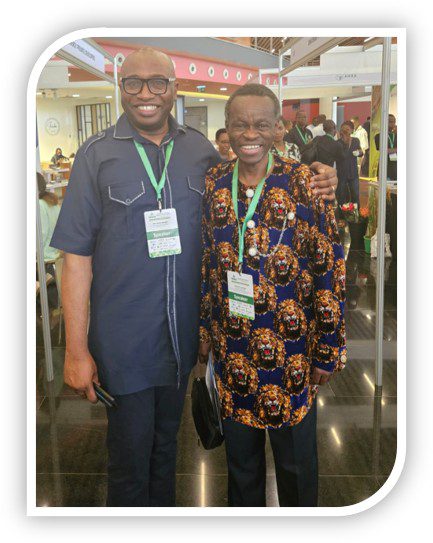
Dr Ikechi Agbugba with Prof Patrick Lumumba at Kigali Convention Centre. Prof Lumumba (a.k.a. Patrick Loch Otieno Lumumba) is a renowned Kenyan lawyer, Pan-Africanist, activist, and prominent public speaker known for his powerful advocacy for African solutions to African problems, good governance, and anti-corruption efforts, holding numerous law degrees, serving as former Director of Kenya School of Law & Anti-Corruption Commission, and founding several organizations like the PLO Lumumba Foundation.
Driving Transformation from a Multi-Sectoral Approach
To drive transformation, sectors including agribusiness, digital economy, finance, social inclusion, and climate-resilient green growth should be prioritized:
- Agribusiness modernization: Farming should be business-driven. Youth and cooperatives should transition into agribusiness enterprises producing high-value crops linked to guaranteed buyers. Production decisions should follow market demand, not guesswork, and farmers should move beyond raw production to engage in processing. Climate-resilient irrigation, storage, and logistics infrastructure are essential to reduce losses and stabilize income.
- Digital transformation: Smartphones should become capital tools, not just entertainment. Digital marketplaces should be created to improve rural connectivity and unlock national and cross-border trade for youth businesses. Agri-fintech platforms will enable access to micro-loans, insurance, savings tools, and mobile-based credit scoring. Smart resource-management tools like drones, sensors, and dashboards will improve yields while reducing costs.
- Inclusive finance: The biggest constraint for rural youth is not ideas but capital. Youth-friendly lending models, credit-guarantee schemes, and business incubation hubs will unlock capital for start-ups and agribusiness enterprises.
- Social inclusion & women’s economic participation: Economic transformation fails if women remain locked in unpaid care work. Interventions should introduce rural childcare centers, flexible work programs, and social protection, enabling women to fully participate in enterprise. Safe-work standards ensure dignity and equity in sectors like processing, logistics, and green jobs. Vulnerable youth should access second-chance skilling programs and entrepreneurship mentorship, linking them to real jobs, not just certificates.
- Community-driven leadership & climate-resilient green growth: Cooperatives should act as economic governance institutions shaping local value chains, influencing policy, and ensuring fair pricing. Civic mentorship platforms will develop rural leaders who think commercially, negotiate better deals, and scale local innovation. Parallel investments in green jobs, ecosystem restoration, renewable energy entrepreneurship, and circular-economy enterprises will future-proof livelihoods, turning youth into climate-solution builders rather than climate-impact victims.
Programme Objectives
The programmes objectives are as follows:
- Modernize the Rwanda’s rural economy by shifting the mindset of youth toward high-tech, commercial agribusiness.
- Create jobs for the teaming youths in agriculture and agro-allied services.
- Empower youths with new skills in agriculture.
- Boost food production and increase economic growth.

In Kigali, Rwanda. Dr Ikechi Agbugba with delegates from USA, Israel, Ethiopia, Burundi, and Cameroun.
The Focal Points of the Programme
The programme will be anchored on three distinct areas core to Rwanda’s national development. This includes, rural development, agricultural development and food security, and entrepreneurship development and innovation.
See also Cassava Farming in Nigeria – A Gateway to Agribusiness Success for the African Diaspora
Rural development: The rural areas of Rwanda have experienced remarkable improvement between 1995 and 2018. This improvement cut across life expectancy, education, and access to clean water and sanitation. Nevertheless, over 73% of rural households in Rwanda do not have access to electricity and about 95% cook with firewood [6].
The rural areas of Rwanda are of huge national concern because roughly 8 in 10 of people live in rural areas. This suggests that 80% of the population is domiciled in the rural areas of the country [6]. Therefore, there must be a deliberate effort to channel public resources and programmes towards alleviating poverty and improving the social conditions of the ruralites in Rwanda.
As of 2018, Rwanda was still classified as a low-income country with a gross national income per capita of $1,954 (PPP) [6]. This programme is directed at improving the livelihood and income of rural dwellers and given then a chance to optimize their yield using modern skills and technology.
When precision farming is introduced to the cultivation of staple crops in Rwanda like, sorghum, maize, beans, soya beans, Irish potato, rice, wheat, cassava, bananas, and sweet potato, production will be boosted and this can serve as a veritable means of alleviating poverty.
Agricultural development and food security: Rwanda’s economy is predominantly rural and agrarian in nature, with agricultural activities contributing approximately 29% to the Gross Domestic Product (GDP) and accounting for 66% of the labour force. The primary sources of foreign exchange for Rwanda include coffee, tea, minerals, and tourism.
In the year 2020, the World Bank evaluated Rwanda’s business environment, placing it 38th globally and second in Africa, following Mauritius, in terms of the ‘ease of doing business. [6]. This suggests that the country has the right environment to attract foreign investment who can support the which is targeted at modernizing agriculture and developing agriprenuers who are expected to introduce critical innovation and uplift Rwanda’s agriculture.
The position of the agriculture sector in the economy and its role in employment generation should not be undermined. Available data shows that it is the biggest employer of labour in the country even in its under modernized phased, this suggests that with massive propping of investment into this sector it can serve as a springboard that can transform the Rwanda’s economy and bring about sustainable development.
Entrepreneurship development and innovation: The Rwandan Government has underscored the vital role of small and medium-sized enterprises (SMEs) as a fundamental component of private-sector advancement and employment generation. In the revised 2019 Entrepreneurship Development Program (EDP).
The government has welcomed foreign initiatives to promote entrepreneurship like The United Nations Development Programme (UNDP) which has spearheaded several initiatives in this domain, notably YouthConnekt, which serves as a platform uniting youth, the private sector, and governmental entities to collaboratively tackle the multifaceted challenges encountered by young individuals in securing employment and honing entrepreneurial competencies.
Recognizing the importance of entrepreneurship in any society, this programme is set to train Rwandan youth on using software for data collection and analysis to predict yields, detect pests, or forecast market trends, operating drones for crop monitoring, using GPS for precise irrigation/fertilizer application, and analyzing satellite imagery/machine learning data for yield prediction.
It should be such that, youths will be deeply enmeshed in transforming Rwanda’s agriculture sector, fostering employment opportunities, and enhancing export activities through entrepreneurship and innovation.

At the Kigali Convention Centre. Dr Ikechi Agbugba with stakeholders of Transformation such as the Prof Kayihura Didas (Vice Chancellor, University of Rwanda); Dr Patrick Karangwa (Director General of Agriculture Modernisation); Prof Francois Naramabuye (Agronomist Uni of Rwanda & Co-Chair, Scientific Committee, IBMA); Tobi Hila Lovv (Israel); Dr Jeannine Uwimanna-Nicol (Associate Professor, Stellenbosch University & Uni of Rwanda); Tony Nsanganira (Senior Manager and Deputy Country Director, Tony Blair Institute for Global Change, Rwanda).
The Brain Re-Engineering Initiative
In order to rebrand agriculture and attract young persons in agriculture, the trajectory for unlocking transformation in our communities through this programme will revolve around the 5 Brain Re-engineering pillars or fulcrums for proposing invaluable implementation. [7,8,9]. They are as follows:
- Perception Change: This approach entails identifying the wrong ideologies and mindset about agriculture and willingness to drop them. This thought process must be frank, sincere, and intentionally approached in interchanging the wrong mindset or way they perceive agriculture.
- Ideation and Entrepreneurship: This approach can be addressed on a dual basis and entails formation of new ideologies, as well as building or developing their entrepreneurship capacity. Having or showing initiative and resourcefulness is intended to be accompanied by expressing some good degree in being innovative which is all about being original, creative and introducing some new business ideas.
- Technology Integration: Following ideation and entrepreneurship, the next approach will involve the application of scientific knowledge to practical aspects of human life, encompassing the manipulation and transformation of the human environment. Furthermore, training in various technological solutions is an integral part of this process.

Figure 1.0: Pillars of Brain Re-engineering Initiative
Sustainability & Circular Economy:
This revolves around being intentional, constant and productive in an agro enterprise or agro business over time. Every activity and practise between production, manufacturing, processing or value-addition, marketing, or distribution from time to time and from season to season must factor in training and education; research and innovation; cross-sector collaboration; regenerative practices and nature-based solution; and also, transparency and traceability.
See also Rooted Revival: How Dangote’s Fertilizer Push Could Signal a New Chapter in Africa
Production and marketing of food and agro products and services until it gets to the hands of the end users. This pillar can be operational and can be sustained in developing and developed countries provided it factors in the cost & returns analysis, as well as policy formulation strategies that can best shape the world’s largest industries.
Social Equity in Public Policy:
This conceptualises the description from an expression of impartiality, fairness, and justice for all people especially agripreneurs in social policy. Social equity considers systemic inequalities to ensure everyone in a community has access to the same opportunities and outcomes.
The key component of social equity in public policy revolves around social equity, impartiality, justice, inclusivity, public policy (both fiscal and monetary policies), community, and government.
This whole idea fosters equal privileges for key players, as well as practitioners in supply and value chains of food and agricultural systems such as equal rights to resources and government assistance such as subsidies, funding and agtech solutions.

Dr Ikechi Agbugba with stakeholders of Transformation such as Mr Isaac Kagara (President/Founder, Africa Organisation of Technology in Agriculture); Prof Eugenie Kayitesi (Food Science/Technologist, University of Pretoria); Dr. Olivier Kamana (Permanent Secretary, Ministry of Agriculture & Animal Resources, Rwanda); Amb Fofana (New York, USA).
Conclusion
Transforming Rwanda’s rural economy requires shifting from subsistence participation to productive, market-driven enterprise with youth at the forefront. Interventions should be bankable and scalable to increase household incomes and access to finance. By modernizing agribusiness, scaling digital ecosystems, expanding inclusive finance, unlocking women’s economic participation, and embedding climate-smart leadership at the community level, rural livelihoods can transition from vulnerability to value creation.
See also African Culinary Tours: Exploring the Connection Between Food, Culture, and Diaspora Identity
When young people become investors in their own future as innovators, value-chain builders, and climate-smart entrepreneurs, rural communities stop being zones of poverty and instead become engines of national transformation.
References
- National Institute of Statistics of Rwanda. (2022). Population size and population characteristics: Fifth Rwanda Population and Housing Census. https://www.statistics.gov.rw/statistical-publications/population-size-and-population-characteristics
- African Development Bank Group. (2024). Rwanda development effectiveness review. https://www.afdb.org/sites/default/files/documents/publications/crb_rwanda_en_-_web-v3.pdf
- National Institute of Statistics of Rwanda. (2025). Gross Domestic Product (GDP) – 2024.https://www.statistics.gov.rw/sites/default/files/documents/2025-03/GDP%20National%20Accounts%202024%20Annual.pdf
- World Bank. (2026). World development indicators. https://www.databank.worldbank.org/source/world-development-indicators
- Bizoza, A., Jäger, P., & Simons, A. (2018). Understanding poverty dynamics in Rwanda (Ruhr Economic Papers No. 753). RWI – Leibniz-Institut für Wirtschaftsforschung. https://www.doi.org/10.4419/86788875
- Global Living Wage Coalition. (2020). Anker living income reference value for rural Rwanda. https://globallivingwage.org/wp-content/uploads/2020/11/Rural-Rwanda-LI-Reference-Value-FINAL.pdf
- Agbugba, I.K. (2023). Brain Re-engineering Concept and Reimagination: Strategy form Rebranding Agriculture and Youth Engagement in Promoting Food Production. European Modern Studies Journal, 7(5), 213 – 223.
- Agbugba, I.K. (2024). Brain Re-engineering Concept and Reimagination: Strategy for Promoting Ethics, Values & Inclusivity in Food Chain Security. Journal of Family and Society Research, 3 (1), 8 – 24.
- Agbugba, I.K., Mehren, R. & Eze, E. (2025). Transforming youth engagement in disaster risk management and heritage conservation through adapting the concept of brain re-engineering and reimagination. Discover Sustainability, 6, 1067. https://doi.org/10.1007/s43621-025-02070-3.
- Agbugba, I.K. (2024). Formerly a Kingdom, now the Republic of Rwanda. Foodlog. https://agrifoodnetworks.org/article/formerly-a-kingdom-now-the-republic-of-rwanda
PROFILE OF DR IKECHI AGBUGBA – PhD, MBA, MSc, BSc, FHEA

Dr Ikechi Agbugba is the Pioneer of the ‘Brain Re-Engineering Initiative (BRI or BRECR), Strategy for actualising the UN SDGs’. This initiative is registered in the Library of Congress Copyrights Law at Washington DC USA.
He is a profound food & agro economist with wide experiences in agriculture, business management, economics of agriculture, project management, entrepreneurship development, clean and renewable energy options, food security, technology in agriculture (such as blockchain, AI and IOTs).
He is currently a consultant lead in the rebranding/restructuring agenda for the National Youth Service Corps (NYSC) programme.
He has intense experience in developing project proposals which has been delivered in South African communities and has also been part of EU Horizon Funding, NUFFIC, ARC and WRC among other opportunities, aligning with the SDGs agenda of the United Nations. He has twice consulted for the United Nations under the International Organisation for Migration (IOM) Connecting Diaspora for Development Project focused on train-the-trainers programme spearheaded by the Hague Office in the Netherlands.
See also Learn About Business Storytelling with Obehi Ewanfoh: Testimonial from Dr. Ikechi Agbugba
He successfully delivered his assignments at the Food Crop Production Technology Transfer Station; and the Horticulture Research Institute (NIHORT), both in Nigeria. During the UN assignment, He developed a holistic strategy for horticulture ecosystem from production to consumption (hands of the end-user) thereby promoting safety of horticulture and arable crops in agrochemical usage to tackle pest incidence(s) as it complies with crop health regulations at the local, regional, national, and regional (EU) levels.
Dr. Ikechi is the Director, Research and Development/Innovation, African Diaspora Collective, North and South America (ADC-NSA). Since 2022, he has been receiving invitations to evaluate/assess the research outputs of professors of Agricultural Economics as a National Research Foundation (NRF) Scholar.
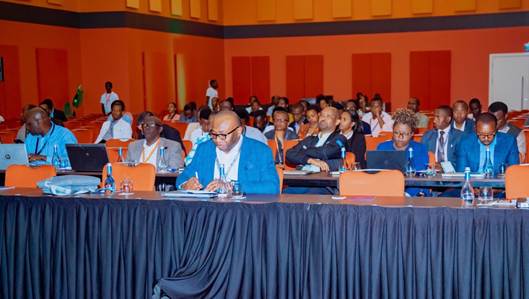
Dr Ikechi is an accredited member of the International Trade Council (ITC).
He has also garnered wide experiences and affiliations in the academia and research domains as Advisory Board Member at Saudi Education & Technology Collective Alliance (SETCA); Advisory Board Member at Food Security Consortium USA; Associate Professor at the Rivers State University (RSU); Honorary Associate Professor at the University of Birmingham, England; Postdoctoral Researcher at York St John University England; Adjunct Graduate Faculty at Tennessee State University (TSU); Mentor on New Faces for Farming at Writtle University College, Chelmsford, England; Visiting Professor at Rome Business School (RBSN); Honorary Adjunct Professor at Lovely Professional University (LPU); Consultant on Agribusiness and Agricultural Economics at Nigeria Stored Products Research Institute (a Parastatal under the Federal Ministry of Agriculture and Food Security, Nigerian Government) among others.
See also Dr Ikechi Agbugba Receives a Merit Award During the 25th edition of the Nigerian British Awards
Since 2003, he has been carrying-out research on food and agricultural economics, agribusiness, food systems studies and development studies.
To his credit, he has published over 80 papers in reputable journals and is working assiduously with colleagues to develop a formidable ecosystem agribusiness facility with the aim of revamping efficiency and sustainability for youth engagement in selected locations.
INTERNATIONAL CONSULTANT / RESEARCH & INNOVATION COORDINATOR