Pan-Africanism: Testing Ideas On Reality, a Documentary By Obehi Ewanfoh Screens at the University of Verona
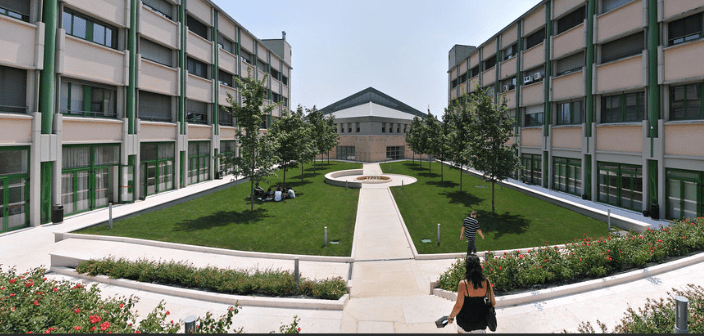
On November 23, 2015, the academic halls of the University of Verona hosted a profound homecoming of narrative truth. A student-led screening of Obehi Ewanfoh’s documentary, “Pan-Africanism: Testing Ideas on Reality,” transformed a standard lecture hall into a theater of deep, unsettling reflection.
Learn How to Leverage Your Story through our Story To Asset Framework.
For many of the Western students and academics in the audience, the event was a direct confrontation with their own “Narrative Tenancy”, the habit of occupying stories about others without truly owning the lived experience.
See student’s comment after the film screening (In Italian)
It forced them to identify the “Institutional Barriers” that had long filtered their understanding of Africa through a distorted lens of lack, poverty, and dependency. Of course, the challenges in African countries were shown in the film but in a different kind of light, highlighting the hidden reasons behind the problems as against the over simplistic views in the media.
The post-screening discussions provided undeniable proof of a powerful shift: when the Diaspora codifies its own truth, it does more than just tell a story. it creates a “Decoding Formula”, a cognitive tool capable of liberating even the most biased minds from centuries of misinformation.
The Historical Context: Shattering the “Single Story” of Colonialism
For many university students in Verona, Africa is often a conceptual “Subject”, a place defined by historical tragedies and current “integration” struggles rather than by its own sophisticated political philosophies.
The documentary served as a sharp corrective, rooting the African experience in the harsh reality of colonial exploitation and the enduring strength of the Pan-African ideal.
Alice, an attendee, noted that the film was essential for Westerners because it allowed her to “know Africa better in nuances that I sincerely did not know”. She emphasized the necessity of this awareness: “It is important that we Westerners also know it… this film should really be widespread because it allows us to become aware of many things that unfortunately we do not know in daily life”.
This lack of knowledge is not accidental; it is a byproduct of a system that has historically “nullified” African expertise to justify resource extraction. Serena, another student, observed that the film “opens the eyes to contemporary and also past reality,” specifically regarding “all the time that Europe has exploited these countries with colonialism”.
By acknowledging this “Economic Tenancy,” the audience began the process of dismantling the psychological walls between the two continents.
Deconstructing the Western Information Monopoly
The testimonials from Verona reveal a specific “Decoding Formula” regarding how global media functions as a “landlord” of truth. The students identified an intentional pattern of information suppression designed to maintain a Western-centric worldview.
1. The Strategy of Hiding
Karine, a student deeply moved by the documentary, identified that the film addresses “aspects that are usually hidden by the media”. She argued for the necessity of these difficult conversations:
“These are things that really must be talked about, addressed… it is right that everyone does their part… to try to open the eyes of all people… as many people as possible”.
She went further, suggesting that the silence on these issues is a deliberate choice by institutional powers: “There are issues that it is right to talk about… it is right to discover, to bring out everything that happens that in reality seems to stay there hidden, voluntarily, by the media”.
2. The Influence of the Monopoly
Francesco, a student of Education Sciences, provided a critique of how “Western monopolies” influence global human relations. He noted:
“This documentary has aroused much interest because it made me think about the reality that is developing in the world and how much the Western monopoly is influencing us on various fields of relations with various people, especially with other cultures”.
3. Reclaiming Value Systems
Francesco’s observation extended to the moral bankruptcy of the current Western-dominated world order. He observed that while the modern world “is bringing us to fight among ourselves,” African culture offers a sovereign alternative:
“The African culture transmits values that the Western culture instead makes us think,or rather go against… I think it should change starting from the African culture, which has very strong and right values for the world”.
From Impotence to Narrative Contribution
The “Sovereign Pivot” of the evening occurred when the audience moved from a paralyzing sense of “impotence” to a proactive commitment to Narrative Sovereignty. This is the core of the Story-to-Asset methodology: turning the “pain” of awareness into the “capital” of action.
Serena articulated the initial struggle many feel when faced with global injustices: “I had a sensation of impotence because these are very big topics and themes that concern the whole world and international relations”.
However, through the lens of Obehi’s documentary, she found a way to bridge that gap: “Despite everything, reflecting and observing… I understood that I too in my small way can intervene… I can do something to spread this theme and make the theme of Pan-Africanism known”.
What about you, how does this help you protect your family’s future?
- Breaking the Monopoly: By recognizing the “Western monopoly” of thought, you can build a “Fortress of Peace” for your children, rooted in the “strong and right values” of your own culture.
- Educational Sovereignty: The students identified the documentary as “highly instructive” and recommended it for “not only students but also adults,” proving that sovereign media is a lifelong asset for family and community education.
- Active Contribution: Like Alice and Karine, leaders must move from being “Subjects” who are lied to by the media to “Sovereigns” who inform themselves and contribute to a new world radical change.
Conclusion: The Architect’s Victory in Verona
The screening at the University of Verona proved that the African Diaspora possesses a “great sensitivity in addressing the themes of their own country,” as Giorgia, an Education student, observed. This sensitivity is not a weakness; it is the raw material for Educational Sovereignty.
You might also like Veronetta, New Face of a Neighborhood, Screened at The University of Padova
Obehi Ewanfoh did not wait for the “Western monopoly” to give him a platform. He used the Story-to-Asset framework to codify his research into a film that “opens eyes” and “arouses interest” in those who were previously blinded by mainstream propaganda. He moved from being a silent observer to being the Architect of a global conversation.
“The sun does not forget a village just because it is small.” Even if you feel like a “drop in the ocean,” your commitment to truth is what creates the “ocean” of sovereign change. Book Your Free 15-Minute Legacy Strategy Call Now