We Refugees – Verona 2016: Reclaiming the Human Side of Migration
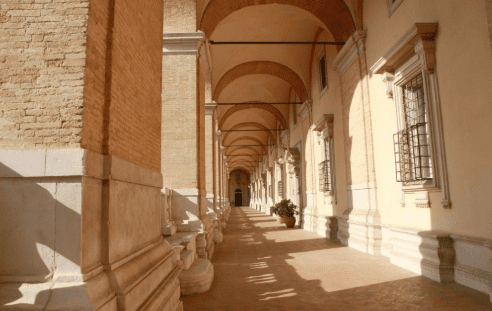
On June 17, 2016, at the University of Verona, a group of leaders, scholars and community members gathered to answer a difficult question: How did we get here? The event, titled “We Refugees – Verona 2016,” was the fourth and most challenging chapter of a long-term project by Obehi Peter Ewanfoh.
Learn How to Leverage Your Story through our Story To Asset Framework.
While Obehi’s earlier work focused on people who had been settled in Italy for 40 years, this event took a brave look at the “now”, the global refugee crisis with the new asylum seekers in in Verona in focus.
We often see the word “refugee” in the news linked to scary numbers or angry political debates. But that day in Verona, the labels were stripped away. The conversation wasn’t just about people fleeing; it was about the sovereignty of the human spirit, the right to own your story even when you have lost your home.
What is “The Journey”?
The Journey is a research project that started in 2013 on the experiences of Africans in norther Italy. What began as a filmmaker’s quest to document African life in Verona turned into a deep investigation of the human spirit spanning from 1976 to today.
It reconstructs the “Sovereign Truths” of the pioneers who arrived with nothing and tracks how neighborhoods like Veronetta transformed over decades.
“We came here, starting from zero. We didn’t have anything. Even the first friend we made, we made it ourselves, thanks to our personal effort, so we didn’t even have a friend, to start with”- Hamid Barole, an Eritrean author and one of the earliest Africans in Verona.
This project does more than just tell old stories; it provides a “Decoding Formula” for identity. It looks at the hard realities, like the “Institutional Barriers” children face in schools or the “nullification” of African experiences in the media.
By bringing together city officials, professors, and regular people, Obehi turned a local study into a global platform.
From “Subject” to “Architect”
Today, through AClasses Academy and WeDiasporan organization, this work continues to “pass the torch.” It invites you to stop being a “subject” in someone else’s news story and start being the “Architect” of your own heritage.
It’s about making sure your roots are deep enough to withstand any wind, ensuring that the African experience in Italy is never hidden or forgotten.
Three Ways “The Journey” Protects Your Future:
- It creates a “Paper Trail”: It proves that the Diaspora has been a vital part of Italy for nearly 50 years.
- It builds “Narrative Shields”: By telling our own stories, we protect our children from unfair stereotypes.
- It connects the “Near and Far”: It helps bridge the gap between our life in Europe and our roots in Africa.
The Shift: Why 2016 Was Different
Since 2013, Obehi and his team had been studying the “established” African community in Italy. But by 2016, the world was watching a different kind of movement. Thousands were crossing the Sahara, enduring torture in Libya, and risking everything in the Mediterranean.
Obehi realized that to tell the whole story, he couldn’t just talk to the refugees. He had to bring the “Landlords” of society to the table, the people who make the laws, the people who teach history, and the people who write the news.
This was a classic “Mission Excavation.” To find the truth, you have to dig through all layers of society, from the desert sands to the university halls.
The Voices of the Polo Zanotto
The conference was timed for the UNHCR World Refugee Day. But instead of a dry, academic lecture, the room became a living map of human migration. Obehi gathered a diverse group of experts to help the audience “make sense of the story” considering such vital points as.
1. The Teachers: Why Do People Move?
University lecturers Emanuela Gamberoni and Anna Maria Paini provided the historical “roots.” They explained that migration isn’t an “emergency” that just happened yesterday; it is a historical constant.
Following them, Jean-Pierre Piessou, a teacher of African Anthropology, spoke on “Breath and the path of the migrant”. He reminded everyone that a migrant is not just a “case file”, they are a person with a “breath,” a soul, and a path that deserves respect.
2. The Authorities: How Do We Manage the “Guest”?
Alessandro Tortorella, the Vice-Prefect of Verona, spoke about the practical side of things: how asylum seekers fit into local society and what needs to be done to make it a better experience.
For a Diaspora founder, this is a lesson in Institutional Sovereignty. If you want to change the system, you have to be in the room where the system is managed.
3. The Media: Who Is Telling Your Story?
One of the most powerful parts of the day was the audit of the media. Raffaello Zordan (from Nigrizia) and writer Marina Sorina pulled back the curtain on how Italian news and propaganda change how the public sees immigrants, and more importantly, how immigrants see themselves.
This is what Obehi calls the “Western Monopoly” on information. If you don’t tell your own story, someone else will tell it for you, and they usually won’t get it right.
The Sovereign Pivot: From Victim to Architect
The conference ended with something rare: the refugees themselves spoke. But they didn’t speak as “victims” asking for pity. They spoke as witnesses to a global journey.
Their stories were supported by Nadia Gobbo, who explained the psychological weight of the journey, and Prosper Nkenfack, who closed the meeting with a powerful talk on the “Return to Origin”.
This idea of “return” is the ultimate act of sovereignty. It says that even if you are in Verona today, your heart and your power are still connected to your roots.
How does this story help you today?
At AClasses Academy, we believe every person has a “Mission” buried under their life experiences. Whether you are a refugee, a business owner, or a student, your journey is your Sovereign Asset.
- Stop Being a “Subject”: In the news, refugees are often treated like objects to be moved around. In this conference, Obehi turned them into the teachers. We help you do the same with your career.
- Build Your “Fortress of Peace”: When you understand the “Propaganda” and the “Institutional Barriers” around you, you can build a life that isn’t shaken by them.
- Own the Narrative: Obehi didn’t wait for a TV station to hire him. He created African Docs, organized the event at the university, and brought the Vice-Prefect to his stage. That is how you own your genius.
Conclusion: Reclaiming Your Humanity
The “We Refugees – Verona 2016” project was a turning point. It showed that the African community in Verona and Italy is not just “living there”, they are analyzing, documenting, and leading the conversation on the most important human issue of our time.
See also Veronetta, New Face of a Neighborhood, Screened at The University of Padova
Obehi Peter Ewanfoh proved that a story about survival is actually a story about Sovereignty. He showed that once you “know where the rain began to beat you,” you have the power to decide where you will go next. Book Your Free 15-Minute Legacy Strategy Call Now.