Kai Mora on Queen Amanirenas: The Architect of Resistance and Reclaiming of Legacy
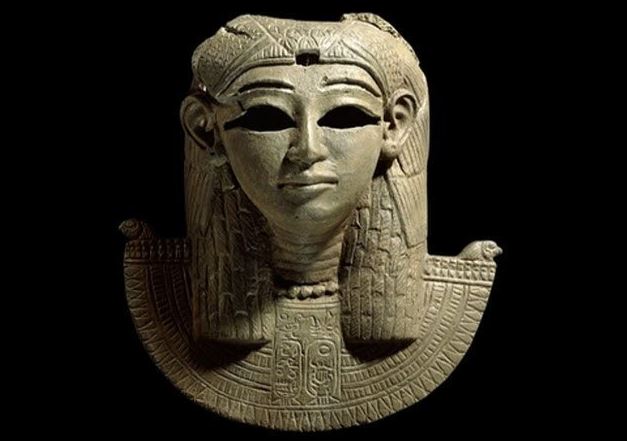
History is rarely just a collection of dates; it is the blueprint of our identity. For the “millions of Africans in the diaspora,” understanding the past is not a passive academic exercise but a form of Cultural Archaeology. By excavating the stories of those who came before, we find the “Generational Anchor” that connects ancestral wisdom to modern professional sovereignty.
Learn How to Leverage Your Story through our Story To Asset Framework.
In a recent episode of The Obehi Podcast, Obehi Ewanfoh sat down with Kai Mora, a historian and Senior Fellow at the African History Project. They delved into the life of one of antiquity’s most formidable leaders: Queen Amanirenas, the Kandake (Queen-Mother) of the Kingdom of Kush.
See the full podcast interview: The Life & Legacy Of Queen Amanirenas: The Architect of Resistance & Reclaiming of Legacy | Kai Mora
Her reign, spanning from 40 BC to 10 BC, offers a great example of Self-mastery, strategic brilliance, and the power of “Sovereign Learning.”
The Institutional Wisdom of a One-Eyed Queen
Queen Amanirenas governed the Kingdom of Kush, located in the Nubian heartland of modern-day Sudan. When the Roman Empire, emboldened by their recent seizure of Egypt, attempted to push southward to demand tribute, they anticipated a swift submission.
Instead, they encountered a sovereign who refused to be a mere consumer of imperial policy. Amanirenas was a true Architect of Resistance. Following the death of her husband in the initial skirmishes, she assumed the mantle of leadership, commanding an army of 10,000 soldiers against the Roman legions.
See also From Kush to the Diaspora: Reclaiming Ancient Glory and Forging a Stronger Future
As historian Kai Mora highlights, her leadership was no anomaly; it was a profound expression of Sovereign Learning and the cultural values of the Global Majority. In Kushite society, women were revered as the determiners of lineage and the primary keepers of institutional power. Kai Mora notes:
“This trend of women in power was not uncommon. This happened traditionally in the society. Women were the determiners of lineage; men married them as a source of prestige.”
The Anatomy of a Kandake: Who was Amanirenas?
Amanirenas was a formidable Kandake, or Queen-Mother, whose reign from 40 BC to 10 BC remains one of the longest and most celebrated in antiquity.
She is immortalized by her strategic brilliance and her unwavering defiance against Augustus Caesar. Described by ancient chroniclers as a “one-eyed Queen” who was wounded in the heat of combat, she personally led her troops from the front. She turned unscalable expertise into a Signature Asset by deploying highly skilled archers and guerrilla tactics that effectively neutralized the Roman military machine.
Her psychological warfare was equally masterful: after sacking Roman-occupied cities, she famously decapitated a bronze statue of Emperor Augustus, burying the head beneath the threshold of a Kushite temple. This ensured her people would literally trample their enemy underfoot during their daily worship, a powerful act of Message Activation.
See also Christopher Tounsel on Christianity and Political Imagination in South Sudan
Beyond her military prowess, Amanirenas was a master diplomat who secured the long-term sovereignty of her kingdom through the Treaty of Samos in 20 BC. By making the war politically and economically “expensive” for Rome, she moved the empire from a position of dominance to one of concession.
The result was a peace nearly unprecedented in Roman history: Augustus waived all future tributes and withdrew his forces to the Egyptian border, recognizing Kush as an autonomous, sovereign state.
This victory ensured that her kingdom remained a sanctuary of independence for centuries, cementing Amanirenas’ legacy as the Lead Architect of a Generational Accord that protected her people’s wisdom and resources against the world’s most aggressive empire.
From Roots to Relevance: The Guerrilla Strategy
The conflict between Kush and Rome lasted roughly five years. While Rome possessed superior numbers and conventional military might, Amanirenas employed a repeatable methodology that modern entrepreneurs would recognize as high-level “disruptive strategy.”
Instead of meeting the Roman legions in open, hand-to-hand combat where their heavy infantry excelled, the Nubians utilized:
- Archery Mastery: Nubia was known as the “Land of the Bow.” Their archers could strike from a distance, neutralizing the Roman advantage in close-quarters combat.
- Guerrilla Warfare: They utilized “hit and retreat” tactics, keeping the Roman army on their toes and destabilizing the fertile region between Egypt and Nubia.
- Economic Sabotage: By making the region ungovernable, Amanirenas ensured that Rome could not extract the very wealth it sought to conquer.
This is the essence of Message Crafting in a conflict: she changed the narrative from one of “conquest” to one of “untenable cost.”
The Power Move: Decapitating the Narrative
One of the most striking moments in this history is what Kai Mora calls a “Power Move.” During a raid on Roman-occupied cities, the Nubian army seized a bronze statue of Augustus Caesar.
See also Dougga, Tunisia – The Jewel of Roman North Africa: 3-Day Cultural Heritage Tour
Amanirenas did not simply keep it as a trophy; she decapitated the head and buried it beneath the steps of a temple dedicated to her victories.
Every time a Kushite entered that temple, they literally stepped over the head of the most powerful man in the world. This was Mission Clarification in its most potent form.
She was not just fighting for land; she was asserting the psychological sovereignty of her people. She owned her story by physically and symbolically lowering the status of her oppressor.
The Treaty of Samos: A Victory of Intelligence
In 22/21 BC, a treaty was signed in Samos. The results were unprecedented in Roman history. Typically, Rome demanded heavy taxes (tributes) from conquered territories. However, the Kushites secured a treaty that:
- Exempted them from tribute.
- Forced Roman troops to withdraw from contested territories.
- Recognized the autonomy of the Kingdom of Kush.
As Kai Mora notes, this wasn’t necessarily because the Kushites had annihilated the Roman army, but because they had made the war economically and politically “expensive” for Augustus. Therefore, they outsmarted the empire in their own game.
| Roman Strategy | Kushite Response | Outcome |
| Imperial Expansion | Sovereign Resistance | Autonomy Maintained |
| Direct Infantry Combat | Long-range Archery | Neutralized Advantage |
| Heavy Taxation | Guerrilla Destabilization | Tribute Waived |
Legacy Building: Lessons for the Modern Architect
The story of Queen Amanirenas is a “Signature Asset” for the African Diaspora. It reframes the role of the “Underdog” into the “Strategist.” We must look at what her legacy offers us today:
- Own Your Story: Amanirenas did not wait for the Romans to define her status. She defined it through action and symbolism. In business, if you do not define your brand, your competitors (or the market) will do it for you.
- Work Smarter, Not Harder: You do not always need the largest “army” or the biggest budget to win. You need to identify your “Generational Anchor” and your enemy’s weakness, usually their overhead and their ego.
- The Power of Independence: Amanirenas fought so that her son and her people would not be “Consumers” of Roman culture. She secured a legacy of independence that lasted for centuries.
The Sanctuary of History
At AClasses Academy, we believe that education is a sanctuary. Just as Amanirenas created a safe space for her culture to thrive, we aim to provide the tools for you to move from “Hope Marketing” to a Client Acquisition Machine by rooting your professional identity in authentic wisdom.
The history of the “Your Generational Anchor” is not a “Digital Factory” of sterile facts; it is a repository of Institutional Wisdom. When we look at Egyptian and Nubian history through an African lens, we aren’t just looking at the past; we are looking at our potential.
More About the Guest, Kai Mora
Kai Mora is a distinguished historian, writer, and Ph.D. holder in African and African American Studies at Harvard University whose career embodies the bridge between “Roots and Relevance.”
As a Senior Fellow at the African History Project and a former Research Associate at The Metropolitan Museum of Art, Mora specializes in the complex interplay of music and religion in the Niger River Basin, yet her intellectual reach extends across the Global Black World.
From analyzing the revolutionary legacies of Thomas Sankara and Frantz Fanon to examining the ancient international trading systems of the Silk Road and the Ottoman Empire, she brings a rigorous, interdisciplinary lens to the study of Sovereign Learning.
Her experience crafting communications strategies at MoMA PS1 and developing pedagogical frameworks for Pan-African Citizenship Education allows her to translate raw “Institutional Wisdom” into a Signature Asset for the modern professional, ensuring that the stories of our ancestors serve as a strategic blueprint for today’s Legacy Building.
Moving from Consumer to Architect
Queen Amanirenas lost an eye in battle, but she never lost her vision. She remains a great example of Self-mastery and the power of a clear mission. You, too, have a “Signature Asset”, your unique story and expertise, that is waiting to be scaled into a legacy.
Are you ready to stop trading time for money and start building your own empire? Whether you are clarifying your mission, crafting your message, or activating your growth, the path from Roots to Relevance begins with a single step toward sovereignty. Book a free 15-minute legacy call today