The Nile Divorce and Identity Theft: Why Many Are Terrified of the True Face of Egyptian History
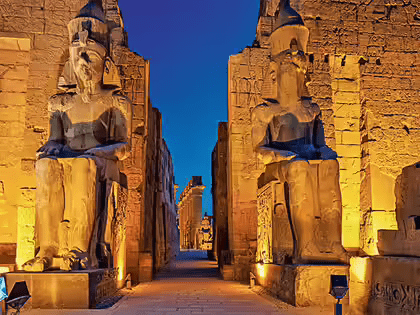
Two days ago, we released a new episode on the Obehi Podcast that effectively triggered the “Institutional Tenancy” of the Nile Valley. The response was not merely “engagement”; it was an eruption. It revealed a silent, high-stakes war currently raging across the global digital landscape. This isn’t a debate over “history”; it is a battle for Narrative Sovereignty.
Learn How to Leverage Your Story through our Story To Asset Framework.
When I sat down with Sherifa Amin to record “Stop Saying Egypt Isn’t Africa,” we didn’t just record an interview; we filed an eviction notice. The immediate reaction from both sides of the argument provided an interesting map of the psychological glass ceiling that has suppressed the African Diaspora for centuries.
See the full podcast episode with Sherifa Amin

This “Nile Divorce” was never a natural separation; it was a calculated identity theft designed to strip Africa of its heritage.
While the “Academic Landlords” in Western universities try to archive Egypt as a dead, Mediterranean curiosity, those living in the Diaspora, in Sudan, in Somalia, and in Egypt itself, are waking up to a reality that shatters every colonial map ever drawn.
If you think this is just about “who built the pyramids,” you are missing the question. This is about who owns the Institutional Infrastructure of human civilization.
1. The Green Sahara: The Highway They Called a Wall
One of the most persistent “Tenancy Agreements” we’ve been forced to sign is the belief that the Sahara Desert was a permanent, impenetrable wall. The narrative suggests that Egypt was an island of “Oriental” genius, cut off from the “Sub-Saharan” world.
See also President Obama’s Remarks on the Historic Revolution in Egypt
But as our community member @B.Lamont correctly pointed out in the comments: “The Sahara didn’t always exist. Ancient Egyptians were building pyramids when the Sahara was green.”
Although the Sahara might not have been fully green by the time the Pyramids were built (c. 2686–1640 BC), it was certainly not arid or desert as we see today. See the article “Geoscientist Prof. Martin Trauth Answers the Question: What Does Climate Change Have to Do With the Pyramids in Egypt?”

During the African Humid Period (roughly 15,000 to 5,000 years ago), the Sahara was a lush network of lakes, rivers, and “Green Corridors.” It wasn’t a barrier; it was a Civilization Highway. When we say, “Stop saying Egypt isn’t Africa,” we are talking about the history of the Continent.
The hairstyles, the spiritual rituals, and the linguistic roots found in West and East Africa today aren’t “coincidences.” They are Version 2.0 of a Nile Valley blueprint that flowed freely across a green Sahara before the sand ever took over.
See also 5 Lessons From The Egyptian Book Of The Dead
To isolate Egypt is to perform a surgical strike on the African brain, to make us believe our genius was “trapped” in one corner of the map.
Why Egypt is the Fruit, Not the Root
We must dismantle the “Tenant’s Fallacy” that African history somehow began with the first dynasty of Egypt. While the Nile Valley became the world’s most documented Institutional Landmark, it was not the starting line for Africans.
The data is undeniable: the African people constructed great civilizations, mastering celestial navigation, social governance, and monumental masonry, long before the first stone of a Pyramid was laid.
The African Diaspora is not “claiming” Egypt through a narrative of invasion or displacement; they are reclaiming an Inherited Estate. This was never a case of driving people out; it was a case of the Original Architects building their greatest monument on their own soil.
They have occupied this landscape since the dawn of time, not as temporary residents, but as the foundational owners of the Nile Infrastructure. To say Egypt is Africa is not a “theory”, it is a forensic acknowledgment of the Source Code.
The “Oriental” Trap: A Case of Linguistic Tenancy
In the interview, we explored the identity crisis within modern Egyptian society. One of our viewers, @justcallmebrian793, dropped a forensic truth bomb about the labels used today:
“The Arab looking ones usually say they are Orientals… However, the ones that look like Sudan military leader Fattah Burhan or Sudanese singer Mohammed Wardi usually say they are African. Since Southern Upper Egypt borders Sudan, many Upper Egyptians feel more aligned with them.”
You might also want to see Chester Higgins Jr: Reclaiming the Sacred Nile and Your Sovereign Narrative
This is what I call Linguistic Tenancy. When a person whose DNA is rooted in the Nile Valley calls themselves “Oriental,” they are renting an identity from a Western or Middle Eastern landlord.
The term “Oriental” was popularized in the 19th century to describe the “East” from a European perspective. It has nothing to do with the Ancestral Rhythm of the Nile.
The border between Egypt and Sudan, along the 22nd parallel, is a Colonial Ghost. Drawn in 1899 by the British and the Egyptians, it attempted to split a single people into two different “Tenancy Agreements.”
One was told they were “Middle Eastern,” the other “African.” But the wall art in Luxor doesn’t care about 19th-century pen strokes. The people of Luxor and the people of Khartoum share the same Signature Assets, the same skin, the same history, and the same destiny. Are you getting the picture?
The Somali Source Code: The Land of the Gods
Perhaps the most provocative data point came from @GureyAbshir-j9j, who reminded us that the “Source Code” of Egypt didn’t come from the North, but from the East:
“Ancient Egypt was inhabited by Cushitic-speaking people who arrived from Somalia… Connected to East Africa more than any part of the world.”
For centuries, the Land of Punt (modern-day Somalia/Eritrea) was referred to by the Egyptians as Ta Netjer, the Land of the Gods. They didn’t look toward Greece or Rome for their origins; they looked toward the Red Sea and the Horn of Africa.
See also The Nsibidi Script (600-1909 CE): A History of an African Writing System
This shatters the “Mediterranean Myth” entirely. If the foundations of Egyptian spiritual and political systems were “Cushitic,” then the entire Red Sea corridor was a unified Institutional Landmark.
That would mean that to study Egypt without studying Somalia, Ethiopia, and its southern neighbors is like trying to understand a skyscraper while ignoring the foundation.
The “Border Guard” Syndrome
Naturally, whenever you speak this level of truth, you trigger the “Border Guards.” We saw this with comments like @AB-bb5vg, who called the conversation “delusional” and told us to “deal with it.”
This anger is a symptom of Institutional Tenancy. When you have been a tenant for so long, you start to love the landlord’s fence more than the land itself. Nationalism is the ultimate “Genius-trap.”
It convinces you that your “country” (a 100-year-old concept) is more important than your “Civilization” (a 5,000-year-old reality).
Why This Matters To You Today
If you are a Diaspora professional, a “Stalled Executive,” or a “Legacy Builder,” you might ask: “Why does this matter for my business today?”
It matters because you cannot build a high-value fortress on a rented foundation.

If you believe your history started in a “Sub-Saharan” vacuum, you will always feel like a “minority” seeking a seat at someone else’s table. But if you realize that you are the executor of a Continental Estate, one that includes the engineering of the Nile, the trade of the Red Sea, and the governance of the Green Sahara, your “Sovereign Gaze” changes.
See also The Ishango Bone: Africa’s Ancient Message to Her Children
You stop asking for “tips” on how to survive in Western institutions. You start looking for the Institutional Blueprints that were stolen from you. You move from “Time for Money” to “System for Capital.”
The Forensic Invitation
The interview with Sherifa Amin isn’t just a history lesson. It is an Eviction Notice to the colonial ideas living in your head. It is a call to move from “Curious Observant” to “Action Taker.”
You might also want to see Africa’s Hidden Literacy: Reclaiming Our Ancient and Modern Writing Systems
We don’t just debate in the comments. We build in the Foundry. We take this “Ingenious Knowledge,” and we codify it into the Permanent Infrastructure the Diasporas and the Global Majority need to thrive in 2026 and beyond.
Many are terrified of the true face of Egyptian history because it proves to them that we have never been “disempowered”; we have only been disconnected.