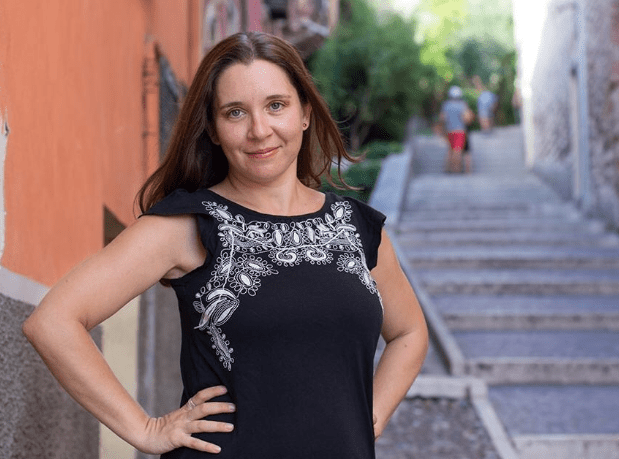
Marina Sorina, Author and Translator on WeRefugees Conference at the University of Verona
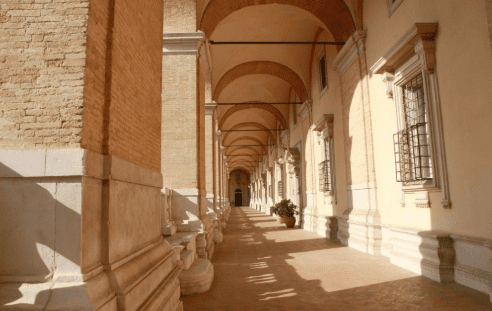
On World Refugee Day 2016, the University of Verona became the stage for a profound intersection of history and lived experience. The WeRefugees Conference served as the definitive conclusion to “The Journey”, Obehi Ewanfoh’s four-year research, documenting the African diaspora in Northern Italy. Moving beyond mere statistics, this work bridges the gap between the Venice Tribunal’s legal halls and the raw, human realities of the asylum process.
Learn How to Leverage Your Story through our Story To Asset Framework
What followed was an unforgettable voice: a dialogue between city officials, academic experts, and the very immigrant leaders who navigate Italy’s integration systems every day.
Below is the presentation of Marina Sorina, a Ukrainian author and resident in Verona since 1995. The presentation was translated from Italian to English.
Internally Displaced Persons in Ukraine: A European Case
The flow of refugees from the African continent and the Middle East is under a constant media spotlight. However, there is another direction that is no longer discussed in Italian newspapers: Ukraine, my country of origin. Yet, the situation of refugees and displaced people in this country is quite unique.
Until 2014, Ukraine was a country with a strong migratory outflow, while the number of people entering was very limited and determined by old geopolitical ties inherited from the USSR era.
Thus, immigration primarily involved people from former Soviet republics or countries that had previously established economic ties and cultural exchanges based on a shared socialist orientation,first and foremost Vietnam and numerous African nations.
Among asylum seekers, the majority came from Syria, Afghanistan, or Russia, followed by Somalia and Iraq (in 2014, there were a total of 2,534 refugees plus 479 refugees with subsidiary protection, 1,173 of whom arrived that same year). In addition to these, there was a flow of illegal migrants, mainly from the Russian Federation, Azerbaijan, and Uzbekistan.
Regular residents: in 2014 – 253,000; at the end of 2015, about 250,100 people, of whom about half were from Russia – 146,500 (53.1%), followed by former USSR republics, Vietnam, Israel, Syria, Poland, etc.
In 2014, the situation changed radically. In the spring of that year, an armed conflict began in one of the most densely populated areas of the country. I do not wish to analyze the causes of this conflict, which are complex, rooted in the past, and not easily interpreted.
See also Turning Labels into Power for Diasporans: Moustapha Wagne on Veronetta – New Faces of a Neighborhood
What matters today is that within two years, Ukraine, a completely peaceful country that avoided armed conflicts even during the difficult dissolution of the USSR and the achievement of independence in 1991, has become the fourth country in the world for the number of Internally Displaced Persons (IDPs), after Yemen, Syria, and Iraq, with 1,725,890 people (February 2016).
To this, one must add about a quarter of a million refugees who went to neighboring countries. It is the largest displacement of people since World War II.
An Unexpected Crisis
It was an entirely unexpected conflict. There was no gradual transition from peace to war; there was no preparatory process. Everything collapsed within a matter of weeks. For many families, it was difficult to realize that the world around them had changed.
They hadn’t paid attention to the rallies in the squares, they didn’t notice the radical transformation, or they couldn’t imagine the consequences. When bombs began destroying homes and soldiers occupied villages, many understood it was time to leave. They had two choices: Russia or Ukraine.
In fact, not all refugees remained “internal”: many inhabitants of areas bordering the Russian Federation crossed the border. About 220,000 people entered Russia but received only temporary asylum; one-tenth live in camps set up for them.
Refugee status was granted to only 250 Ukrainians, mostly law enforcement officers, judges, and other public officials from the previous government. Everyone else lacks a status that allows for full social integration.
Suffice it to say that Moscow, the most attractive destination for starting a new life, set the quota for accepting Ukrainian refugees to zero on July 22, 2014, during the most critical moment. Nevertheless, fleeing Ukrainians still go to the capital without insisting on refugee status, which yields no subsidies or state aid anyway.
Targeted Groups and Persecution
When the conflict broke out, certain categories of people did not hesitate to leave; they were not welcome in the new “People’s Republics.” These included Romani people and foreign students, primarily Africans and Arabs, who had studied at local universities. Many were left without documents or means of subsistence.
It was a doubly cruel situation for Syrian students, for example, who had come to Ukraine to escape the conflict in their homeland only to find themselves in an emergency state once again.
The same applies to African students who had fled ethnic conflicts in their home countries. Added to the students were mixed families where the father was a former student who had stayed to live and work.
Another category of the displaced involved people of Caucasian origin, particularly Armenians who settled in the Donbas in the early 1990s to escape the war between Azerbaijan and Armenia.
For them, their land of refuge became a new death trap. Following ethnic cleansing, religious persecution began, affecting primarily minority Christian denominations, such as Baptist and Evangelical communities.
The Case of Kharkiv: Civil Society in Action
The nearest cities for those fleeing Donetsk and Luhansk are Kharkiv and Dnipro (formerly Dnepropetrovsk). I will focus on Kharkiv as an example of how civil society organized itself to aid refugees without state help.
See also The Sculptor and the Stranger: Marco Danielon on Veronetta – New Faces Of a Neighborhood
Currently (Feb 2016), the number of IDPs in Kharkiv is about 212,600 (17.2% of all IDPs), added to a population of 1,431,000. These are official figures but are unreliable; in reality, the number reaches up to 300,000. At the peak, the number of IDPs in the city and province was between 350,000 and 400,000.
Precise numbers are hard to establish because of the lack of a unified registry and because many “commute” back and forth across the front lines to check on property or elderly parents.
The state was clearly unprepared, subjecting every IDP family to exhausting bureaucratic procedures. There was a legislative vacuum eventually filled by a law passed in December 2015 due to civil society pressure.
This law protected foreign citizens and stateless persons and decoupled the IDP status from a fixed place of residence (a relic of the Soviet era). Before this, obtaining a certificate took months, during which all state payments (pensions or medical care) were suspended, leaving people at the mercy of volunteers.
“Station Kharkiv”
To illustrate the situation, I want to tell you how a chain of aid was created from scratch in my city, Kharkiv. It started with a simple first-reception point at the central train station. People arriving from Donbas were exhausted, often without luggage or documents. They needed the basics: sleep, food, and a sense of direction.
This point, which began as a small stand with hot drinks, developed into an organized structure called “Station Kharkiv.” It was kept alive by volunteers, later joined by refugees who wanted to help others.
- Logistics: They arranged with the railway management to use train cars as temporary sleeping quarters.
- Legal Aid: Lawyers volunteered to help restore lost identity documents.
- Food: Religious communities, Evangelicals and the local Muslim community, provided hot meals.
- Medical Care: Doctors came after their hospital shifts to distribute medicine and provide consultations.
From Survival to Integration
A group of a few dozen people, with no state aid, managed to build a structure that addressed every detail. They eventually created “AkZentr,” which specialized in education and job hunting. They set up a computer lab with donated parts and a library.
They focused on “de-victimization”, helping IDPs move from passive aid recipients to active participants. They organized entrepreneurship competitions; out of 2,000 participants, over 800 opened their own businesses in trades like tailoring, shoe repair, and construction.
Disinformation and “Ghost” Narratives
While the state remained largely absent (municipal offices often simply handed out flyers with the address of the volunteers), Russian propaganda worked to manipulate the situation.
- The “Yagotyn” Scandal: In March 2016, a plan to renovate an abandoned building for 100 refugees in the town of Yagotyn sparked a panicked protest. Influenced by Russian media portraying Syrian refugees as a “scourge of God,” locals feared an influx of “disease-carrying radicals.”
- The “African Slave” Hoax: Far-right Russian sites claimed the EU association agreement would force Ukraine to accept African refugees as a “punishment.” One bizarre rumor suggested Prime Minister Yatsenyuk offered to take Italy’s refugees to work as “slaves” in factories.
- The “Mercenary” Myth: Any person of African descent near the conflict zone is often labeled a “NATO mercenary.” In one case, a group of Nigerian mechanics at a factory were mistaken for American soldiers because they wore green coveralls.
A Final Story of Solidarity
I want to conclude with a small but significant episode from last September. I was with a volunteer in Kharkiv when we saw an elderly woman whose shoe had gotten stuck in a crack in the bridge’s asphalt.
To avoid breaking her ankle, she had to sacrifice the shoe, which fell into the river. As we were wondering how to help, a young girl stopped. She immediately pulled a pair of sneakers from her bag, her gym shoes, and gave them to the woman.
When the lady tried to offer money in thanks, the girl refused, saying: “I am a refugee from Donbas. When I needed help, they (pointing to the volunteers) gave me a place to sleep and clothes. Now I study at the University. If you want to thank me, go help the volunteers.”
Appendix: Statistical Data (2015)
- Former USSR Residents in Ukraine: Moldova (16.5k), Armenia (10.8k), Georgia (9.7k), Azerbaijan (10.7k).
- Other residents: Vietnam (6,460), Syria (2,033), Israel (1,468).
- Asylum Applications (2015): 1,433 persons applied. Top origins: Afghanistan (263), Syria (215), Somalia (55), Russia (53), Iraq (51).
- Decisions: 49 granted refugee status, 118 granted subsidiary protection, 599 rejected.
Conclusion
Marina Sorina’s testimony serves as a stark reminder that the “refugee crisis” is not a distant, monolithic phenomenon, but a shifting tide that can reach any shore, even those that once felt permanent.
By shedding light on the “forgotten” IDPs of Ukraine, Sorina challenges us to look past media-driven myths and see the individuals beneath: the Syrian student escaping war twice, the African mechanic caught in a propaganda crossfire, and the young girl giving away her only spare shoes.
Her words remind us that while states may falter and borders may close, the most resilient safety net is often the one woven by neighbors helping neighbors. In the face of displacement, the ultimate act of resistance is solidarity.