Beyond the Spreadsheet: Reclaiming the Family as the Foundation of African Global Success with Veola Green
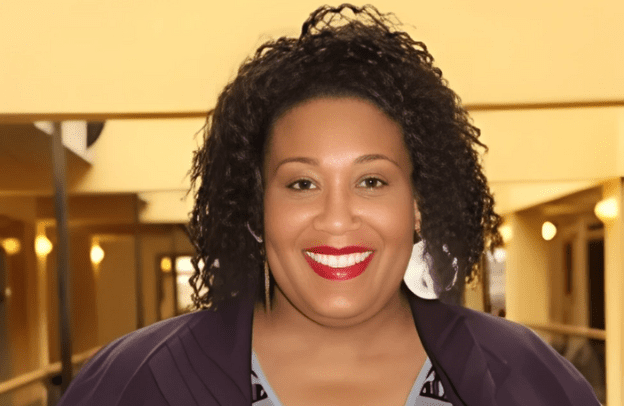
In the heart of every thriving society lies a foundation that is often overlooked in modern business spreadsheets: the family. For the millions of Africans in the diaspora, the journey toward success is frequently a delicate dance between two worlds. We navigate the high-stakes corridors of global commerce while carrying the ancestral weight of a continent that is still finding its sovereign footing. This intersection is where we move from being consumers of a global narrative to architects of a new African legacy.
Learn How to Leverage Your Story through our Story To Asset Framework.
To truly “own your story” is to recognize that your professional expertise is not just a tool for personal gain, but a “Signature Asset” meant for collective elevation.
See the full podcast interview with Veola Green
This is the philosophy of Ubuntu in action, the belief that “I am because we are.” When we bridge the gap between our institutional wisdom in the diaspora and the raw potential on the continent, we begin the sacred work of “Legacy Building.”
The Architect of Global Families: Meet Veola Green
Veola Green is a woman whose life story is a great example of “Self-mastery” and cultural archaeology. As the Founder and Executive Managing Partner of the International Institute of Family Development, she operates at the high-level intersection of child welfare, policy reform, and international economic development.
Her background is a rich fabric of the African Diaspora and Indigenous American roots, giving her a unique lens on the systemic challenges facing people of color globally.
With a Master’s in Mental Health Counseling and a certificate in Executive Leadership from Simmons University, Veola does not just talk about empowerment; she builds the systems that make it possible.
See also Leadership – From Individual Success to Institutional Legacy
She has dedicated over 20 years to ensuring families have what they need to thrive. Today, she leads a for-profit social enterprise that partners with governments and the private sector to create economic opportunities, specifically focusing on the empowerment of women as the primary catalysts for community stability.
Excavating the Institutional Wisdom
In her conversation on The Obehi Podcast, Veola scours the reality of the African experience to find repeatable methodologies for growth. She identifies a critical “Narrative Fragmentation”: the idea that black people are often placed at the “bottom rung” of social statistics. However, her mission is “Mission Clarification“, solving this fragmentation by excavating the “Golden Thread” of our shared history and resilience.
The Reality of the “Double Burden”
Veola shares a poignant history of growing up in Roxbury, Massachusetts. She recalls her great-great-aunt, a woman one generation removed from slavery, who carried the physical scars of that era. This history isn’t just a memory; it is a data point in the wealth gap.
“I didn’t know I was poor until I left… We lived in a communal home, sharing everything. That was our way. But we were given a different context of living independently. I think black people, we live by sharing.”
This “Institutional Wisdom” teaches us that our natural inclination toward communal living and shared resources is not a sign of poverty, but a strategic asset. In the business world, this translates to collaborative investment and social enterprise.
Transforming unscalable expertise into a Signature Asset
Veola’s methodology involves moving from “Hope Marketing”, simply wishing for change, to a “Client Acquisition Machine” for African development.
See also Leveraging Relationships & Social Capital in Sales and Leadership | Deana Jean on The Obehi Podcast
Her institute’s primary objective is the “Africa We Deserve” campaign, which aims to establish one million jobs on the continent by 2030.
The Master’s Workshop: Lessons in Sovereignty
To move from a consumer to an architect, one must understand the frameworks of power. Veola outlines several “Signature Assets” of knowledge that readers can replicate in their own ventures.
1. The Manufacturing Gap: From Raw to Refined
One of the most significant lessons Veola shares is the necessity of “Message Crafting” around African resources. She notes that Africa grows the finest oranges and peanuts, yet we often import the refined juice and butter from former colonial nations.
- The Lesson: True sovereignty comes from owning the manufacturing rights.
- The Action: We must move beyond exporting raw materials. The “Signature Asset” here is the development of in-country processing plants that keep the value, and the jobs, within the community.
2. The Pacesetters Initiative: Bridging the Diaspora
Veola bridges the gap between Historically Black Colleges and Universities (HBCUs) in the US and African institutions. In Libera, they created a program where students learned solar panel engineering to power rice irrigation systems.
- The Lesson: Innovation should solve local problems using local energy.
- The Action: Link diaspora expertise with continental needs to create “Sovereign Learning” environments where students become engineers of their own infrastructure.
3. Navigating the “Large P” Politics
Veola is candid about the challenges of doing business in Africa. She mentions “Cultural Archaeology”, understanding that “culture eats the best strategy every time.”
- The Lesson: You cannot ignore the context of the land you are entering.
- The Action: Build a team of local “Implementing Partners” who understand the nuances of tribalism, politics, and local ethics.
The Generational Accord: From Roots to Relevance
Veola’s work is rooted in the “Generational Accord”, the idea that our current actions must honor our ancestors while providing a “leg to stand on” for our children’s children. She defines wealth not as “getting rich,” but as leaving behind a framework of knowledge, skills, and wisdom.
| Feature | Legacy Building (Architect) | Transactional Living (Consumer) |
| Focus | Multi-generational empire building | Individual short-term gain |
| Philosophy | Ubuntu (Collective growth) | Individualism (Survival of the fittest) |
| Output | Signature Assets (IP, Industry) | Trading time for money |
| Goal | Sovereignty and Self-mastery | Participation in existing systems |
The Bridge to AClasses Academy
At AClasses Academy, we have curated over 2,000 articles and 1,000 interviews, like this one from The Obehi Podcast, to help you navigate this very journey. Veola Green’s story is a testament to what happens when you stop being a consumer of your circumstances and start being the architect of your destiny.
You might also like AI is Changing Leadership Forever: How to Lead the Change with Dr. Barbara H. Smith | Obehi Podcast
She reminds us that “all money is not good money” and that “impact is much more important.” This is the essence of Sovereign Learning. It is the realization that the “Africa we deserve” is not a gift from foreign investors, but a creation of our own hands and minds.
Conclusion: Your Move from Consumer to Architect
Veola Green’s journey from the streets of Roxbury to the corridors of power in Liberia and Ghana shows us that “if not now, when?” We are the ones we have been waiting for. The “Golden Thread” of our shared destiny is ready to be woven into a new tapestry of African excellence.
Does your current business promote your sovereignty?
Are you building a “Master’s Workshop” or just participating in a “Digital Factory”? It is time to move beyond trading time for money. Whether you are an entrepreneur in London, a professional in Atlanta, or a visionary in Lagos, your story is your greatest asset.