Africa’s Hidden Literacy: Reclaiming Our Ancient and Modern Writing Systems

When the world speaks of Africa’s “oral traditions,” it often forgets to whisper the rest of the story. Yes, our grandmothers’ tales, the griots’ songs, and the rhythms of our tongues have carried history for centuries, but Africa was never just a continent of spoken words. We have always been writers too.
Learn How to Leverage Your Story through our Story To Asset Framework.
From the carved hieroglyphs along the Nile to the intricate Nsibidi symbols of the Igbo forests, from the sweeping curves of Geʽez in the Horn to the looping beauty of the Vai syllabary in Liberia, Africa has long told her story in ink, stone, and spirit.
For those of us in the diaspora, the story of Africa’s writing systems isn’t just a history lesson. It’s a mirror. It’s a reminder that our ancestors documented, invented, taught, and preserved. We come from people who wrote about the world before the world wrote about us.
Africa Was Never “Illiterate”
Colonial scholars once described Africa as a land of “oral cultures.” The phrase lingered like smoke, suggesting that we had no written history, that literacy arrived on ships or with holy books. But this view was narrow, misleading, and frankly, insulting.
Orality has always been a strength of African societies, a living, communal archive that thrived long before paper. Yet, what’s often erased from that narrative is that Africans were writing long before Europe emerged from its Dark Ages.
As historian Dr. Fallou Ngom of Boston University has shown through his research on Ajami (African languages written in Arabic script), thousands of manuscripts, in Wolof, Hausa, Mandinka, and Fulfulde lie in family chests across West Africa.
They include poetry, contracts, and even personal letters. For centuries, Africans have been recording their thoughts, just not in the scripts Europeans recognized.
So, when someone tells you Africans didn’t write, remember: the question isn’t if we wrote it’s whose writing counted.
The Cradle of Civilization — and of Writing
Let’s begin where humanity itself began along the Nile.
Egyptian Hieroglyphs
The world knows the splendor of Egypt’s pyramids, but the hieroglyphs carved into temple walls are perhaps Africa’s greatest intellectual monument. These symbols, part picture and part sound, were not just art, they were communication, administration, science, and prayer.
See also The Sacred Nile with Chester A. Higgins Jr.
From hieroglyphs came Hieratic and Demotic scripts, and eventually Coptic, still used today in the Coptic Orthodox Church.
Egyptian writing shaped the alphabets of Phoenician, Greek, and Latin which means the letters you’re reading right now have African roots.
Meroitic Script
Further south, in what is now Sudan, the Kingdom of Kush developed the Meroitic alphabet around 300 BCE. Though not fully deciphered today, it stands as proof that African civilizations beyond Egypt had their own systems of writing, their own records, their own voices etched into time.
Living Scripts of the Continent
Geʽez: The Ancient Script Still Breathing
In Ethiopia and Eritrea, the Geʽez script, created nearly 3,000 years agom still lives. It’s used to write Amharic, Tigrinya, and several other languages. Walk through Addis Ababa or Asmara, and you’ll see Geʽez characters dancing across books, newspapers, and street signs, elegant reminders of an unbroken literary tradition.
In the Orthodox churches of the Horn, young priests still chant scripture in Geʽez, the same language that carried African Christianity long before Europe heard of Rome.
See also Omo Valley Soul Journey: 4 Days of Tribal Connection & Camping Under African Skies
Tifinagh: The Writing of the Desert
Travel westward to the Sahara, and you’ll find another ancient script in use, Tifinagh, the writing of the Amazigh (Berber) people. It traces its lineage back to the Libyco-Berber alphabet used nearly 2,500 years ago.
Today, Morocco and Algeria have officially recognized Tifinagh as the script for writing Tamazight, the Amazigh language.
Its angular shapes — ⵜⴼⵉⵏⴰⵖ — now grace road signs, textbooks, and art installations. For the Amazigh, using their ancestral script is a political and spiritual act, a declaration that “We were here before borders.”
Vai: Liberia’s Literary Jewel
In Liberia, the Vai syllabary was created in the 1830s by Momolu Duwalu Bukele after a dream revelation. Each symbol represents a syllable, making it uniquely suited to the Vai language.
Nearly two centuries later, Vai remains in use, handwritten in letters and published in books. It’s also been digitized and included in Unicode, meaning it can be typed and shared online. Imagine texting your family in a 19th-century African script — that’s what Vai writers are doing today.
N’Ko: The Script of Pride
When Solomana Kanté invented N’Ko in 1949 for the Manding languages (like Bambara and Maninka), he was pushing back against colonial claims that Africans lacked the capacity for “civilization.”
Today, N’Ko is thriving. There are N’Ko schools, online courses, and entire libraries digitized in the script. It’s used not only in Guinea, Mali, and Côte d’Ivoire but also by diaspora communities in Europe and the Americas. On social media, N’Ko typists are turning Unicode characters into cultural revolution.
N’Ko literally means “I say.” It’s Africa speaking for itself again.
Scripts of Symbols: The Power of African Imagery
Writing in Africa isn’t always about alphabets, sometimes it’s symbolic, spiritual, and visual.
Nsibidi: The Sacred Signs of Southeastern Nigeria
Long before colonialism, the Ekpe and Efik-Ibibio societies used Nsibidi, a system of ideograms expressing proverbs, laws, and love. Some symbols are simple; others carry deep spiritual meaning.
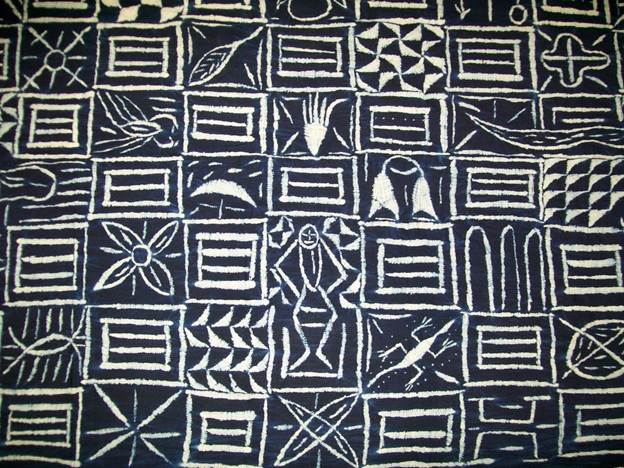
Nsibidi was a script of secrecy and ceremony, and its beauty has inspired artists and filmmakers alike, you may have seen its influence in Black Panther’s Wakandan glyphs.
Adinkra: Ghana’s Language of Wisdom
Among the Akan people of Ghana and Côte d’Ivoire, Adinkra symbols have been used for centuries to express proverbs and philosophies. Each symbol carries a lesson, like Sankofa (go back and fetch it), urging us to return to our roots to build our future.
Modern Ghanaian inventors have even developed full Adinkra-based alphabets, bringing visual tradition into written form. This is heritage evolving, not fading.
African Innovation in the Modern Era
What makes Africa’s story so powerful is that script invention didn’t stop with the ancients. In the last hundred years alone, Africans have created more than two dozen new writing systems for Yoruba, Somali, Bambara, Fula, and more.
- In Somalia, innovators like Osman Yusuf Kenadid developed the Osmanya script in the early 1900s.
- In Malawi, the Mwangwego alphabet was designed in 1979 to write native languages.
- In South Africa, IsiBheqe soHlamvu (also called Ditema tsa Dinoko) provides a visual way to represent tones in Southern Bantu languages.
These are not relics. They are living laboratories of African thought.
The Digital Renaissance
For centuries, African writing systems survived in manuscripts, murals, and memory. Now, they are entering the digital age.
Thanks to the Unicode Consortium, the global standard that enables writing on computers and phones, African scripts like Tifinagh, Vai, N’Ko, Bamum, Bassa Vah, and Mende are now officially encoded.
That means you can send a WhatsApp message in N’Ko, create a Tifinagh website, or design a Vai-language keyboard. Researchers are developing AI tools that recognize African scripts, from Geʽez OCR to Tifinagh handwriting recognition.
See also African Presence In The Ancient World – Dr. Kiatezua Lubanzadio Luyaluka
Technology is no longer a threat to our scripts; it’s their new ally.
As a 2023 study in arXiv noted, deep learning models have achieved over 90% accuracy in reading Tifinagh characters. Slowly but surely, the world of code is learning the codes of Africa.
Why It Matters for the Diaspora
If you are part of the African diaspora in London, Toronto, Brooklyn, or São Paulo — you might be wondering: What does this have to do with me?
It has everything to do with you.
Reconnecting with Africa’s writing systems isn’t just about letters and symbols. It’s about belonging.
When you learn that your ancestors used Nsibidi to record law, or N’Ko to write science, or Geʽez to preserve theology, you reclaim a story that colonial history tried to steal. You remind yourself that African intelligence was never oral only, it was universal, diverse, and self-determined.
African scripts are also powerful tools for the future. They can anchor new literature, inspire design, strengthen African language education, and build unity in the diaspora. Imagine Afro-diasporan children learning to write their names in Vai or Adinkra what pride that would bring.
Challenges and the Road Ahead
Let’s be real: many of these scripts remain endangered. Few are taught in schools outside their regions. Publishing them is expensive. Digital fonts and keyboards, though improving, are still limited.
But hope is rising. Universities are digitizing manuscripts. Diaspora groups are hosting workshops. The N’Ko Institute of America teaches online classes. Artists and designers are embedding Adinkra and Tifinagh into fashion and branding.
The revival is no longer a whisper, it’s a movement.
Reclaiming the Written Soul of Africa
Our story doesn’t begin with colonization, and it certainly doesn’t end there. Africa has always written, in stone, in song, in syllables, and in spirit.
To write is to remember. To revive our scripts is to refuse erasure.
So, to my brothers and sisters in the diaspora:
Learn a symbol. Trace a letter. Download a font. Write a word in your ancestral script.
Because when we write in the alphabets of our ancestors, we do more than communicate we heal. We remind the world, and ourselves, that Africa has always been literate, sophisticated, and beautifully self-expressed.
The ink was never dry. It was just waiting for us to pick up the pen again.