The Iron and the Altar: Forging Ancestral Power through Idigun and Esan Spirituality
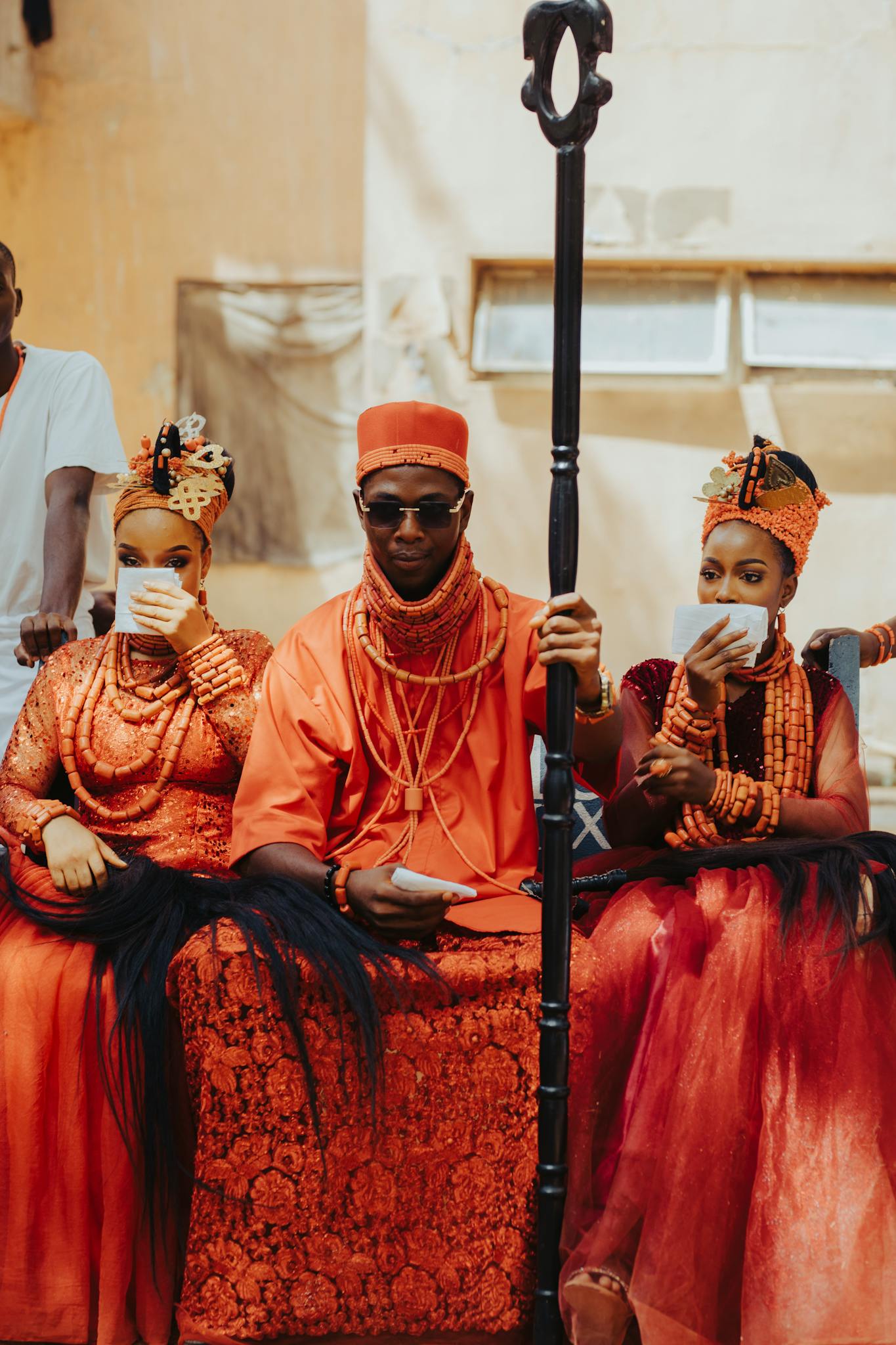
In the profound spiritual landscape of Esanland in Nigeria, the boundary between the visible world and the ancestral realm is not a wall, but a bridge. At AClasses Academy, we teach that the journey of the African diaspora is one of reclamation. It is about moving from a state of cultural amnesia to a state of “Ancestral Assets.” To understand the Esan people is to understand a culture that does not merely “remember” the dead, but actively collaborates with them. Central to this collaboration is the reverence of ancestral spirits and the formidable deity of metal and transformation as: Idigun.
Learn How to Leverage Your Story through our Story To Asset Framework.
For those seeking to reconnect with their African heritage, the study of Esan spirituality offers a deeper understanding. It teaches us how a lineage’s history (Story) is codified into sacred objects and rituals (Assets) that provide protection, justice, and psychological healing for generations.
The Altar of the Fathers: Alu-Elimhin
The foundation of Esan spiritual life is the Alu-Elimhin (ancestral altar). In traditional Esan religion, the worship of ancestors is both a universal obligation and a central source of personal power.
You might also like The Orisha Protocol – Navigating the Diaspora with Sovereignty and Power
The senior son, known as the Omijiogbe, serves as the spiritual bridge for the entire family. He is the custodian of the paternal home and the guardian of the altar where the spirits of the departed reside.
The Alu-Elimhin is a sensory space designed to facilitate “cooling” and “purity.” In the Esan worldview, the transition from the physical world to the spirit world can be turbulent; therefore, the altar must be a place of peace. Here are some elements you will find in Alu-Elimhin.
- Native Chalk (Ere): This is perhaps the most essential substance on the altar. Its whiteness expresses the purity and beneficence of the ancestors. When ground and mixed with water, it becomes a liquid blessing used to anoint the foreheads of the living.
- Cowrie Shells (Ighoesan): These symbolize more than just historical currency. They represent the “white” energy of wealth, clarity, and good fortune. They are often tied to the furnishings of the shrine as a testament to the family’s prosperity.
- White Cloth (Ukpon-afua): Whether handwoven or modern cotton, white cloth draped across the shrine signals a boundary between the mundane and the sacred.
For the diaspora, the Alu-Elimhin represents the “Hard Asset” of the family line. It is a physical location where one can go to ground their identity, silenced by the noise of the modern world, and listen to the whispers of those who came before.
Idigun: The Spirit of Iron, Blood, and Justice
While the general ancestral altar honors the family line, the presence of Idigun introduces a different, more industrial form of spiritual energy. Idigun is the powerful Esan god of iron, equivalent to the Yoruba Ogun or the Benin Ogun.
The shrine of Idigun is distinct because it rarely relies on delicate wood carvings. Instead, Idigun is found in the “hard” materials of the earth. His shrine usually contains:
- Iron Tools and Weapons: Cutlasses, hoes, and scrap iron are the primary residences of his spirit.
- Earthen Figures: If figures are present, they are often made of mud or clay, representing the raw, foundational power of the soil.
- Sacrificial Testimony: The blood of animals, skulls, and feathers are often left at the Idigun shrine. This is not “violence” in the Western sense; it is the sealing of a contract. It is the recognition that life requires energy, and that the spirit of iron, which clears the forest for farms and protects the village in war, must be fed.
Idigun as a Metaphor for Transformation
In our Story to Asset Framework, Idigun represents the Forge. Just as raw iron must be heated and hammered to become a useful tool, our intergenerational trauma must be processed and “forged” into wisdom.
See also Olokun – Understanding the Waters of Life and the Flow of Esan Spirituality
Idigun is the patron of the smith, the warrior, and the laborer. He represents the “Secular Theory of Obligation” (as noted by scholars like Ejizu), where spiritual power is used to enforce social contracts and hard work.
The Ukhure: The Voice of the Ancestors
The most iconic object in Esan religious art is the Ukhure, or ancestral staff. It is the essential feature of the Alu-Elimhin. In its simplest form, it is a peeled wooden rod about two to three feet long, often wound with strings of cowrie shells. However, in the royal palaces of Southern Esan, these staffs become masterpieces of figural sculpture.
Each Ukhure represents a single paternal ancestor. When a father passes away and the burial ceremonies (Itolimhin) are completed, the senior son is duty-bound to commission a new Ukhure.
The Multidimensional Power of the Staff
The Ukhure is a functional asset that serves four primary roles:
- Invocation: The staff is tapped on the ground to “wake” the ancestor and call their attention to the offerings of the descendants.
- Blessing: It is used as a tool for pulverizing white chalk to be mixed with water for anointing participants.
- Oath-Taking: In the absence of a modern courtroom, the Ukhure was the ultimate judge. Swearing an oath before the ancestral staff was a life-or-death matter. It was believed that the ancestors would strike down those who swore falsely.
- Conflict Resolution: The staff is brought out to witness the settlement of family disputes, incest, or adultery. It acts as a moral anchor for the community.
For the diaspora, the Ukhure is the ultimate symbol of Lineage Continuity. It teaches us that we are not isolated individuals floating in time; we are the “topmost figure” on a staff that stretches back centuries.
Also Healing From the Root: Reclaiming the Power of Osun in Esan Spirituality
The Southern vs. Northern Style: A Tale of Two Cultures
There is a striking aesthetic difference between the northern plateau kingdoms and the southern kingdoms of Esan.
In the North, the Ukhure and ancestral objects tend to be plain or have simple, non-descript heads. These were often carved by the family heads themselves rather than professional sculptors. This reflects an egalitarian, “grassroots” spirituality where the connection to the ancestor is direct and unadorned.
In the South (kingdoms like Ewohimi, Ogwa, and Amahor), the influence of the Benin Empire and the Ika Igbo people is visible. Here, we find fine figural carvings. These figures often stand with empty hands or touch their stomachs, representing the Onojie (King). Some carry their own miniature Ukhure or display the Ada and Eben (swords of office) in relief.
This cultural interchange reminds us that our identity is fluid. The southern Esan kingdoms were “younger” and maintained closer ties with Benin, often paying tribute through Agbor. Their art reflects this cosmopolitanism, a blend of indigenous Esan values with the high-court aesthetics of the Benin Empire.
Memorial Heads: The Weight of Wisdom
On the altars of the Enijie (Kings) and certain high-ranking chiefs, one finds carved wooden heads. Unlike the Ukhure, which is essential, these heads are “ornamental” assets intended to honor the greatness of the deceased.
- Human Heads: Found primarily in the south, these often wear coral bead collars and eagle feathers, mimicking the regalia of living kings. They represent the “Head” as the seat of judgment and will.
- Ram Heads (Uhunmhọn Oghogho): The ram is a central figure in Esan. The ram’s horns symbolize power and the ability to face misfortune “head-on.”
- Antelope Heads: Rare and graceful, these are found in Ewohimi and signify an ancient, refined lineage.
In some Northern kingdoms, like Opoji, ram heads are carved with “humanized” features, human eyes or noses. Scholars suggest this was a way for Esan carvers to bypass the “royal injunction” of the Benin Empire, which sometimes restricted the use of purely human memorial heads to the highest royalty.
See also Spirituality and Leadership: What Do the Esan People Call God?
By “humanizing” the ram, Esan people asserted the divine nature of their own ancestors through artistic subversion.
The Ọkpọ Staff: The Authority of the Elders
While the Ukhure is about the lineage, the Ọkpọ is about the person. The Ọkpọ is the walking stick of the Esan elders (Edion). It is typically carved from the kola tree, the “senior” tree of the forest.
The Ọkpọ represents a gerontocratic system of power that predates the introduction of kings (Enijie). It is a symbol of the indigenous, egalitarian authority of the village. Even today, an Onojie’s word can be challenged by an elder holding the Ọkpọ of the Odionwele (the oldest man in the village).
This teaches us the importance of Grounded Authority. In our professional and personal lives, we must balance our “royal” ambitions (the Ukhure) with the “elder” wisdom of character and community service (the Ọkpọ).
Reclaiming the Asset: A Path for the Diaspora
The spirituality of the Esan people is not a relic of the past; it is a living technology for human flourishing. When we speak of ancestral spirits like Idigun or the power of the Ukhure, we are speaking about Identity Preservation.
For the African diaspora, the “Story to Asset” journey involves:
- Healing Intergenerational Trauma: Acknowledging the “Iron” (Idigun) in our history, the hard times, the labor, and the survival.
- Reclaiming Ancestral Wisdom: Studying the symbols of our people to understand our inherent psychological strengths.
- Spiritual Alignment: Building our own internal “Alu-Elimhin”—a place of mental and spiritual peace where we honor those who paved the way for us.
The Esan people teach us that every life is a segment of a larger tree. Just as the Ukhure-ọhọ tree grows in segments, our lives are interconnected. When you honor your ancestors, you are not just looking backward; you are strengthening the roots so that your own branches can reach higher.
At AClasses Academy, we are dedicated to helping you translate these ancient spiritual principles into modern high-value assets. Your heritage is not a burden; it is your greatest competitive advantage.
Step into Your Power
Are you ready to transform your unique journey and ancestral history into a permanent legacy? Our Story to Asset Framework is designed to help you align your personal power with the wisdom of your lineage.
Whether you are seeking spiritual healing, leadership development, or a deeper connection to your African roots, we are here to guide you. Book Your Free 15-Minute Legacy Strategy Call – AClasses