Dr. Keith Claybrook on African Deep Thought and the Architecture of Identity
How do you know who you are if you only read the stories written by your competitors? For many in the African Diaspora, identity has been a “political construct” rather than a cultural truth. We have often been defined by what we are not, rather than the rich, institutional wisdom of what we actually are.
Is your story a liability or an asset? Take the 3-Minute Sovereign Audit to see if your legacy is secure.
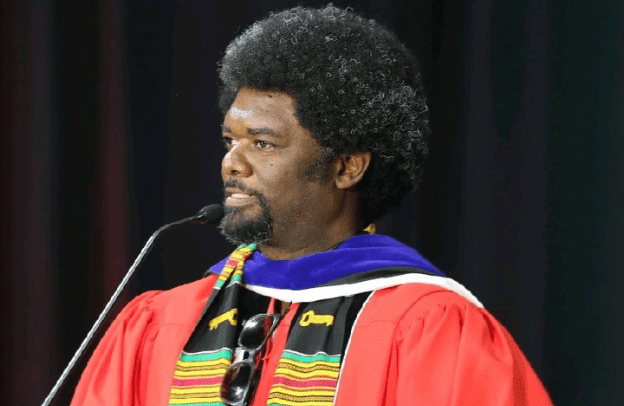
In an episode of The Obehi Podcast, Dr. Keith Claybrook, an Associate Professor and Chair of Africana Studies at California State University, Long Beach, joined host Obehi Ewanfoh to dismantle these constructs.
See the full interview with Dr. Keith Claybrook
This conversation was not just a history lesson; it was a masterclass in Legacy Building and Self-mastery. Dr. Claybrook’s journey from the streets of Compton to the halls of academia offers a blueprint for every diasporan professional seeking to own their story.
The Architect of History: Meet Dr. Keith Claybrook
Dr. M. Keith Claybrook, Jr. is more than an academic; he is a bridge-builder between the ancestral past and the professional future. Born and raised in Compton, California, during the height of the 1980s and 90s, he grew up surrounded by a media narrative that equated his home only with poverty and struggle.
See also The Nile Divorce and Identity Theft: Why Many Are Terrified of the True Face of Egyptian History
Yet, within his own walls, he saw a different reality: a lineage of homeowners, educators, and resilient thinkers.
With a Ph.D. in Cultural Studies and a deep-seated passion for the Black Freedom Movement, Dr. Claybrook has dedicated his life to “African Deep Thought.” He teaches his students that critical thinking didn’t start with the Greeks; it is a fundamental part of the African world community.
His work serves as a Generational Anchor, ensuring that the wisdom of the elders is not lost but transformed into a scalable asset for the next generation of leaders.
Excavating the Institutional Wisdom: The Lessons of Resistance
Dr. Claybrook’s methodology begins with “Cultural Archaeology.” He scours his own family history to find repeatable lessons for modern life. He shares two powerful stories of his grandmothers that define the spirit of Sovereign Learning.
1. The Strategy of Small Wins
His great-grandmother, a sharecropper in Louisiana, practiced “little acts of resistance” in the cotton fields. By adding pebbles or moisture to the cotton to make it weigh more, she wasn’t just seeking extra pay; she was maintaining her psychological sovereignty in an oppressive system.
- The Lesson: Resistance isn’t always a loud protest. Sometimes, it is the quiet, daily refusal to accept the conditions forced upon you.
2. The Lineage of Excellence
His other grandmother was a schoolteacher whose father owned his own land in Arkansas and defended it against “night riders” with arms. This story shatters the myth of the passive victim.
- The Lesson: Ownership—whether of land or intellectual property—is the ultimate form of protection.
Moving from “Black Studies” to “Africana Studies”
One of the most profound shifts Dr. Claybrook discusses is the change from “Black” to “Africana.” This isn’t just a linguistic preference; it is a core part of Mission Clarification.
- Black Studies: Born out of the 1960s racial struggle, “Black” was a political identifier. It served a purpose in a specific historical moment of resistance.
- Africana Studies: The “a” at the end of Africana is an intentional move to globalize the identity. It shifts the focus from a racial designation (what others call you) to a cultural designation (who you are).
As Dr. Claybrook notes, “Being black was not the factor” when he traveled to Ghana or Nigeria. In those spaces, the “Black” label becomes redundant because everyone is black.
See also 5 Lessons From The Egyptian Book Of The Dead
The real markers are culture, geography, and lineage. For the diasporan professional, owning your story means moving beyond the reactive “Black” label and stepping into the proactive “Africana” identity.
The Framework: African Deep Thought as a Signature Asset
Dr. Claybrook introduces a repeatable methodology called African Deep Thought. This is an African-centered approach to critical thinking that uses:
- Proverbs: Condensed wisdom that requires mental agility to unpack.
- Riddles: Tools for sharpening the mind and logic.
- Narratives: Storytelling that transmits values across generations.
This is what AClasses Academy refers to as Message Crafting. By turning unscalable oral traditions into a structured system of critical thinking, Dr. Claybrook has created a Signature Asset that he uses to empower his students and his community.
The Story to Asset Framework™ in Action
Dr. Claybrook’s life perfectly illustrates the three phases of Obehi’s proprietary system, which is built on over 10 years of research and 1,000 interviews with diasporan leaders.
Phase 1: Mission Clarification (The Golden Thread)
Dr. Claybrook found his “Golden Thread” when he traveled to Ghana. He realized that his interest in sports medicine was a “like,” but his passion for African history was a “love.” He solved his own “Narrative Fragmentation” by connecting his Compton roots to his West African relevance.
Phase 2: Message Crafting (The Signature Asset)
He didn’t just study history; he codified it. By developing the “African Deep Thought” curriculum, he turned his expertise into a scalable marketing asset that challenges the Eurocentric monopoly on “critical thinking.”
Phase 3: Message Activation (The Acquisition Machine)
Through his teaching, his books, and his presence on platforms like The Obehi Podcast, Dr. Claybrook moves from “Hope Marketing” to being an authority. He doesn’t just hope people understand history; he provides the framework that makes them architects of their own identity.
Connecting the Diaspora: A Global Family Reunion
Dr. Claybrook’s trip to Ghana was not a tourist excursion; it was a “return home.” This is the heart of Ubuntu, the belief that “I am because we are.” When he saw a taxi driver who looked like his uncle, the distance between the Diaspora and the Continent vanished.
AClasses Academy, with over 2,000 articles, and The Obehi Podcast, with over 1,000 interviews, serve as the digital version of this return. They are the “Master’s Workshop” where diasporan leaders can safely excavate their wisdom and build their legacy.
You might also want to see Chester Higgins Jr: Reclaiming the Sacred Nile and Your Sovereign Narrative
“The issue is the respect. The issue is recognizing the humanity of a people. You can call them anything, but if the respect and dignity is not extended… it doesn’t matter what you call them.” — Dr. Keith Claybrook
Your Journey from Consumer to Architect
Dr. Claybrook’s final thought is a call to action: “Make our ancestors proud and continue to pave a road that our children’s children’s children will be able to benefit from.”
You are currently a consumer of this information. To become an Architect, you must move beyond trading your time for money and start building your “Generational Anchor.”
Whether you are an entrepreneur in London, a professional in New York, or a creative in Paris, your institutional wisdom is your most valuable asset.
Take the First Step toward Self-Mastery
Are you ready to turn your story into a legacy? Don’t let your unique wisdom die with you. Enter the “Master’s Workshop” and start building your signature asset today.
Book your free 15-minute Legacy Strategy Call today to design the asset that will tell your story and position you as the ultimate authority in your industry.